Category: MMORPGs

  • World of Warcraft: Classic Will Outlive Retail & Its Clones

    World of Warcraft: Classic Will Outlive Retail & Its Clones

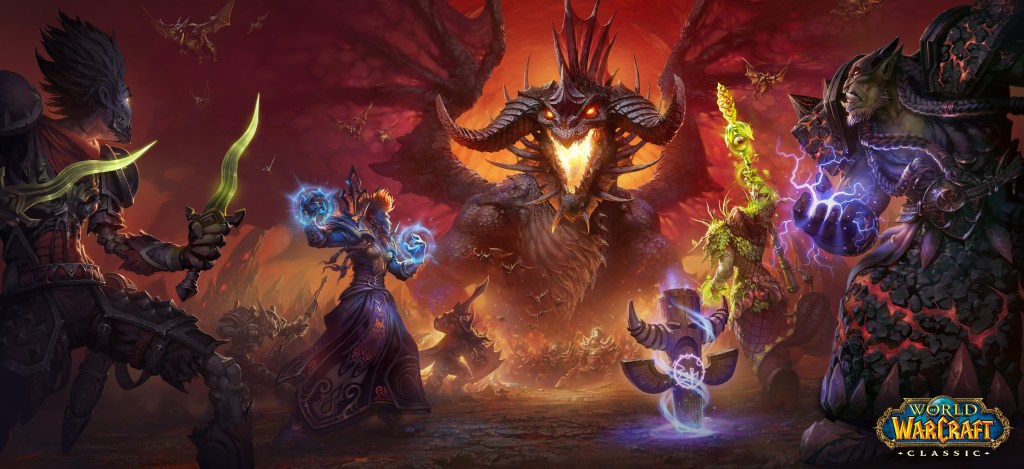
    World of Warcraft, the 800 lb gorilla of the MMORPG industry, has gained renewed popularity with the release of World of Warcraft: Classic, its subsequent expansions, and novelty servers. Even as the ashes of Activision Blizzard’s public reputation continue to smolder, Warcraft persists almost twenty years after its release. Despite having a new ‘retail’ expansion on the horizon, it feels that the longevity of WoW Vanilla will outlast not just its competition but its progeny as well whether Blizzard wants it to or not.

    Winter is Coming

    Massively multiplayer online role-playing games, like World of Warcraft, and Winter go together like blueberries and pie. For those living far enough from the equator for it to matter, the holiday season is cold, dark, and often lonely. Fantastic worlds of wonder and magic offer players an escape from their troubles and a “third place” to gather with other like-minded individuals. In search of a virtual world to make my home for the winter, I shuffled through my collection of MMORPGs to see what the space had to offer in 2023.

    Clearly, Final Fantasy is doing just fine. It’s not my cup of tea, but I’m glad folks are enjoying it and I wish I liked it more. Retail WoW offers me none of the joy that brought me to the scene as a child. Several new IPs have come and gone since I last paid for a Warcraft subscription, Wildstar, Rift, and Star Wars the Old Republic to name a few. The ones that were lucky enough to be put into maintenance mode offer me even less than World of Warcraft: the War Within. Other survivors market themselves as drastically different experiences, some attempting to recreate the magic of Ultima Online and others adopting a more action-oriented approach to combat. None of these experiences capture the fantasy of a massively multiplayer role-playing game: they’re unabashedly selling a product, showering new players in meaningless trinkets, and offering plenty more at the cost of an active monthly subscription.

    More Money, More Problems

    Money makes the world go round, but that’s not an excuse for bad game design. In an attempt to capture the success of World of Warcraft: Wrath of the Lich King, many competitors rushed out similar products without realizing what made the original worth its weight in gorilla. With employee turnover, the ravages of time, and some level of incompetence, Blizzard eventually began acting more like one of its own competitors rather than the company that launched the World of Warcraft back in 2004.

    Deathwing helped reshape Blizzard as well as Azeroth.

    Beginning with WoW: Cataclysm, it was clear that the world had changed, but not for the better. Blizzard stubbornly fought against private servers and their administrators for years, openly admitting that they thought they knew better than their fanbase. What they really knew is that, if players got what they really wanted, the stockholders would lose money. The original World of Warcraft was such a well-made carrot-on-a-stick that the players seem to prefer it over whatever gold-plated turd Activision Blizzard continues to serve their retail subscribers. Conceding to the inevitable, they eventually released their own vanilla servers called World of Warcraft: Classic.

    Exploring the World

    What is it about the original Azeroth that keeps players coming back? The “World.” Every other game, more modern expansions included, attempted to copy the success of WoW but forgot that the staying power of an MMO lies in its core fantasy. In World of Warcraft, the player starts off as a meager adventurer and must travel, go on quests, and meet other players and virtual characters. Reaching the max level in Vanilla was not the be-all-end-all goal popularized by later expansions. Role-playing, traversing the world, and chatting with other players are some of the most fulfilling experiences that MMORPGs uniquely offer, yet the industry quickly shifted to focus on end-game dungeoneering and selling premium fashion via microtransactions.

    Keeping the magic of an MMORPG can be a daunting task given they are intrinsically designed to keep the player playing as long as possible to soak up as many subscription fees as possible. Whatever Stockholm Syndrome that MMO fans suffer from comes with the urge to go back to the familiar and continue adventuring, but the illusion fades quickly once the player looks behind the metaphorical curtain. Despite the risk of scams, bots, and server admin drama, players flock to private servers to cut out the middleman and enjoy their favorite game however they want to.

    World of Warcraft is worth replaying over and over because there is enough going on across both continents to keep any sane person engaged for years. The game was designed to be explored. Even the most common form of fast travel, flight paths, zeppelins, and boats, force the player to stop and smell the roses. Open-world games are about setting one’s own goals, so results may vary, but as long as a player is comfortable making their own path, they’ll have plenty of adventuring to do.

    Retail World of Warcraft and plenty of other MMOs fail to fulfill their fantasies from the beginning; not only can players pay for max-level characters but they hardly start out as lowly adventurers. I have no interest in paying to become a renowned warlord of a virtual realm; A. because it saps the “accomplishment” of all its meaning and B. without meaning, there’s no point in spending my time chasing the proverbial carrot. Any game that offers a free max level boost on their in-game shop is conceding that a majority of the “game” is worth paying hard-earned cash to skip.

    World of Warcraft: Classic offers an experience that no other MMO can; everything matters (within reason). Delving into a modern MMORPG often involves dodging landmines and trying to avoid any gameplay that is outdated, underdeveloped, or otherwise obsolete. It’s a tedious process that WoW Vanilla avoids by being a time capsule of a better time rather than a half-baked hedonistic treadmill meant to milk players for every cent they’re worth. Cataclysm marked a clear delineation between the old Blizzard and the new; not only could you not go back to the old Azeroth anymore, but most of the Burning Crusade and Wrath of the Lich King (two popular expansions) became irrelevant. WoW Vanilla, TBC, and WoTLK give players a clear beginning and end with a static playing field to explore without fear of mistakenly playing a part of the game that no longer matters. Blizzard proved that plenty of players are willing to pay their developers to stop developing their games for the sake of endless growth and stockholder earnings.

    What do you think? Are there other MMORPGs that are doing something new and interesting? Let me know in the comments below.
  • When It’s Okay to Go Home Again… Or How to Learn to Love Maintenance Mode

    When It’s Okay to Go Home Again… Or How to Learn to Love Maintenance Mode

    With no end to the pandemic in sight, I’ve found myself delving into MMORPGs in my spare time. Whether it’s Guild Wars 2 or World of Warcraft Vanilla, I always compared them to my time spent in Telera. Eventually, I decided to play my favorite MMO rather than playing games that offer similar experiences with different dressing.

    The question inevitably becomes: “Is the game dead?”

    As much as I loathe the concept of games dying, it’s easy shorthand to describe a game being abandoned by it’s developer and either shutdown or, at best, put into maintenance mode. Rift still has a community of devoted players, making major cities less barren than I expected. Instant adventures are equally as populated, giving players easy access to grouped content. In all other ways, however, Rift can be considered being in maintenance mode.

    Although I wasn’t privy to the events as they occured, it looks like Trion Worlds went under recently and sold the rights of Rift to Gamigo. The new owners seem content in keeping the servers updated and using their limited resources to address community issues, such as recently patching their player report feature.

    If you believe the rumors, I also hear good news about world boss content being experimented with on the PTR. This, combined with the already existing seasonal content, is enough to keep me logging in and checking out the game every once in a while.

    Can an MMO designed to bring players together quickly and easily ever be truly dead? Sure, LFG queues don’t pop as quickly as they used to (or at all) but you can get folks to join you in chat if you’re patient. Instant adventure solves most murder hobo needs, while PVP, crafting, raids, slivers, and chronicles are all still accessible.

    It’s hard to recommend an MMO in maintenance mode without adding a million caveats, so I’ll try to keep this simple. Rift is easily one of my favorite MMOs, if not games, and has a lot of great story and fun gameplay to explore for those looking to find it. If you also want flexible and interesting class choices and build opportunities, plenty of group PVE content, and a unique story/aesthetic, Telera may still have something to offer.

  • Remnant: From the Ashes – Review

    Remnant: From the Ashes – Review

    In a world where every game is at some point inevitably compared to Dark Souls, it’s understandable why it took me this long to give Remnant: From the Ashes a try. “It’s Souls with guns!” people would say to me. I’ve slogged through enough Souls-likes that I need more than just the lure of the next bonfire and relentlessly punishing gameplay to win my attention. Thankfully, Gunfire Games manages to find a graceful balance between drawing inspiration from other games and improving upon the foundation they’ve already set.

    Instead of drawing directly from From Software’s magnum opus, the developers of Remnant cherry-picked the best qualities from the series to adopt and discarded the rest. Gone are the endless corpse runs back from the last bonfire after dying over and over on the same boss. The UI is intuitive and jumping into a game with friends is as easy as pressing one button. There’s even a difficulty rating, a welcome addition to a genre that often misses the point about player experiences.

    A pattern that quickly reveals itself is that Remnant owes just as much to Diablo 2, Borderlands, and similar loot pinata simulators than it does to the Souls series. Chests explode, showering you with crafting materials and ammo. Weapon mods and equipment are easy to mix and match at one’s leisure. Most obtainable items are shared with all players in your party, so there’s no downside to running around collecting everything in sight if that’s up your alley. With an aesthetic that leans closer to Fallout or Deadlands, it’s clear that Remnant borrows a lot from gaming royalty.

    That being said, Remnant: From the Ashes is still very much a Souls-like. Players still dodge roll through enemy attacks, chop off dragons’ tails to craft fantastical weapons, and fight against overwhelming odds to their heart’s content. What is gone, however, is the frustration, alienation of new players, and a tanking frame rate. This game runs remarkably smooth and doesn’t overstay its welcome. 

    Instead of having long branching paths interwoven within one another, Remnant opts for the randomly generated approach. Players could have very similar experiences up until they encountered their first boss, for example. This along with the difficulty rating provide a lot of replay value for players who want to experience more than the main game has to offer or experiment with new gear and weapon mods combinations. For everyone else who just wants to enjoy a short and sweet romp through a dystopian wasteland, I was able to complete the main story in two or three vigorous gaming sessions.

    If you are a fan of Dark Souls and similar titles, then you have probably already given this game a try. However, if you cringe at the idea of dying to hidden traps and wandering off aimlessly only to be eaten by a dragon, then don’t overlook Remnant just because it fits into the Souls-like mold. This might be the perfect introduction to the genre for new players period, both because of how similar to Dark Souls it is and how drastically different it is at the same time.

  • WAAAARRRRGGHHHH – Warhammer Online: Age of Reckoning Review

    WAAAARRRRGGHHHH – Warhammer Online: Age of Reckoning Review

    While I’ve never officially studied law, I recognize the effects that intellectual property rights have had on the preservation of gaming history. This is why I’ve supported private servers for MMORPGs for years, namely because profits stand in the way of maintaining important video gaming artifacts as they were intended to be played. MMOs that have been long shut down by their copyright holders have found new life in private servers that often break the original game’s terms of use. One such game has benefited greatly from the popularity of a private server: Warhammer Online.

    Like many MMORPG projects of the time trying to find their niche, Warhammer Online takes many of the best qualities from its predecessors and adapts them for a more PVP-focused approach. Although I didn’t have a chance to play it on its initial release, I’ve wanted to jump into the world of Warhammer for a long time to see what inspired some of my favorite features from Rift, another MMO from times gone by. Public quests, in particular, piqued my interest, as they offer a unique play experience for players who prefer fighting NPCs rather than players of the opposite faction. Like most theme park MMOs, Warhammer seemingly has something for everyone but appeals specifically to those who heed the call to war and fans of the well-established IP.

    When the game was originally being marketed, a large part of their outreach went into a series of production updates and videos that highlighted their design decisions and delved into specific details for all of the classes and specializations. This was when I originally heard about the project. The first class that jumped straight out at me was the Chaos Marauder, a melee class who specializes in mutating their body into various horrific forms. Similar to stance dancing as a Warrior in World of Warcraft, the Marauder can switch between several mutations to quickly adjust their playstyle. Needless to say, the first toon I rolled up was a Marauder with a giant mutated arm, so I christened him Fisterroboto.

    Chaos mutations sold separately.

    Once I got over the dated graphics, I was absorbed into the world of Warhammer and wanted to explore all that it had to offer. The normal questing experience is very similar to pre-Cataclysm World of Warcraft, asking players to navigate through areas with plenty of monsters to slay, quests to complete, gather resources, and larger obstacles to overcome as a group. What makes Warhammer Online stand apart, however, is the ability to begin PVPing straight out of the gate and teleport around the world to where the action is actually happening. After leveling from 1 to 10 and figuring out how to play a Marauder effectively, I entered a player versus player zone to see what all the fuss was about.

    The War Report offers players the ability to see exactly what is happening on the server at that time and teleport to whatever area or event might interest them most. Seeing that a nearby PvP zone was contested against the Order, I decided to lend my allies aid in battle. After wandering around and sneaking through caves, I found myself teaming up with a few other Destruction players to capture objectives, gather war supplies for our side, and slay oncoming Order players. Although we were outnumbered, my Squig Herder pals and I fought valiantly, using guerilla tactics to target players left out from their group and cut off supply routes for the enemy forces. After gathering a small war band and sieging an enemy watchtower, we were unfortunately defeated by another zerg of Order players. They not only outnumbered us, but they also had plenty of support and healer classes to help keep their melee players alive. After regrouping at the respawn location and trying again a few times, I called it quits and tried a few different classes.

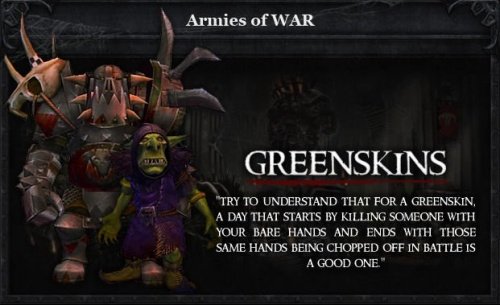
    With my melee DPS character out of the way, I wanted to try some of the ranged classes that Warhammer has to offer. First on my list was the aptly named Squig Herder, the Destruction’s ranged pet class. Like many of the class designs in Warhammer Online, the Squig Herder has a unique ability that drastically changes their playstyle on the fly. Called Squig Armor, this ability allows the Goblin player to be swallowed whole by one of their pet squigs while controlling it from the inside of its mouth. Being able to switch from a ranged DPS class to a giant angry meatball at my whim was worth trying out the class alone. I also tried my hand at the Order’s Shadow Hunter, the Elf equivalent of the Squig Herder sans an animal companion. The Shadow Hunter swaps between stances, including a ranged stance for sniping, a melee-oriented stance, and a short-ranged stance as well. Finally, I tried my hands at the Warrior Priest, a melee healing class for the humans. Surprisingly, even the heal-bots have interesting mechanics to juggle while ensuring that their teammates are topped off. The Warrior Priest’s abilities generate Righteous Fury which can be spent on healing spells or buffs, transferring the player’s offense into defense for their party.

    If I had any complaint while leveling my various characters, it was that itemization felt strange at times and there weren’t enough reasons to explore my surroundings besides finding a stray public quest across a zone or searching for an opposing player looking to throw down. When a monster drops loot in Warhammer Online, there is a chance that it will not be an item you will be able to use. Since classes are so specialized, both in terms of playstyle and in terms of their equipment, most pieces of gear are only able to be used by specific classes. This means that after an adventuring session, a player may have collected one or two items that they’ll actually be able to use and eighteen others that they can sell as vendor trash. While this felt strange at first, it could just be a case of MMO culture shock since World of Warcraft had me selling just as many gray items to vendors and I couldn’t even trade those off to other players if they really needed them. Theoretically, the design should encourage players to interact, trade, and, hopefully, build connections, but I couldn’t be bothered and ended up selling most of the gear I collected for the spare change they were worth.

    Warhammer Online’s streamlined design offers players who are accustomed to World of Warcraft’s quality of life changes plenty of ways to navigate the world with ease. This, however, diminishes the feeling that there is a thriving world out there in the first place, rather than a series of zones connected by flight paths. This isn’t to say that the game lacks areas to explore, but that there just doesn’t seem to be much reason to do it. Thankfully, the landscapes and outposts are well designed both in aesthetics and in function. There’s something oddly thrilling about riding your trusty steed over a demolished siege weapon and up onto the broken wall of an enemy fort or sneaking through a deserted cave to assault the enemy from behind.

    After taking a good share of Order and Destruction classes for a spin, I think it’s safe to say that I really enjoy Warhammer. Sure, it has plenty of faults, chief among them that the only way to play it currently is on a private server, but what it loses in graphical fidelity and strange mob pathing/animations, it makes up for tenfold in style, charm, and its overall presentation. For a twelve-year-old PvP-centric MMORPG based on a franchise that has seen better days, Warhammer Online still stands the test of time against stiff competition in the MMO space. The fact that I’m actively playing it over other modern games that I’ve spent a considerable amount of money on is a testament to how well the game was made and how much passion and hard work the community has put into keeping it alive all this time. If you’re willing to delve into the world of private servers, you owe it to yourself to give Warhammer Online a try regardless of whether you’re a returning veteran looking to claim a few more skulls for your throne or an MMO fan looking to sink their teeth into something new.

  • 5 MMO Lessons from the Success of WoW Classic

    5 MMO Lessons from the Success of WoW Classic

    If you had told me in 2004 that in fifteen years World of Warcraft would be re-released to as much fanfare if not more than modern MMOs, I probably wouldn’t have believed you. At the time, WoW seemed like a natural extension of the success of Warcraft 3, but it would be impossible to correctly guess just how culturally significant the game would become. Even Blizzard, the company best known for adopting successful ideas and polishing them for a mainstream audience, didn’t see the prize-winning goose that they had sitting in their lap. “You think you do, but you don’t,” is the infamous line uttered by Allen Brack, now president of Blizzard Entertainment.

    Oops.

    As someone who played lots of World of Warcraft, both on retail and on a myriad of private servers, I scoffed when I first heard Mr. Brack’s condescending comment to Warcraft’s most devoted fans. “If that’s what they really thought about the fans of their original product, then screw them,” I thought. Thankfully, Blizzard came to their senses and released WoW Classic to a resoundingly enthusiastic response a few years later.

    And low and behold, the original World of Warcraft is rumored to be outperforming the retail version of Battle for Azeroth 15 years after its initial release. I hope Blizzard executives feel just a little guilty every time they cash their humongous checks from the success of WoW Classic. While they’re wallowing in their riches and cursing themselves for their complete lack of foresight, there are also a few other lessons that Blizzard and other MMO developers can learn from the success of the return to Azeroth.

    5. World Player Vs Player Content

    While open-world PVP has been fetishized by the MMO community to a dangerous degree over the past decade, there is a reason it has been generally phased out of modern game design: there are only so many sheep that are willing to be preyed on by wolves. Theme park MMOs like WoW thrive off of catering to as many players as possible, but whether it’s because of players queuing for dungeons in major cities rather than exploring the world or because the griefers chased away all their victims, world PVP just doesn’t feel the same anymore.

    Although I don’t think that the conflict between Tarren Mill and Southshore is the epitome of PVP action, there is something unique to WoW Vanilla that brings people back to the wilderness to either gank or be ganked. Perhaps it’s the glee of picking off enemy faction raiders, forcing them to reapply all of their buffs or picking off lowbie questers, but either way, it’s clear to see that WoW Classic fans were excited to jump back into the midst of old-school PVP chaos.

    4. Class Identities

    One of the biggest successes of WoW’s original design are the archetypal class fantasies that were ingrained in each specialization and talent tree. Nowadays, thanks to the constant “quality of life” improvements, most classes play similarly, most racial bonuses don’t matter, and the only real differentiating factor is how you’ve transmogrified your gear. Class-specific quests, class-specific raid utility such as Mage’s conjuring beverages, and non-combat abilities made each class/race combination feel unique and interesting.

    Sure, if you get down to the brass tacks, there isn’t much reason to keep non-combat abilities or class quests if your goal is to bring in as many new players as possible (many of which ignore all quest text and treat WoW like a murder simulator). However, filing down those edges has resulted in a bland, repetitive, and homogeneous experience. If some kid doesn’t like having to travel across the “world” to complete their quests, they can go play a game that isn’t explicitly about that very thing.

    3. Simplicity

    Games as a Service is a mixed bag in terms of its mutual benefit to both game developers and their fans, but one major issue with that approach is how quickly complexity creep starts to catch up with them. Having to release new content every few months to keep people subscribed results in bloated games that either force players to slog through years-old content or clear a clean slate every few years, all but erasing older content entirely. Either way, you slice it, MMOs have a complexity issue and going back to the very beginning when rocks were soft and games were simpler is bound to appeal to fans of older titles. Vanilla World of Warcraft isn’t a “simple” game by any means, but some players are more interested in proper positioning, preparation, and teamwork than how many buttons they’re required to press when executing their rotation.

    2. Gameplay Over Graphics

    Although retail Battle for Azeroth hasn’t strayed very far from its roots aesthetically, it’s clear that World of Warcraft’s initial success can at least partially be attributed to its ability to run on just about any machine back in 2004. Add an extra 15 years to that mix and you have a game that can probably run on your Apple Watch at this point, and yet, WoW Classic and Vanilla WoW’s popularity throughout the years has shown that good gameplay trumps graphics, at least in regards to long term longevity. A game’s graphics will look dated in 2-3 years, and that shelf life is only decreasing as technology improves. Blizzard instead took the success of Everquest, made it more accessible, and slapped on their signature stylized aesthetic and commitment to polish.

    1. Quality of Life Improvements Erode All Things

    World of Warcraft is a great lesson in how to draw the line between quality of life improvements and creating an immersive and believable world worth exploring. That is to say that Blizzard was really bad at dancing that line, instead deciding to leap even further past it with each new expansion pack. While there are many factors in an MMORPG’s loss in subscribers, many attribute the beginning of WoW’s decline to Cataclysm’s attempt at recreating Azeroth.

    Through a combination of dungeon finder queues, flying mounts, instanced single player areas, removing quests with any sort of scale or difficulty to them, removing class quests, favoring instanced PvP over Open World, and a myriad of other “features,” World of Warcraft became less and less about exploring the actual world of Azeroth and more about completing daily objectives, AoE clearing dungeons with a pickup group, and AFKing in the same exactly major city as everyone else despite the plethora of other interesting places to inhabit and explore.

    World of Warcraft Classic’s popularity is a clear lesson that some of the best parts of playing an MMORPG are overcoming obstacles with others. Remove the obstacles and any meaningful way to interact with strangers and you end up with a single player chat room simulator. Players are willing to put up with archaic game design decisions, dated graphics, and humongous time investments to play an MMORPG that actually plays like one.