Category: Rants

  • When It’s Okay to Go Home Again… Or How to Learn to Love Maintenance Mode

    When It’s Okay to Go Home Again… Or How to Learn to Love Maintenance Mode

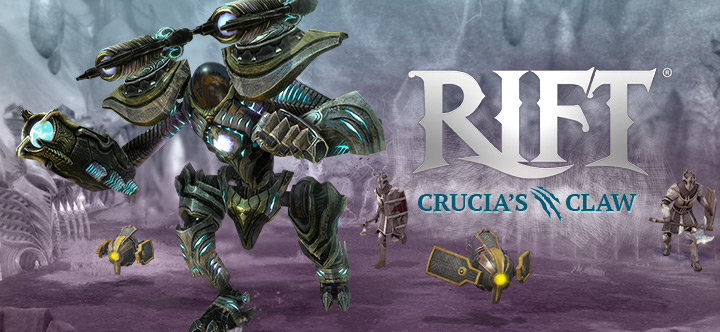
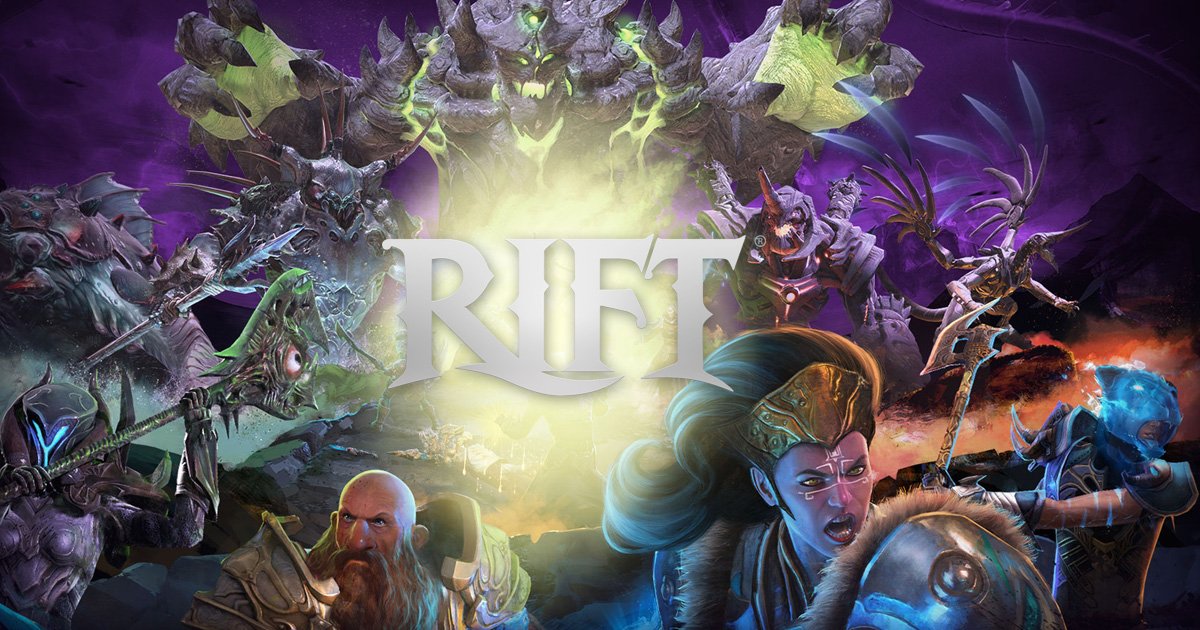
    With no end to the pandemic in sight, I’ve found myself delving into MMORPGs in my spare time. Whether it’s Guild Wars 2 or World of Warcraft Vanilla, I always compared them to my time spent in Telera. Eventually, I decided to play my favorite MMO rather than playing games that offer similar experiences with different dressing.

    The question inevitably becomes: “Is the game dead?”

    As much as I loathe the concept of games dying, it’s easy shorthand to describe a game being abandoned by it’s developer and either shutdown or, at best, put into maintenance mode. Rift still has a community of devoted players, making major cities less barren than I expected. Instant adventures are equally as populated, giving players easy access to grouped content. In all other ways, however, Rift can be considered being in maintenance mode.

    Although I wasn’t privy to the events as they occured, it looks like Trion Worlds went under recently and sold the rights of Rift to Gamigo. The new owners seem content in keeping the servers updated and using their limited resources to address community issues, such as recently patching their player report feature.

    If you believe the rumors, I also hear good news about world boss content being experimented with on the PTR. This, combined with the already existing seasonal content, is enough to keep me logging in and checking out the game every once in a while.

    Can an MMO designed to bring players together quickly and easily ever be truly dead? Sure, LFG queues don’t pop as quickly as they used to (or at all) but you can get folks to join you in chat if you’re patient. Instant adventure solves most murder hobo needs, while PVP, crafting, raids, slivers, and chronicles are all still accessible.

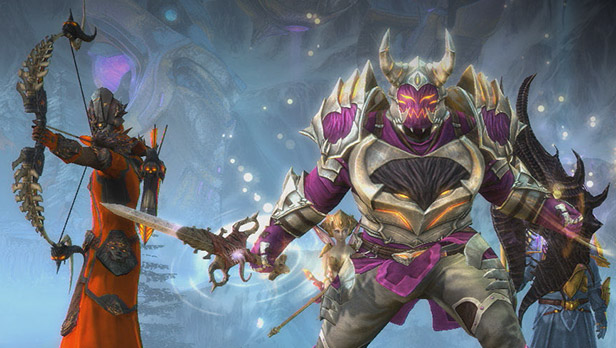
    It’s hard to recommend an MMO in maintenance mode without adding a million caveats, so I’ll try to keep this simple. Rift is easily one of my favorite MMOs, if not games, and has a lot of great story and fun gameplay to explore for those looking to find it. If you also want flexible and interesting class choices and build opportunities, plenty of group PVE content, and a unique story/aesthetic, Telera may still have something to offer.

  • Call of Duty: Modern Warfare – The Ultimate Christmas Guilty Pleasure

    Call of Duty: Modern Warfare – The Ultimate Christmas Guilty Pleasure

    Despite my lukewarm response upon its initial release in 2008, I have kept up the tradition of playing Call of Duty: Modern Warfare exclusively during the winter holiday season for years now. There’s something incredibly satisfying about the arcade-style, fast-paced FPS action that keeps me coming back. Although the military propaganda and gun violence stand in stark contrast to the traditional Christmas aesthetic, I find it fills a hole in my holiday spirit that can only be satisfied by hiding from relatives and repeatedly queuing for Shipment over and over.

    To make things better, the original Modern Warfare had holiday-specific maps and special effects. “Ho! Ho! Ho!” signals the coming of Santa on his sleigh, ready to airstrike your opponent’s position at your command. On specific holiday-themed maps, players explode in puffs of red and green smoke and snowflakes. Lots of games have holiday content, but there’s something oddly appealing about the way that the original Modern Warfare decked the halls despite it being over a decade old and glorifying US military imperialism.

    Taking advantage of the influx of new players around the holidays is definitely a perk, but there must be a reason I’m not coming back to Counter-Strike: GO, Apex Legends, or other, more modern FPS to get my fix. What about COD: MW has created this permanent connection in my mind with an otherwise wholesome human holiday?

    It could certainly be the map familiarity, but if that was the only case I would be playing cs_office or de_dust on a 24/7 server instead. My previously established legacy skill could be another factor, but I am traditionally a PC player, am currently playing Call of Duty on my PlayStation 4, and have a tough time mastering the controller.

    After wondering why I’ve associated Call of Duty with Christmas for years, I think I may finally have a grasp on the situation. First, I suspect that for something to be considered a guilty pleasure, it would have to be outside of the norm for that specific individual. For myself, jumping over to Call of Duty from Counter-Strike, Unreal Tournament, and Quake 3 Arena was enough of a step out of my comfort zone to qualify. Now that I’ve come to love Modern Warfare, playing it on a console brings back fond memories of grinding for prestige over holiday breaks when I was younger.

    The instant gratification of Call of Duty’s signature arcade-style approach to FPS also helps keep the good times rolling when combined with soy eggnog and Christmas cheer. Explosive damage, the potential for racking up huge killstreaks, and near-instant respawn timers help grease the wheels a bit, making the bad times feel less bad while accentuating the good times with flashing lights and fanfare. Being able to turn my brain off, not feel as invested in my kill/death ratio, and relax while fragging randos online is my Christmas guilty pleasure, I guess.

    I hope you’ve had a very happy holiday and an eventful New Year!

  • Why Rift was the Best MMORPG for Me

    Why Rift was the Best MMORPG for Me

    There’s this prevailing sentiment among video game players that there is an objective ruler upon which you can evaluate all games. For the rest of us that live with at least one leg firmly planted in reality, we realize that art and entertainment are never that simple. Some games do very well financially to little critical acclaim, while some critical darlings go mostly ignored by the masses. Some games may not even register on your average Forknife tween’s radar, but they may still have had a profound effect on the people who enjoyed them.

    MMORPGs are especially difficult to discuss like this due to their temporary nature. Despite what game publisher PR departments want you to believe, you can never go home again, at least not to Azeroth or Telara. MMOs are designed to constantly be in flux, relying heavily on player engagement to make the experience feel whole. I mention this because one of my favorite games of all time was what some in more niche gaming scenes might consider a failure, a fly-by-night World of Warcraft clone that did little more than distract fans until the next expansion by Blizzard.

    This summary couldn’t be farther from the truth, as Rift did much more than temporarily steal a portion of WoW’s audience. Trion World’s debut MMO invited gamers into a rich fantasy world with an emphasis on player expression, exploration, and cooperation, at a time when World of Warcraft was dealing with massive blowback from its community about the difficulty of Cataclysm content compared to the WotLK expansion, among other things. Telara wasn’t just Azeroth 2.0, instead offering a welcome alternative that pushed the experience in other directions. While WoW’s cataclysm was revitalizing how traditional questing was done, Rift stuck to a more familiar formula and tried expanding on the core MMO experience instead of reinventing it.

    Rift was developed at an interesting time in MMO history, one most memorable for the string of game publishers trying to cash in on the WoW craze just as WoW was waning in popularity and trying to revamp itself. A big complaint gamers had about the streamlining of MMO design was that it often leads to players AFKing in one or two major cities, stopping only to queue into a dungeon or check their auction house sales. Rift’s answer to this was it’s namesake Rifts that opened up throughout the game and offered players an incentive to explore Telara and cooperate with other players to defend it against invading forces.

    On paper, this idea sounds revolutionary. In reality, it ended up playing like a slightly more engaging group quest from other, similar titles. But, what it lacked in mechanics it made up for in atmosphere and worldbuilding, both of which are paramount to my experience playing an MMORPG. Sure, you could theoretically ignore the invaders and go about your business, but for those playing for the sake of adventure, it provided a great distraction from the more basic questing system.

    Rifts weren’t the only thing keeping players engaged, however. In between the planar invasion and rifts opening up, players could also (eventually) click a button to immediately be grouped together with other players and thrust directly into a group quest, jump into dungeons, raids, and smaller raid-style encounters. They even eventually offered more casual players access to raid content through more intimate encounters using similar assets and environments. Essentially, if you were a PvE MMO fan, Rift probably had something for you.

    That being said, it did leave a bit to be desired in terms of Player versus Player mechanics. World PvP never seemed as lively as it should, perhaps because the open-world provided much more interesting endeavors than PKing unsuspecting newbs (An Ex Por, y’all), but there were plenty of instanced opportunities to kill your fellow man. Thankfully, I was more than happy to dip my toe in Warfronts before returning to my much more comfortable time murdering A.I. controlled monsters en masse.

    For me, Rift was perfect because I was pretty disappointed with World of Warcraft at the time and found a fresh, yet familiar approach to a game genre I had thoroughly enjoyed for more than a decade at that point. It was obviously not for everyone, but I hope that people give the game a chance despite the fact that it will probably never live up to my fond memories of time spent in Telara.

  • On the “Do the Thing” Mentality or On Unremarkable Advice

    On the “Do the Thing” Mentality or On Unremarkable Advice

    When I venture into the unknown territory of a new hobby, my first course of action is to gather up and subscribe to as many relevant newsletters, email reminders, and social media outlets that produce quality content on the subject as possible. Writing wasn’t any different for me in this regard. I was immediately drawn to Medium as a great toolkit for honing my skills and learning from other writers. Little did I know just how much unremarkable advice about writing is out there.

    The “Do the Thing” mentality, movement, whatever you want to call it, works under the basic premise that success comes to those who work hard and believe in themselves. All one needs to do is “do the thing” and all their problems will wash away and their true life’s calling will be revealed.

    The trick is that life’s just not that simple.

    So, you can imagine my surprise when my email inbox was suddenly filled with headlines like “How Writing Everyday Helped Change My Life” and “5 Habits from Successful Writers” despite neither of those articles offering any actionable advice or information other than “Writing good! Do the thing!” For those looking for actual, factual advice, there is plenty of fantastic writing advice floating around the web, you just have to know where to look. In this case, I prefer to stay away from these vapid, faux-motivational fluff pieces that serve only to inflate their author’s ego and needlessly fill up your inbox.

    Here is a good rule of thumb if you want to quickly and easily identify a piece of unremarkable advice:

    Is the lion’s share of the article’s content summed up in the headline without any additional information that might help better illustrate the author’s point of view?

    Ding, ding, ding!

    Underneath it all, it’s undeniable how relatable these articles are. Humans happen to like things that relate specifically to them and their experiences, so it makes sense that there would be a market for articles that do little but offer a brief, albeit overtly circle-jerky, reprieve from staring at a blank page, wracked with writer’s block.

    “Writing good! Do the thing!”

    After the fourth or fifth article like this, it starts to feel more like a pep talk after an exhaustive hot yoga session rather than a clarion call to aspiring authors to pursue their passions.