Tag: Games

  • “It’s Just a Game”: How to Avoid Annoying Your Online Audience to Death

    “It’s Just a Game”: How to Avoid Annoying Your Online Audience to Death

    Understanding how your online multiplayer game may be used to abuse your player base by bad apples is a key component to keeping a healthy audience of friendly, inclusive, and happy players. If you find your audience begin to skew more toxic and angry, take a look at your game and what elements may be specifically abrasive when played by someone who wants to ruin the fun for everyone else.

    Games are not meant to be taken too seriously. There’s a reason that little league baseball diamonds have signs to warn parents against getting too heated during their child’s game. That being said, it is human to take something one is passionate about to heart. Telling folks that “it’s just a game” is often an unhelpful dismissal of the experience that person is having, especially in instances where the game design itself is to blame for the player’s frustrations. Keep in mind, a developer’s job is to evoke specific emotions: it is not the player’s job to be in the right mindset or react appropriately.

    Giving players the chance to chat with one another is becoming increasingly unnecessary as accessibility features progress rapidly. Context specific pinging systems, canned alerts, and emojis offer plenty of chances for players to interact without the chance of them throwing slurs and insults at one another. Let folks communicate through their favorite VoIP application with people they like and keep in-game communication as an options for players to opt in for instead of having it as a default setting.

    “I love being an annoying prick in online games, especially when I’m better than my opponent. Do I think that’s a particularly pleasant personality trait? Hell no!”

    Bad actors can use more than just communication tools to troll and goad other players; specific game designs can often be abused, if not used as intended, to annoy and frustrate opponents. This is an established tactic in all competitive games, but there is a reason that competitive poker players are limited in how they can interact with the other players at the table. A good litmus test for whether a mechanic could potentially be used as a psychological shiv against others is for designers to playtest with competitive players rather than with other developers. Letting more invested players beat your ass by wiping your mental stack and making you want to punch your monitor can be an effective way to iron out these kinds of tools.

    Animations, aesthetics, and sounds can also be used by players to annoy and frustrate others. Anyone who has played a particularly spicy Jigglypuff player in Smash Bros. knows how old it gets to hear them taunt repeatedly from across the stage. Costumes and cosmetics can be specifically tailored to vex opponents just as easily. Mortal Kombat’s fatalities are infamous for causing players to turn off their game in anger. Were they just as bad back in the arcades? Probably, but being online only exacerbates the issue.

    There is a long precedent of both games that lean into aggressive behavior and avert negative play experiences through clever design. Mortal Kombat 1 is an example of playing both sides: players can brutally disembowel each other post-match but attempting to tea-bag one’s opponent will result in an innocuous taunt instead. NetherRealm Studios also made the baffling decision to let players chat over VoIP by default. Apex Legends does a stellar job of encouraging interaction between team mates without requiring them to communicate verbally or through chat. Most games don’t even allow randomly matchmade opponents to chat with one another, but even canned messages and emojis can be abused. At the end of the day, there is nothing to replace community moderation, but developers have plenty of tools in their repertoire to avert a player’s influence over others’ emotional wellbeing.

    Each piece of your design can and will be used against other players by bad actors if you let them. I should know… I love being an annoying prick in online games, especially when I’m better than my opponent. Do I think that’s a particularly pleasant personality trait? Hell no! There will always be a place for people like me in online games, but it should be a result of intentional design and not an accidental byproduct of innocent intentions. Keep in mind how players will play your game beyond the boundaries of your expectations and help avoid tensions among players by resolving those pain points before they become cudgels used to beat your audience into submission.

  • Real-Time Strategy Expectations Versus Reality

    Real-Time Strategy Expectations Versus Reality

    Player expectations can vary depending on a myriad of variables too varied to count. As a child, I was drawn to the “sexier” elements of real-time strategy games like Starcraft, Warcraft, Command & Conquer, and Age of Empires, such as building a giant army and watching it clash against my opponent’s. Without a clue as to what competitive gameplay looked like and high on passion for the more simulation-style elements of the genre, I struggled to grasp what made these games tick. Watching high-level competitive matches of Starcraft: Brood War and Warcraft 3: The Frozen Throne as an adult has exposed the vast chasm between my expectations as a younger player and the reality of winning an actual match online.

    How to Play Terran – Starcraft: Brood War

    I was originally drawn to the cowboys-in-space fantasy that Terran represented; lining tanks up and bombarding enemies with nuclear bombs seemed like cool enough tactics to make the game worth playing as a Timmy/Johnny hybrid. Siege Tanks are undoubtedly one of the most important units in the Terran arsenal, but my least favorite unit has now become the one piece I rely on most in 99% of my own matches.

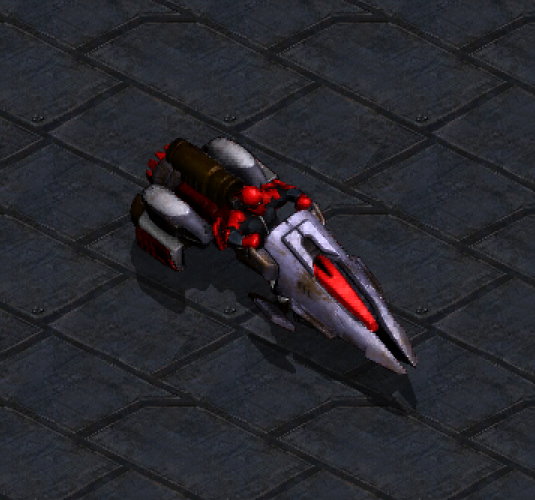
    The Vulture is an unassuming hovercycle with a grenade launcher and the ability to plant land mines that chase nearby enemies and provide surveillance of the surrounding area. Without much armor and a short attack range, I originally thought that they were primarily a scout unit without much extra utility. Watching any competitive Starcraft: Brood War game with Terran will quickly reveal just how important they are to the race’s game plan. Not only do they provide lightning-fast scouting, but their mines are some of the best area denial and vision abilities in the game. In small numbers, Vultures are vicious harassing units and they also pack quite a punch in larger groups.

    Warcraft 3 is Not an Army Simulator

    Although I played a lot of Starcraft, Warcraft 3 is my favorite game of all time and played a significant part in my childhood entertainment. That being said, none of my Warcraft 3 “ladder” matches involved any of the key components of competitive Warcraft: micro, efficient creeping, harassing, and unit diversity. My goal was often to mass a specific unit and smash my head on the keyword in an attempt to appeal to the almighty random number generator. Not only is high-level Warcraft 3 more about leveling Heroes, but armies are often small, varied groups of units that play off of each other’s strengths.

    I now realize that heroes that are generally considered great choices are completely opposite to the ones I liked most and for completely different reasons. Splashy and dramatic spells pale in comparison to the ability to summon “more dudes” to fight your opponent. The Farseer, Firelord, and other summoners dominate the competitive landscape together with heroes who provide passive benefits to their armies like the Death Knight and the Keeper of the Grove. Having more boots on the ground in a game about small skirmishing armies makes sense to me as an adult, but it was completely lost on me as a child.

    There was a reason I played more custom games than ladder matches, but as an adult, I now fully appreciate the value of a Circlet of Nobility. Minor stat benefits aren’t often attractive to Timmy or Johnny, but I’ve aged into being more of a Spike in my early 30s. Despite Blizzard’s downfall and the demise of Warcraft 3: Reforged, I suspect I’ll be playing Warcraft 3, Starcraft: Brood War, and other real-time strategy games in the future.

    Speaking of which, I just helped fund Zero Space, a new RTS game that seems to land somewhere in between Starcraft, Warcraft, and Warhammer: Dawn of War. Check it out on Steam and Kickstarter.

  • 5 Lessons 10th Edition Warhammer 40,000 Should Learn From Age of Sigmar

    5 Lessons 10th Edition Warhammer 40,000 Should Learn From Age of Sigmar

    Games Workshop’s flagship tabletop wargames are just as distinct as they are similar. Both games have developed in parallel over the past few years and still have lessons to learn from one another. With Warhammer 40,000’s 10th edition just around the corner, now’s the time to theorize what the new rules set might look like.

    5. Remove the Psychic Phase

    This lesson could just as easily be learned from the success of Horus Heresy’s 2nd edition, but Age of Sigmar similarly benefits from the removal of a dedicated magic phase. Whether you prefer being able to move before or after casting spells, cleaning up unnecessary complexity will go a long way toward making Warhammer a more approachable game for everyone.

    4. Improve Overwatch

    Neither 40k’s Overwatch nor Age of Sigmar’s Unleash Hell are perfect by any means, but the disparity between which models/factions can actually take advantage of their respective anti-charge mechanics shows a clear favor towards the fantasy approach. Unleash Hell allows the defending player to shoot their opponent at a -1 to hit deficit after a successful charge move is made. These two changes in conjunction make for a much more impactful mechanic, but one or the other alone might make Overwatch more than a niche universal strategem.

    3. Adjust Secondary Objectives to be More Reactive

    No plan survives first contact with the enemy, although the current rules for Warhammer 40k wouldn’t show it. Locking each player into three secondary choices from the onset of a match does little to encourage flexibility and quick thinking from players. Age of Sigmar’s Battle Tactics may not be lauded for their design, but they at least allow players to react to what has already happened on the battlefield and change their plans accordingly.

    2. Simplify Morale

    Why Morale involves two separate dice rolls is beyond me. Everyone complains that morale doesn’t matter enough, so having something more similar to Sigmar’s battle shock might help kill two birds with one stone; that or it could just give folks more things to complain about.

    1. Free Warlord Traits and Relics

    Warhammer is always in flux, so this may simply be a symptom of a specific meta-game that we will soon forget. However, 9th edition’s recent change to force players to pay Command Points pre-game to select warlord traits and relics is something I would immediately reverse. Building a list is an engaging part of the process for many different players and forcing them to sacrifice a vital resource to access flavorful aspects of their army is antithetical to allowing players to differentiate themselves and their lists.

    What do you want to see most of Warhammer 40,000’s 9th edition? Let me know in the comments below.

  • 5 Necessary Changes in 10th Edition Warhammer 40,000

    5 Necessary Changes in 10th Edition Warhammer 40,000

    An inexperienced wargamer might be surprised to find that Warhammer 40,000 is both Games Workshop’s most popular game and a complete mess. With decades of success and a devoted fan base, 40k has surpassed every other game in the industry by a large margin. This success has come at a dire cost; legacy rules and mechanics add to the overwhelming sense that Warhammer in space is as bloated and hard to grok as it is compelling to new players. 9th edition introduced a nearly unimpeachable foundation for gameplay and then added more rules and stratagems than any reasonable person has the patience to wade through. With a new edition on the horizon, here are a few suggested changes to make Warhammer 40k more fun for everyone.

    Stratagems

    Similar to Command Abilities in Warhammer: Age of Sigmar, Stratagems offer players abilities outside of their unit’s datasheets. Both games offer a set of universal abilities that all players have access to, but Warhammer 40k leans much more heavily into each player’s individual stratagems. An average codex has two pages devoted to these abilities and it can be difficult for even experienced players to track which stratagems relate to which units or specific gamestates. 

    Solution: Simply expanding the set of universal stratagems, cutting down the overall number, and moving them to specific data sheets will help remove some of the bloat that 9th edition introduced while also making the interesting abilities easier to remember and therefore use effectively.

    Rules Bloat

    Solution: Get rid of 10-20% of superfluous rules and relegate them to a specific game mode, preferably not Matched Play. 

    The main difference between Age of Sigmar and 40k is the degree to which each mechanic helps support the overall flavor of the game and story that the players are trying to tell. Age of Sigmar has fewer rules and better flavor expression, while 40k is extremely bloated and still fails to execute on replicating the lore that makes players start playing in the first place. 

    Number Crunch

    Having to track primary and secondary objective points, command points, experience points, and other various numbers at any given time while primarily using 6-sided dice makes my smooth brain wince. Counting to 100 is an incredibly inefficient use of a player’s time and mental stack.

    Solution: Move the decimal point over one and make numbers smaller and easier to grok. Instead of having 100 point games, make 10 points the maximum instead. This will require the scoring system to be adjusted accordingly, but it will also make the game easier to play without sacrificing anything of value.

    Flavor Expression

    As mentioned previously, Warhammer 40,000 suffers from having incredibly interesting lore and gameplay that fails to live up to the storytelling that precedes it. Factions like the Adeptus Mechanicus and Necron share very similar space mechanically but have drastically different flavor, while the Adeptus Astartes are carbon copies of one another with the exceptions of Space Wolves and Blood Angels. Another ~33% of the model range is devoted to Space Marines but angry, without many shades of nuance in between. Some of the scariest alien menaces known to mankind end up being as weak as wet tissue paper on the tabletop.

    Solution: Of the fewer rules that remain post-debloating, ensure that those rules do a better job expressing the individual faction’s background lore. Differentiate between factions that have similar themes and ensure that everyone has something interesting to do. Reinforcing how the remaining rules express how cool the world of Warhammer 40,000 is would do wonders toward making a better game.

    Skill Expression

    Despite Games Workshop’s best intentions, Warhammer 40,000 is a competitive game with a growing community of professional players. That being said, there are a few mechanics that cause repetitive game states and leave opponents in a situation where they can predict their opponent’s strategy without much agency to do anything about it. Some data sheets provide a jack-of-all-trades profile priced in such a way that makes other similar options inefficient in Matched Play. 40k even offers a few factions stratagems to help players subvert skill testing abilities and just “do the thing!” Letting players do cool stuff is essential, but making them actually do something of note to achieve it will both make their opponents feel better for losing and make the active player feel more clever for having overcome the hurdle.

    Solution: Leaving players with fewer catch-all tools and forcing them to overcome unexpected obstacles will increase player skill expression while reducing the amount of feel bads felt from losing in the same way each match.

    As Age of Sigmar’s development has successfully trended towards simpler, more expressive gameplay, Warhammer 40,000 has several opportunities to learn similar lessons while remaining a distinct game with its own quirks. Warhammer does not need a universal ruleset. Instead, Games Workshop should let the left hand know what the right hand is doing and learn lessons from the development of its other products and other tabletop wargames in general.

  • Guild Wars 2 is the MMORPG I Always Wanted

    Guild Wars 2 is the MMORPG I Always Wanted

    (Guild Wars 2 – ArenaNet/NCSoft)

    MMORPGs seem especially prone to building devoted fan bases, leading players towards spending most of their time in one or two virtual world’s that they prefer over others. The original Guild Wars was one of those games that I will forever admire as a landmark in gaming history. ArenaNet pioneered many mechanics that pushed the genre in new and unique directions (focusing more on PVP, showing how silly the leveling treadmill is, singleplayer AI teams, etc).

    Once Guild Wars 2 was announced, I admit that I was cautiously excited, but as the game got closer to release and I managed to get my hands on it, that caution quickly turned to disappointment.

    Gone was the revolutionary card game-esque skill system, where players selected eight abilities to bring into combat rather than using the same skills as everyone else of that class. Players could no longer select a secondary class to diversify their strategic options. Guild Wars 2, while innovative in its own ways, removed much of what I admired most about the original.

    That wasn’t enough to stop me from playing, but it did put a damper on my initial playthrough. I managed to level a warrior and travel through the world but stopped playing after a few months. It took me until 2019 to realize that Guild Wars 2 might be exactly what I need in an MMORPG at this point in my life.

    og_rift_lg

    The more I play GW2, the more I realize it’s stunning similarity to my other favorite MMO, Rift. Group quests keep me entertained as I romp through the wilderness with a pack of strangers, monsters attack nearby villages that need defending, exploration is rewarded, the scenery and atmosphere are gorgeous, and the skill system, while not as brilliantly elegant as it’s predecessor’s, is varied and interesting enough to keep me switching up my playstyle every couple of sessions.

    The only thing that Guild Wars 2 is missing from Rift is it’s tab targeting and poorly aged questing system, both of which I do not miss dearly (although I am always nostalgic of boar killing-style quests once in a while). I wish there was fishing, but with the addition of gliders and mounts, Guild Wars 2 is just about as perfect an MMO as you can get without installing Guild Wars 1.