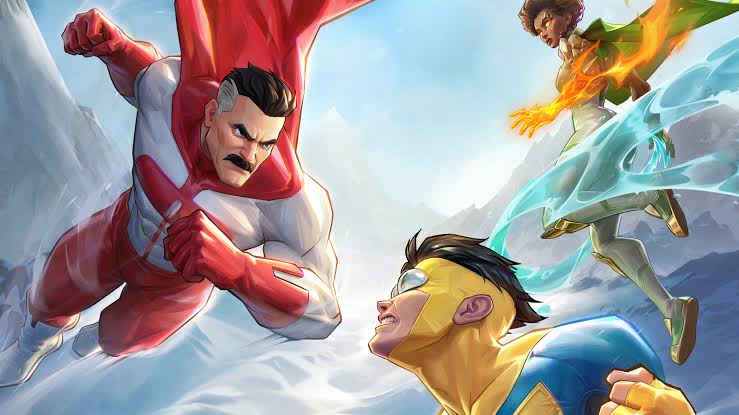
The legacy of the tag-team hyper fighter, a niche within a niche, has a strange hold on a specific set of 30 to 50 somethings who grew up playing titles like Marvel vs Capcom 1, Marvel vs Capcom 2, and Ultimate Marvel vs Capcom 3 (Famously, actor Michael B. Jordan rallied on video for Capcom to re-release MvC2 on modern consoles). Despite those games successes, the sub genre of fighting games known for being the most difficult to get into competitively has had a rocky history outside of the Marvel franchise. Even Disney struggled to find their landing with Marvel vs Capcom Infinite in 2017, but the past year and change has been especially depressing in the world of tag-team hyper fighters.
Our story seemingly begins with a silver lining. The release of Dragonball Fighter Z was a momentous one for the fighting game community; it combined the amazing 3D artwork of Guilty Gear Xrd, the gameplay of Marvel vs Capcom 3, and one of the most recognizable intellectual properties of our time, Dragonball.
Crouching Tiger, Hidden Dragon Balls
Dragonball FighterZ could do no wrong from a financial perspective, but beneath the surface there were unforeseen long term consequences for the game and the genre writ large. At its core, a fighting game based on a popular intellectual property is likely to put more emphasis on the size of their roster to fit as many beloved characters into the game as possible. These games tend to create homogenous gameplay across the cast to help casual players feel comfortable playing whatever character they may prefer. The return on investment for appealing to casual players (read: the majority of people who play fighting games) outweigh the numerous negative effects that this design has for low and high level competitive players: combos become stale and in many cases universal, team building loses its strategic value, and whatever characters lead the competitive landscape become all that players see in match or in tournaments.
It took the fighting game community at large a while to sour on Dragonball FighterZ, but issues remain and seem to have permeated through games that DBFZ would eventually come to inspire. Even casual DBZ fans had something to complain about eventually. FighterZ was aimed at the competitive fighting game audience just as much as casual DBZ fans, which ruffled some feathers. Games like Dragonball Xenoverse or Dragonball Sparking! Zero offered way more proverbial bang for those casual players’ bucks without also asking them to eventually graduate to low-level competitive players.
After Dragonball FighterZ’s release, it became the unofficial dream of any anime fighting game fan to have their favorite anime receive similar treatment. The industry was paying attention as well, leading to several hyper fighters coming out years later. However, many of these projects suffer from the same issues as their inspiration; relying on a casual audience while developing a good fighting game wrapped in a bad product.
Nein Impact & Twoexkayo
First to arrive on the scene, Hunter X Hunter: Nen Impact made it abundantly clear that it was geared for only the sickest of hyper fighter sickos (read: me and a couple hundred other people). Then the game fell flat for a significant portion of that notably small community without a reliable rollback net code implementation. As much as I enjoy the game, Nen Impact will likely remain an 8-ing oddity rather than a fighter to introduce to Hunter fans who rarely play fighting games.
Riot Games’ 2XKO had a lot going against it even before it launched, but by most accounts it’s a fun return to 2v2 tag team gameplay. The developers should be proud of what they were able to accomplish, but even the best fighting in the world likely can’t make the free to play model work. Add on top of the live-service model the ability to actively tag between two fighters and perform impressively long and complex combos on opponents, and it becomes evidence that 2XKO had to perform a miracle to develop the kind of casual audience a free to play game needs to survive.
Then Invincible VS (INVS) came out in April and it was a mess. I haven’t decided whether being a fan of the Invincible franchise helped my opinion of the game or hurt it, but either way, it would be impossible to ignore all of the problems with INVS despite me enjoying it and playing way too much (I’ve been grinding ranked to try to get out of Diamond). In retrospect, the problems with Invincible VS seem to indicate significant problems with the project before release.
Invinki?
Invincible VS is a 3 vs 3 tag-team hyper fighter designed by Quarter Up, a subsidiary of Skybound Entertainment. Co-founded by Robert Kirkman, one of the creators behind the Invincible comics and television show, Quarter Up acts as the game development division spun up to create games based on Image Comics IPs. The team consisted of various notable developers with fighting game experience, including folks who worked on the first season of Killer Instinct (2013) and FGC figureheads Rip and Vicious.
In a departure from the comics and cartoon show, Invincible VS is a 2D fighting game with gorgeous 3D renditions of the franchise’s cast. The game offers a Story Mode, an Arcade Ladder, Local Versus, Ranked Online Play, Casual Online Play, Lobbies, Leaderboards, Tutorials, Training Mode, and a plethora of unlocks related to the comics and show. A roster of twenty characters, including two of the released downloadable fighters, give players plenty of room to create a team of three to fight with.
Alongside tag-team hyper fighter tropes like tagging and calling in assists, INVS offers plenty of unique mechanics that create for a diverse gameplay experience each time. Players can tag between fighters while comboing their opponent to engage in a bespoke guessing game (often called an RPS or rock paper scissors) that could either extend the combo, stop the combo, or reverse the combo entirely depending on what options each player picks and how quickly they can respond to their opponents visual cues. Fighters are able to cancel their normal attacks into special attacks without the usual terms and conditions that other fighting games require players to agree to before playing. Invincible VS even takes the act of dashing across the screen up to eleven by allowing players to spend their meter to drastically speed up their movement and punish unexpecting opponents.
The additions to the formula that make Invincible VS unique are arguably some of the biggest culprits for the game not reaching their shareholders’ expectations despite hitting the 1 million player milestone, but they’re certainly not the only problems.
What Will You Have After 500 Years?
Projects of this scope are not the result of one person or role. Game development is hard enough as it is for people to try to scapegoat an individual team member for a specific game’s success or failure. There are almost always multiple points of failure (or success) and other cascading problems that build upon each other as a project develops. My goal is not to find blame or diminish the hard work that the team at Quarter Up put into making one of my favorite games of the year. However, I may have a thing or two of interest to say about the game and the issues that could have led to Skybound Entertainment laying off approximately 75% of the staff at Quarter Up only a few months into the first season of the game.
Gameplay
As previously mentioned, Invincible VS is at its core a simplified tag-team hyper fighter. Pitting two teams of three super heroes or villains from the Invincible universe is one hell of a pitch, and it has certainly found an audience since launch. I don’t think Skybound Entertainment considers it a success, given the fate of most of the team at Quarter Up, but like Nen Impact and 2XKO, the game suffered from both following in Marvel vs Capcom 2’s footsteps and failing to live up to a majority of its audience’s expectations.
At a high level, Invincible VS’s gameplay can be broken down into several layers that players break through as they get better and hit certain milestones. For the casual audience, the game just needs to be fun for fans of the franchise to mash buttons and see their favorite characters duke it out. The tag mechanics are a double edged sword for these players; on one hand they can play with more of their favorite characters, but on the other they have more mental stack to deal with while playing. From a gameplay perspective, the game suffices as an action figure simulator for those who only want to go surface deep.
Layer One
If a player gets possessed by the competitive spirit, they realize that mashing is very effective on offense or defense. This layer has a sharp drop off of players who find being asked to practice a video game too much to bother. Simple tactics like moving just outside the range of the opponent’s wake up roll help players rise above the most casual of Invincible fans. Characters like Battle Beast, Invincible, and Conquest offer plenty of room for mashing armored moves and avoiding having to think too hard about blocking or whiff punishing.
For the lowest level competitive player, this gameplay may be a welcome relief from other fighting games that require proper timing, manual execution, or forethought. However, players who enjoy the low level gameplay of Invincible VS may be turned off by the fact that slightly better players blow them up for tactics that used to guarantee free wins. I’d expect another large drop off of players that don’t pass this milestone.
Layer Two
The second layer involves players using their assists to “skip” the neutral phase (when both players are at a neutral state, not hitting or blocking one another). These players understand the basics of how to build a combo, how to defend against mashing, and how to confirm a combo off of an assist call. Without their assists, this level of player struggles to maintain their advantage and generally back off as much as possible to stall for time. There are plenty of mechanics to counter this kind of behavior, namely Boost Dash, but players who live in the medium competitive community will likely be content not progressing further unless forced to.
Layer Three
Third is usually when folks learn defensive mechanics like Heroic Strike or using armored attacks deliberately to beat their opponents’ offensive pressure. This layer can be particularly frustrating due to the fact that the offensive mechanics of Invincible VS can often be more powerful than the defensive options in specific situations. Motion inputs exacerbate this issue by making armored reversals more difficult, especially compared to the simple input versions. If the developers had been proverbially throwing spaghetti at the wall, this layer is when those noodles start to come together.
Layer Four
At risk of oversimplifying fighting games, the fourth layer is achieved once players begin incorporating all of the game’s mechanics together in tandem. For Invincible VS, that often means knowing when not to utilize a mechanic even if it’s tempting. Proper use of Heroic Strike, Assist Break, and Combo Tag can make or break a match, but overuse of any mechanic can quickly lead to defeat. Assist Break is particularly dicey, given that it is so punishing for the user if not used correctly. I expect that Combo Tag will similarly see less use over time as there are safer and more beneficial ways to mix-up your opponent and tag out.
Layer Five
The last and potentially final layer is for folks who are burning the trail for the game competitively. There are definitely those who have become masters in INVS since April, but I expect that number to grow as time goes on. The existence of this level of player suggests a certain level of quality for the game itself, but it doesn’t tell the whole story of the average player’s experience with Invincible VS.
Although I consider myself a fighting game sicko, I understand that there are far too few of us to sustain the kind of budget a fighting game needs to be developed these days. A successful game in this space needs to be a good product first and a great fighting game second. The best way I can describe Invincible VS is a mess of ideas that solidifies into a pretty fun hyper fighter; some mechanics seem directly focused on bringing in casual fans of the series while others are clearly aimed at high-level competitive play.
Even the idea of starting the Invincible franchise’s first foray into video games with a fighter was bound to turn off a certain number of casual fans. Choosing a niche (hyper fighters) within a niche (tag-team fighters) within a niche (fighting games) and then giving aspiring competitive players so many boundaries to progress may have had an effect on the game’s public opinion only four months after its release.
I applaud the development team for the amount of references and story beats that they were able to jam into each character’s move lists, but several members of the cast feel rather uninspired compared to their comic book or television counterparts. Those fighters feel like barebones interpretations of the characters to fill a roster, rather than intentional love letters to the franchise. Cecil’s design is particularly flaccid; he shoots guns and commands reanimen but not much else.
Everything Goes, But Nothing Matters
The flexibility of the combo system, while great for newer players to mash to their heart’s content, is divisive among the most deranged of fighting game sickos. Shang Tsung once wisely said, “If anything works, nothing matters,” or something like that, which is an apt description of combos in Invincible VS. There are more optimal combos than others, but the margin is small and the discovery phase is less about learning the combo system and more about learning what moves have weird damage or combo meter scaling values. Why attempt a cool combo when looping a special move with wonky scaling 8 times into an ultimate attack does a better job?
What the combat system does encourage is annoying, frustrating, and potentially mood ruining combos that do more emotional damage to the opponent than actual damage to their fighter. If making a cool combo that’s also optimal damage is nearly impossible, then performing combos that make your opponent want to uninstall the game is the next best thing. This is just one small design decision that helps create a game that isn’t very fun for both players.
From a far, it feels like the developers of Invincible VS and other similar titles really wanted to make a fighting game like the ones from their childhoods, but have to jam the game full of misguided accessibility features to secure funding. Playing local versus on console or in arcades is a much different experience than what most fans of fighting games have these days; the mechanics of Invincible VS specifically crumble under the pressure of a WiFi internet connection and encouraging toxic behavior only helps make the existing community more insular and uninviting. If someone acted like a total chud to be in person, I would just never play against them again, but the amount of rage quitters, tea baggers, one and done-ers who have made Invincible VS their home make the online experience a test in patience.
The Invincible intellectual property works against INVS in ways that I didn’t initially expect. Whereas most fighting games include snarky pre and post combat dialogue, Invincible’s mature themes and violent nature makes the experience of getting your ass beat even worse. Not only are you bad at fighting games, but Mark Grayson actively mocks you for thinking the game was going to be fun in the first place. For fans of the series, this is clearly a reference to the fight between Invincible and Conquest, but for everyone else it just sounds like the developers knew they made a game that was actively detrimental to one’s mental wellbeing.
Overall, the gameplay of Invincible VS gets a three point five out of five Mark Graysons for a solid high-level competitive landscape marred by a rough and frustrating path through lower level strategic layers. Like a lot of fighting games, Invincible VS is best played offline with friends if you can manage it.
Gameplay: 3.5/5
Artwork
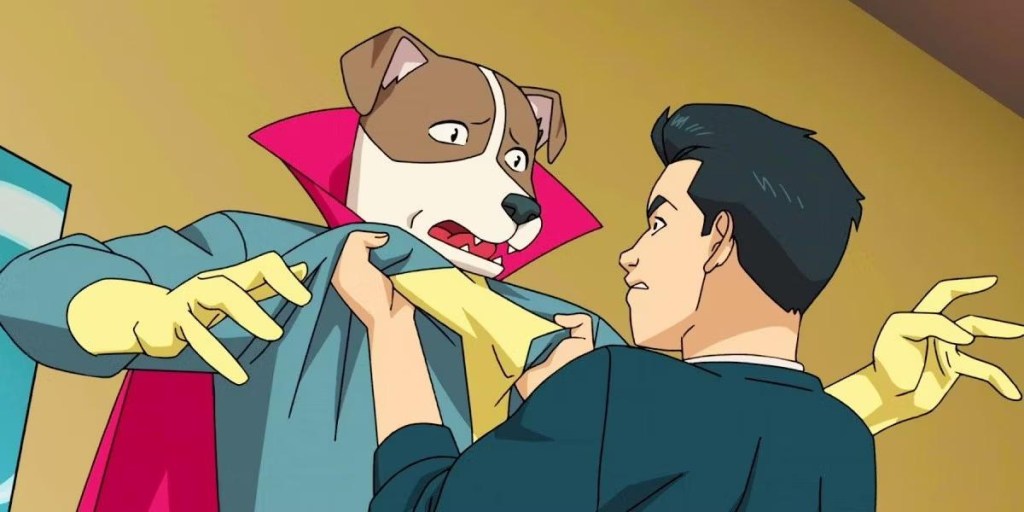
Invincible as a series has crossed the gamut of visual mediums, starting with a comic book run, expanding to animation with the Amazon show, and now into the realm of 3D with Invincible VS. Although the art style differs across each entry in the franchise, there is a visual continuity and fidelity between that makes me want to read, watch, or play more. The story’s cast are well rendered in the third dimension and their keyframe-focused animations, while divisive, are unique and suggest an homage to its roots as a comic book.
A few minor graphical glitches don’t deter from the game’s appeal. In fact, they do the opposite. There’s something charming about seeing parts of the character models load in. Special effects don’t oversell their animation’s impact and avoid cluttering the screen. Invincible VS’ visuals may not be everyone’s cup of tea, but expecting Mortal Kombat 1 level of character detail from a comic book fighting game is nuts.
My only complaint, if you can call it one, is that the soundtrack by The Glitch Mob is forgettable and perhaps a waste of money. I don’t expect fans of the group are itching to pick up Invincible VS for the OST, and I don’t expect there to be a lot of crossover between fans of Invincible either. Normally, it wouldn’t be worth mentioning, but a game with more problems to count spending money to bring in name brand musicians seems misguided at best.
The artwork of Invincible VS gets a solid four point five out of five Mark Graysons for its ability to blaze a trail into a new dimension and realize these characters in new and creative ways.
Artwork: 4.5/5
Story
Saving the worst for last, the story mode (and offline modes for that matter) is the biggest risk that Invincible VS as a project could have made. Invincible fans are not particularly unique, but those hardcore fans are the most important stakeholders for an IP-based game like INVS. For folks who were excited to see their favorite super heroes and villains duke it out in 3D before moving on to the next game, Invincible VS gave very little incentive.
Most fighting game story modes are minimalistic to a fault, but Invincible VS’ story mode could be easily replaced by an hour long Youtube video. In fact, I would encourage any fan of the series who would only be interested in the story to skip Invincible VS altogether. Not only is the storyline uninspired, it actively makes the game less interesting from a narrative perspective.
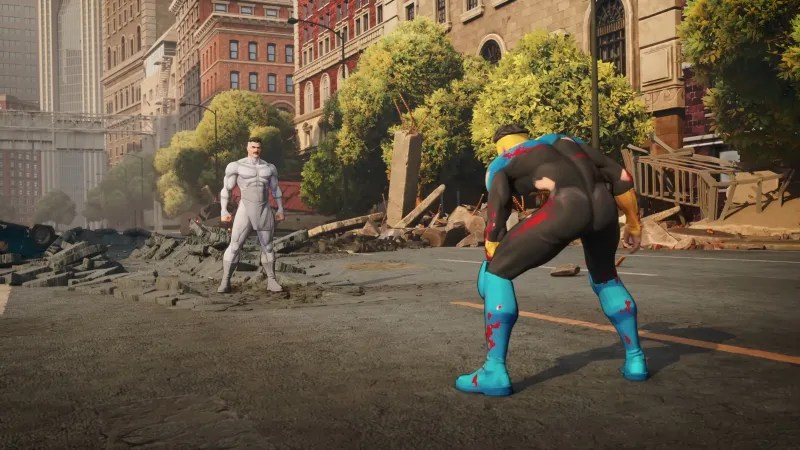
Many fighting game franchises offer an entry colloquially called a “dream match,” in which the fourth wall is ignored and players are expected to treat the story or roster as non-canonical, or not a part of an overall story or narrative. Instead, Invincible VS decides to spend an hour explaining why Omin-man and Cecil can fight without Nolan punching through his former boss’ face; a question that wasn’t asked and didn’t need answering. Once someone has played the story, any emergent narratives are squashed by the fact that half the cast (if not more) aren’t actually who they say they are, and are therefore weaker than the genuine specimen.
A story mode that not just disappoints but actively makes the rest of the game worse for it is one hell of an accomplishment. If somehow the remaining skeleton crew of a development team is able to prove that the launch story mode is only part one of five, I would be glad to reevaluate it as a product. For now, the story of Invincible VS is at best a great pilot for an 3D animated show for streaming, and at worst a disappointing waste of the game’s budget.
The story for Invincible VS scrapes by with one Mark Grayson out of five for its ability to not only turn off its primary audience but also disappoint folks who aren’t all that interested in story modes in the first place.
Story: 1/5
Final Thoughts
2026 is not a great year to be a fighting game fan and Invincible VS didn’t make things any easier. As a fan of Invincible, I’m conflicted more than I would normally be. I’m at the point where I can’t honestly recommend the game I enjoy to anyone who isn’t the most seasoned of fighting game players, and that sucks. Not because I won’t continue to enjoy the game, but because I know there’s very little chance for a do over. New Dragonball fighting games are a dime a dozen, but there likely won’t be a new Invincible game anytime soon.
Out of the four main facets of gameplay that Invincible VS offers (Singleplayer, Online, Local, and Training Mode), half of them are under developed, unfinished, and the worst sin a game can make, not fun. I wouldn’t wish playing online ranked mode on my worst enemy and the singleplayer content is more than just lacking, it’s bad.
Overall, Invincible VS gets an average score of three out of five Mark Graysons.

