Tag: review

  • Simple, Fun, and Engaging – The Fall Guy Review

    Most of what I heard about The Fall Guy before seeing it myself was folks pondering on Twitter, “who is this movie made for?” It turns out the movie is made for folks who love movies. Whodathunkit?

    Rarely do I get to watch a movie that feels so jam-packed with passion and love for the art form. Not only is The Fall Guy a movie about movies, it’s a movie about the people who make movies. Emily Blunt plays a stunt coordinator turned director playing opposite Ryan Gosling, a stunt man forced into early quasi-retirement who is brought back for one more gig. Winston Duke excels as the movie-within-a-movie’s stunt director; he’s a great addition to an already stellar cast. What was marketed as a nonstop action romp turned out to be much more of a romantic comedy through the lens of film making, which was a pleasant surprise. The writing was witty, the actors looked like they were having a blast, and the visual effects were stunning.

    Compared to the director’s other similar project, Bullet Train, The Fall Guy kept me engaged throughout and was more polished overall. I usually find myself nitpicking dialogue or special effects if I’m not really into a movie. Besides leaving to get drink refills and a quick bathroom break, my partner and I were stuck to our seats, nearly forgetting to eat all of the snacks we snuck in with us.

    The question is, was this movie worth watching in the theaters instead of catching it on streaming in the comfort of my own home? I guess that depends on your living situation, but The Fall Guy was worth watching on the silver screen. Health concerns notwithstanding, the theater feels like the right place to see a movie that is a celebration of the industry as well as the art. TFG may not have a gimmicky popcorn cup like Dune 2, but it was worth seeing in the theater for the sake of talking about it on the walk to the parking lot.

  • Warhammer Age of Sigmar: Dominion – 3rd Edition Review

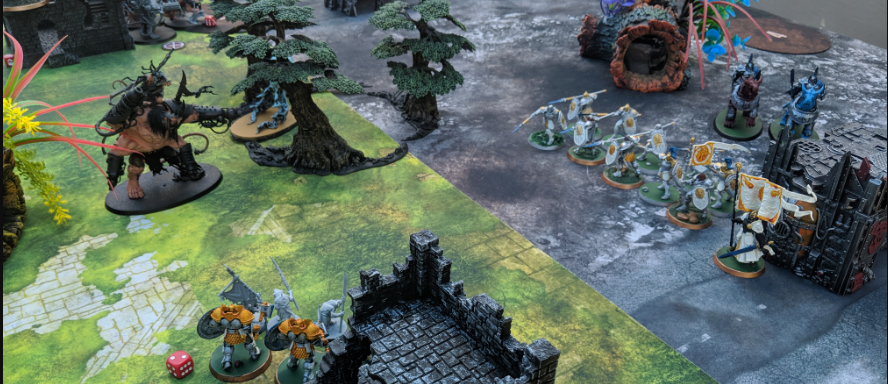
    Tabletop wargaming is my generation’s model train. I grew up going to train conventions with my dad, collected Warhammer 40,000 models in middle school, and admired Warhammer Fantasy from afar for years. It wasn’t until the 2020’s pandemic that I took another look at my miniature collection and regained a love for tabletop wargaming. After a year and a half of learning Warhammer 40k’s 9th edition, I purchased an Age of Sigmar Dominion box and fell head over heels for the modern fantasy equivalent of Games Workshop’s most popular tabletop wargame.

    For context, Age of Sigmar is not Warhammer Fantasy—it is a brand reset for the fantasy version of Warhammer and presents a totally new product despite similar models being used in both games. While Warhammer 40,000 has the baggage of decades of legacy mechanics and rules, Age of Sigmar strips back the bloat and attempts wild and flavorful approaches to traditional wargaming tropes as opposed to the strict interpretations of the 41st millennium. 

    The core rules for Age of Sigmar are relatively simple compared to its contemporaries and help engage the players in the cooperative storytelling that makes for fun gaming sessions. Mortals of the various realms face off against terrifying daemons, horrifying beasts, and followers of chaos alike. 

    Without a ton of rules bloat to lull your brain to sleep (or boredom), Sigmar relies heavily on universal mechanics that all players can take advantage of. The more flavorful abilities are left for specific factions to utilize, but they rarely take center stage in a game primarily around statistics and predictability. This creates a game flow that helps players build up knowledge and familiarity with the game regardless of which force they select to field (the exception being OCR).

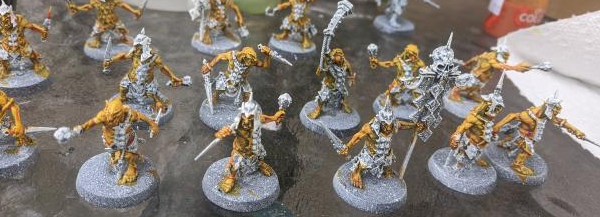
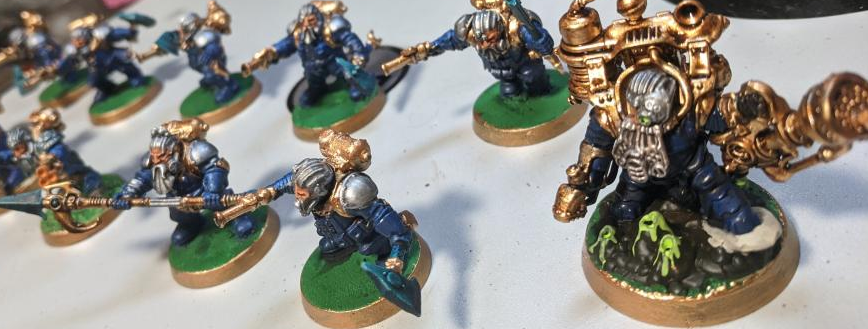
    After growing up with old metal models and janky instructions, assembling the models from the Age of Sigmar Dominion box was a breeze! Not only are the models pegged for easy, no-glue-required assembly, but their design is sleek and elegant enough to allow for more experienced builders to trim the pegs off and work with or kitbash the plastic to their heart’s content. If you like the honorable Stormcast Eternals or the slimy Kruleboyz, both armies are a steal at ~$60 each.

    If you’re interested in getting into tabletop wargaming but don’t know where to start, consider picking up the Age of Sigmar Dominion box (they currently sell for around $120 USD) to gain access to two 1,000-point armies that can be played after assembly. If you’d rather try something smaller scale, there’s always Age of Sigmar: Warcry to test your mettle against opposing warbands instead of opposing armies.

  • The Midnight Gospel – A Review

    Being a cishet white dude almost guarantees that I’m into podcasts of some sort. I listen to NPR, various gaming shows, and a couple of comedy podcasts to help lighten the mood. I often find my specific preferences too idiosyncratic to make sharing podcasts with all but my closest friends practical. The Midnight Gospel, however, is one podcast that I heartily recommend to just about anyone who enjoys lengthy cartoons for adults. What you get in return for a few minutes of your time is a wild ride that was worth the price of admission simply for the conversation with friends after watching the first episode.

    While most podcasts rely on specific topics or guest speakers to guide the conversation, the Midnight Gospel flips the format on its head to form an amalgam of spontaneous conversation and scripted comedy that is worth experiencing at least once. Whether you can stomach the rest of the first season is another question entirely.

    I want to avoid spoiling anything, so I’ll try to be as vague as possible in my description. The Midnight Gospel is a story about an intergalactic, perhaps interdimensional, podcast host who interviews various denizens of the cosmos on a variety of topics ranging from drug use to the teachings of Ram Dass. That’s it. That’s all you’re going to get. If that sounds up your alley, then today is your lucky day! The Midnight Gospel can currently be found streaming on Netflix.

    For everyone else who may not watch but is still interested, I’d say that Midnight Gospel absolutely nails what it sets off to accomplish. The pseudo-philosophical dialog and psychedelic atmosphere makes it an easy cartoon to throw on while hanging out with friends just to gauge their reactions. I fully expect TMG will fall somewhere on the cultural impact spectrum akin to Mystery Science Theater or other late-night stoner classics.

  • WAAAARRRRGGHHHH – Warhammer Online: Age of Reckoning Review

    WAAAARRRRGGHHHH – Warhammer Online: Age of Reckoning Review

    While I’ve never officially studied law, I recognize the effects that intellectual property rights have had on the preservation of gaming history. This is why I’ve supported private servers for MMORPGs for years, namely because profits stand in the way of maintaining important video gaming artifacts as they were intended to be played. MMOs that have been long shut down by their copyright holders have found new life in private servers that often break the original game’s terms of use. One such game has benefited greatly from the popularity of a private server: Warhammer Online.

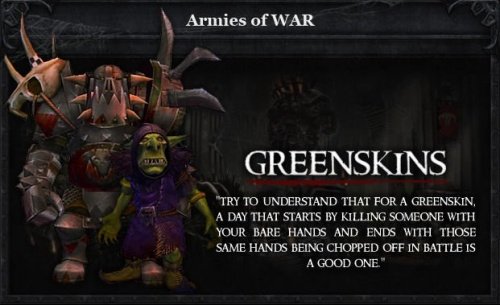
    Like many MMORPG projects of the time trying to find their niche, Warhammer Online takes many of the best qualities from its predecessors and adapts them for a more PVP-focused approach. Although I didn’t have a chance to play it on its initial release, I’ve wanted to jump into the world of Warhammer for a long time to see what inspired some of my favorite features from Rift, another MMO from times gone by. Public quests, in particular, piqued my interest, as they offer a unique play experience for players who prefer fighting NPCs rather than players of the opposite faction. Like most theme park MMOs, Warhammer seemingly has something for everyone but appeals specifically to those who heed the call to war and fans of the well-established IP.

    When the game was originally being marketed, a large part of their outreach went into a series of production updates and videos that highlighted their design decisions and delved into specific details for all of the classes and specializations. This was when I originally heard about the project. The first class that jumped straight out at me was the Chaos Marauder, a melee class who specializes in mutating their body into various horrific forms. Similar to stance dancing as a Warrior in World of Warcraft, the Marauder can switch between several mutations to quickly adjust their playstyle. Needless to say, the first toon I rolled up was a Marauder with a giant mutated arm, so I christened him Fisterroboto.

    Chaos mutations sold separately.

    Once I got over the dated graphics, I was absorbed into the world of Warhammer and wanted to explore all that it had to offer. The normal questing experience is very similar to pre-Cataclysm World of Warcraft, asking players to navigate through areas with plenty of monsters to slay, quests to complete, gather resources, and larger obstacles to overcome as a group. What makes Warhammer Online stand apart, however, is the ability to begin PVPing straight out of the gate and teleport around the world to where the action is actually happening. After leveling from 1 to 10 and figuring out how to play a Marauder effectively, I entered a player versus player zone to see what all the fuss was about.

    The War Report offers players the ability to see exactly what is happening on the server at that time and teleport to whatever area or event might interest them most. Seeing that a nearby PvP zone was contested against the Order, I decided to lend my allies aid in battle. After wandering around and sneaking through caves, I found myself teaming up with a few other Destruction players to capture objectives, gather war supplies for our side, and slay oncoming Order players. Although we were outnumbered, my Squig Herder pals and I fought valiantly, using guerilla tactics to target players left out from their group and cut off supply routes for the enemy forces. After gathering a small war band and sieging an enemy watchtower, we were unfortunately defeated by another zerg of Order players. They not only outnumbered us, but they also had plenty of support and healer classes to help keep their melee players alive. After regrouping at the respawn location and trying again a few times, I called it quits and tried a few different classes.

    With my melee DPS character out of the way, I wanted to try some of the ranged classes that Warhammer has to offer. First on my list was the aptly named Squig Herder, the Destruction’s ranged pet class. Like many of the class designs in Warhammer Online, the Squig Herder has a unique ability that drastically changes their playstyle on the fly. Called Squig Armor, this ability allows the Goblin player to be swallowed whole by one of their pet squigs while controlling it from the inside of its mouth. Being able to switch from a ranged DPS class to a giant angry meatball at my whim was worth trying out the class alone. I also tried my hand at the Order’s Shadow Hunter, the Elf equivalent of the Squig Herder sans an animal companion. The Shadow Hunter swaps between stances, including a ranged stance for sniping, a melee-oriented stance, and a short-ranged stance as well. Finally, I tried my hands at the Warrior Priest, a melee healing class for the humans. Surprisingly, even the heal-bots have interesting mechanics to juggle while ensuring that their teammates are topped off. The Warrior Priest’s abilities generate Righteous Fury which can be spent on healing spells or buffs, transferring the player’s offense into defense for their party.

    If I had any complaint while leveling my various characters, it was that itemization felt strange at times and there weren’t enough reasons to explore my surroundings besides finding a stray public quest across a zone or searching for an opposing player looking to throw down. When a monster drops loot in Warhammer Online, there is a chance that it will not be an item you will be able to use. Since classes are so specialized, both in terms of playstyle and in terms of their equipment, most pieces of gear are only able to be used by specific classes. This means that after an adventuring session, a player may have collected one or two items that they’ll actually be able to use and eighteen others that they can sell as vendor trash. While this felt strange at first, it could just be a case of MMO culture shock since World of Warcraft had me selling just as many gray items to vendors and I couldn’t even trade those off to other players if they really needed them. Theoretically, the design should encourage players to interact, trade, and, hopefully, build connections, but I couldn’t be bothered and ended up selling most of the gear I collected for the spare change they were worth.

    Warhammer Online’s streamlined design offers players who are accustomed to World of Warcraft’s quality of life changes plenty of ways to navigate the world with ease. This, however, diminishes the feeling that there is a thriving world out there in the first place, rather than a series of zones connected by flight paths. This isn’t to say that the game lacks areas to explore, but that there just doesn’t seem to be much reason to do it. Thankfully, the landscapes and outposts are well designed both in aesthetics and in function. There’s something oddly thrilling about riding your trusty steed over a demolished siege weapon and up onto the broken wall of an enemy fort or sneaking through a deserted cave to assault the enemy from behind.

    After taking a good share of Order and Destruction classes for a spin, I think it’s safe to say that I really enjoy Warhammer. Sure, it has plenty of faults, chief among them that the only way to play it currently is on a private server, but what it loses in graphical fidelity and strange mob pathing/animations, it makes up for tenfold in style, charm, and its overall presentation. For a twelve-year-old PvP-centric MMORPG based on a franchise that has seen better days, Warhammer Online still stands the test of time against stiff competition in the MMO space. The fact that I’m actively playing it over other modern games that I’ve spent a considerable amount of money on is a testament to how well the game was made and how much passion and hard work the community has put into keeping it alive all this time. If you’re willing to delve into the world of private servers, you owe it to yourself to give Warhammer Online a try regardless of whether you’re a returning veteran looking to claim a few more skulls for your throne or an MMO fan looking to sink their teeth into something new.

  • All Aboard the Z Train! – Train to Busan Review

    All Aboard the Z Train! – Train to Busan Review

    With Bong Joon Ho’s Parasite racking up Oscar accolades and bringing renewed attention to Korean cinema, it felt like the perfect time to watch another film that I’ve had my eye on. Like a good horror movie, Train to Busan explains its premise just enough for us to jump right into the story; an absentee father promises to bring his daughter to see her mother in Busan for her birthday, but not everything is as it seems. Tension begins to ramp up as a sickly woman flings herself onto the train just as it’s about to depart, only to be followed by a swarm of zombies rushing the train platform.

    Like Parasite and Snowpiercer, Train to Busan delves deep into the struggles of class and politics while also telling a thrilling tale. In fact, the similarities between the two most popular train-based Korean films to break into the international market are hard to ignore. Both take place on a train and use the convenient separation of the train cars to both physically and metaphorically distance the characters from one another while taking full advantage of the limited space to create an unnerving sense of claustrophobia.

    In terms of the zombies themselves, Train to Busan decides to take the World War Z approach of fast, mindless, and twisted undead who trample over one another in a mass of flesh and rapid hunger. This helps keep the characters and the audience on edge, but the world-building isn’t as internally consistent as it could have been. As the protagonist struggles to understand the situation, I also had a hard time stitching together clues to figure out the origin of the outbreak or even the terms on which the plot was progressing forward. For example, there is a scene that involves soldiers falling out of helicopters, only to rise as zombies a moment later and attack nearby civilians that left me wondering if the whole incident was an accident or a direct attack by weaponized zombies.

    As the story and train get moving, plot points slowly fall into place and become a lot easier to predict. The occupants of the train are widdled down to a small cast of plucky survivors, including a baseball player, a cheerleader, a pregnant woman, and her husband, and a narcissistic COO of some corporation. Although they fit neatly into archetypal horror movie roles, each brings a personality and charm to the film that helps keep it from being just another zombie gorefest.

    Where the story diverts from horror tropes, however, also happens to be the film’s weakest point. For a movie that otherwise left little room for sentimentality, I was surprised at the sharp left turn towards the end of the film that plays more like a Korean day-time drama than an apocalyptic horror flick. It suffices to say that Train to Busan desperately wants to tear at your heartstrings, almost to a melodramatic degree. The dragged out ending with borderline nonsensical character decisions and goofy sentimental moments only helped sour what would have otherwise been an outstanding film.

    All that being said, the good aspects of Train to Busan are hard to ignore despite its obvious flaws. It’s a zombie flick with a fun premise, interesting characters, and a great sense of pacing that only falters towards the end, long after you’ve stopped caring about the plot. If you’re a zombie/horror fan or want to explore some of what Korean films have to offer, this would be a hard title not to recommend.

    Train to Busan is currently streaming on Netflix.