Tag: update

  • Deadlock: Old Gods, New Blood Review or Why We Play Games That Hurt Us

    Deadlock: Old Gods, New Blood Review or Why We Play Games That Hurt Us

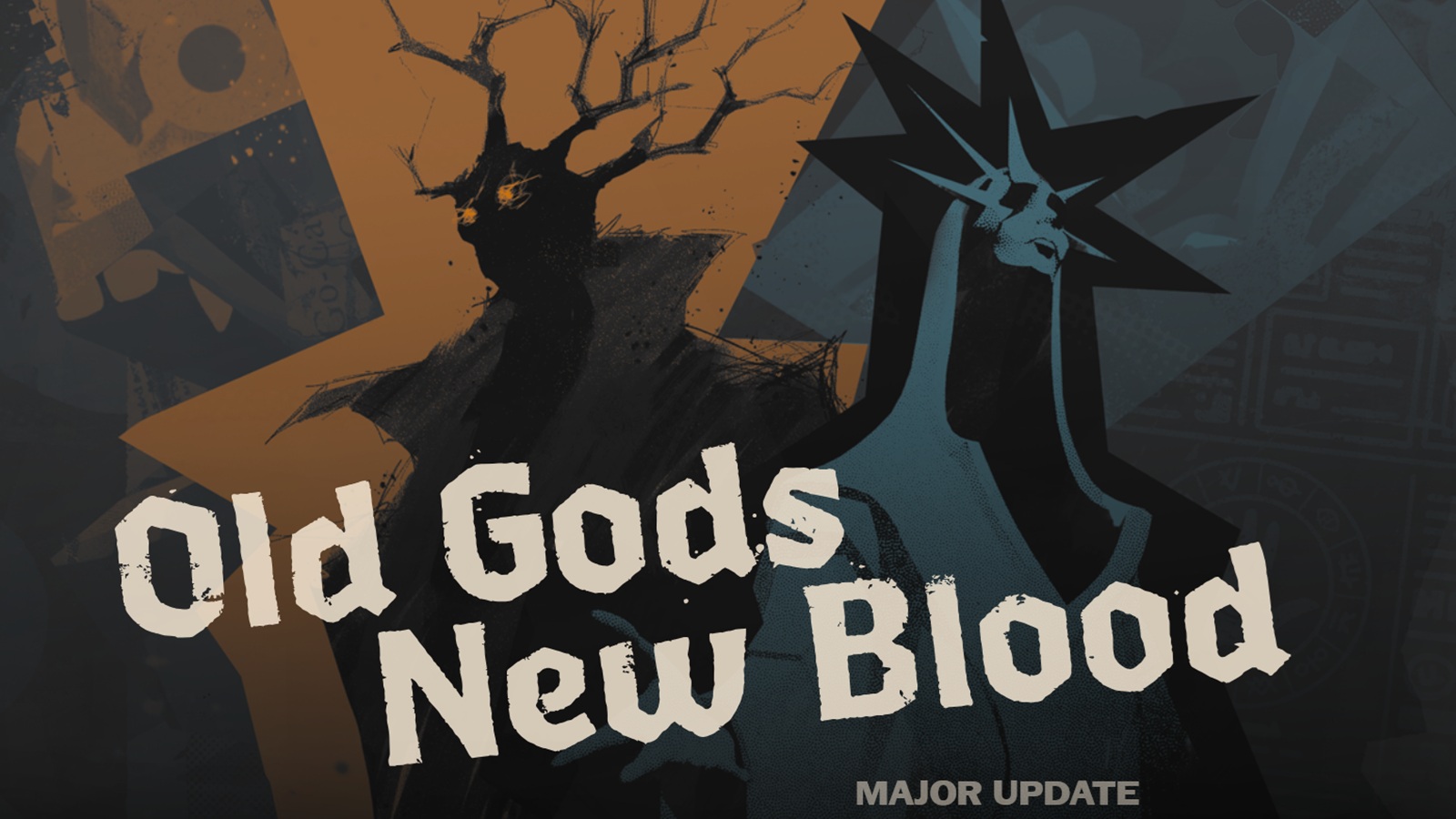
    Deadlock may be a game without an intended audience, but it’s clear that hasn’t stopped Valve’s latest experiment from succeeding. After an extended period of open beta testing, the Old Gods, New Blood patch has updated the game’s overall look and feel to be more cohesive and expressive. Red team is now fighting under the Hidden King and the Blue team are followers of the Arch Mother.
    What remains from my previous endeavor in Valve’s fictional New York City is gameplay that hasn’t evolved much past Defense of the Ancients circa 2006 fused together with a loose interpretation of what it means to be a third-person shooter. The game is still split into two major components: character select and item select. Normally, I would complain about the fact that Valve is dead set on making this more akin to an ARTS like DOTA or Smite than a traditional “hero” shooter. Items in Deadlock are exemplary of what they should be for the genre it is in, despite me wishing they didn’t exist. Being able to adjust your character’s strengths and weaknesses throughout a match is very useful to avoid players feeling like games are decided solely by character select. All in all, the MOBA-style gameplay loop offers players who might not be comfortable with a more shooting focused third-person shooter, making Deadlock easier to find a friends to play with than others.

    The biggest deciding factor in a character’s strategic diversity is their weapon of choice, often designed for aesthetic purposes, that lead to lopsided character balance and annoying match ups. McGuiness, for example, can benefit from a wide array of different types of items, but due to her gatling gun-styled weapon, she can also upgrade her basic attack to a ridiculous level. This can feel like a lottery at times, as the usefulness of a character’s weapon often feels like its based on aesthetic preferences from the character artists rather than intended game design.

    What’s left over is better than the sum of its parts, but only just. Every aspect of Deadlock seems to be designed to bring in as many new players to both third-person shooters and ARTS/MOBA as possible while greasing the wheels and leaving up the guard rails up to avoid giving players any reason to stop playing. What’s more accessible than a game that plays itself once you’ve been fed enough and can follow an enemy’s silhouette with your crosshair?

    On the topic of accessibility, Deadlock suffers from the same issues as its predecessors—namely that it has 30+ characters and even more items that can fit into up to eight item slots, making for an innumerable amount of information for new players to digest before playing optimally. How games like this get new players and folks still struggle to play fighting games is beyond me.

    Last of note is how Valve has been releasing new characters. Each big update has come with a set of fresh heroes to play as and against. 2025 brought with it Victor, Paige, Drifter, Mina, and Billy. From my experience, four out of six of these characters are either:

    1. Annoying as hell to fight against
    2. Way too powerful when fed early on
    3. Lacking much skill expression to make better players stand out
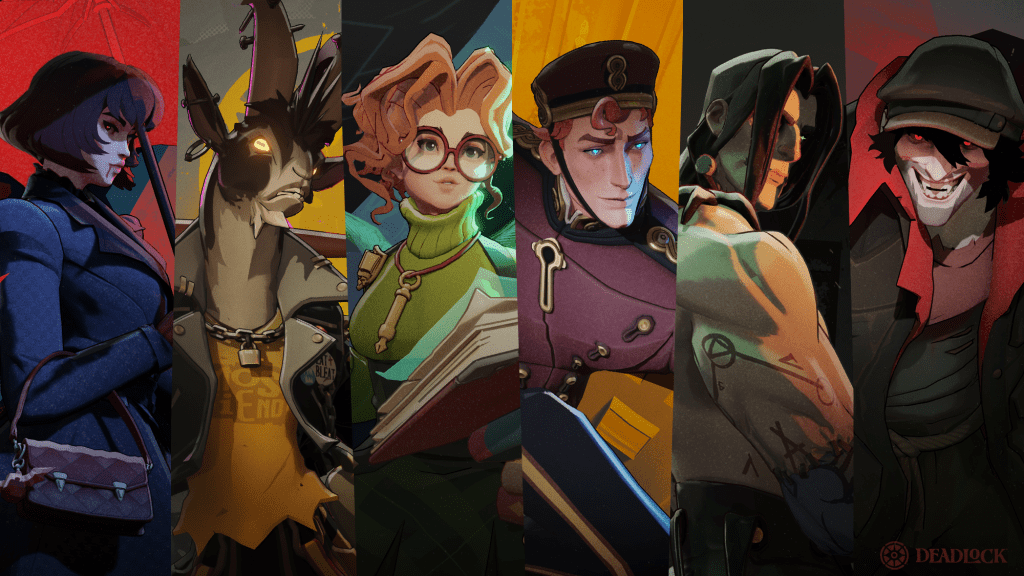
    You can guess who is who.

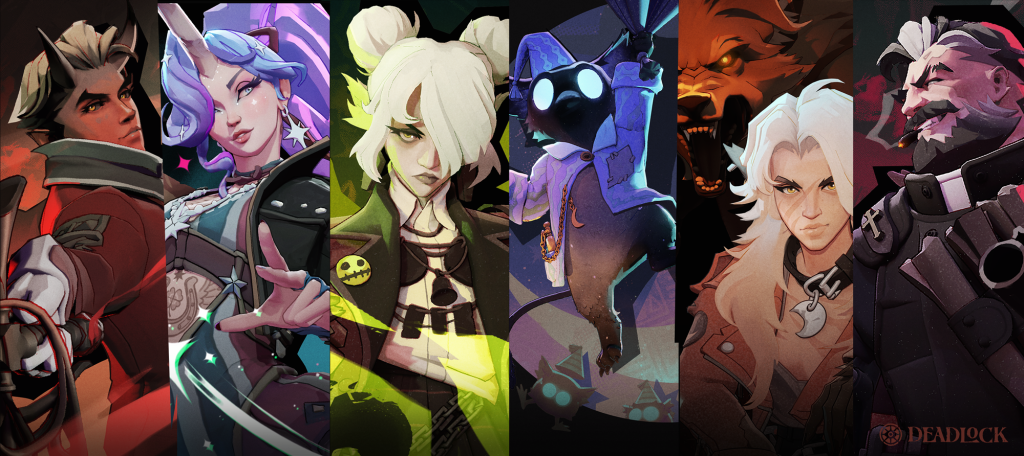
    Olds Gods, New Blood has brought another sinister six to the roster, including Apollo, Celeste, Graves, Rem, Silver, Venator. Although only two are released as of this publication, I can already tell that Rem and Graves are described by at least one of the there complains listed above, if not all three.
    As the lines blur between open beta and a soft release, Valve has made it abundantly clear that their release cycles will mimic other games in the genre to a tee. New characters will dominate until player backlash becomes too much to ignore and the community’s whales have been drained of all of their precious oil. Annoying character designs will also be characters who are incredibly powerful and dominant in matchmaking, and they will never feel as devastating when a team mate is controlling them.

    I’m still enjoying myself with Deadlock, but I suspect it has more to do with my investment in the genres it borrows from and my friends logging in to play more than the game design itself. I would have fun rubbing rocks together if my friends were down. This game feels like any game you might play with friends, except it is intended to annoy you to death over the course of a 60 minute match.

  • 5 Ways that Rift Lives on in Guild Wars 2

    5 Ways that Rift Lives on in Guild Wars 2

    (Guild Wars 2: Icebrood Saga – ArenaNet)

    As I’ve mentioned repeatedly before, Rift is one of my favorite MMORPGs. Sadly, I don’t expect to revisit Telara anytime soon, given that the game has long since transitioned to being free-to-play and entered what is effectively a maintenance mode. Another MMORPG has caught my eye, however; I just can’t seem to keep my hands off of Guild Wars 2, especially given ArenaNet recently launched their latest Living World event, the Icebrood Saga. After spending hours reliving my adventures in Tyria, I realized that many of the reasons that I had originally fallen in love with Rift were clearly apparent in Guild Wars’ sequel. Had my favorite MMO been living under my nose all this time? Did my frustration with the changes to the class and skill system in Guild Wars 2 keep me from realizing its brilliance? Either way, let’s jump straight into the top 5 ways that Rift lives on in Guild Wars 2.

    5. Group Quests

    Let’s get the obvious items out of the way, shall we? Rift’s namesake mechanic involved temporal rifts opening up in the wilderness, each requiring a group of adventurers to overcome and fight back the oncoming horde of baddies. Players didn’t need to join a group or invite strangers into their own party to participate as a community to overcome a common goal. Guild Wars 2 picked up where Rift and other MMOs (Warhammer Online comes to mind) left off, allowing players to jump in and out of quests simply by completing their objectives while sharing rewards with nearby players along the way. Not only does this create a more welcoming and accessible world to play in but it creates a more streamlined experience than the more traditional fetch quests of old.

    4. Exploration

    Although Guild Wars made a name for itself just fine without a persistent open-world environment, ArenaNet shifted their focus drastically with the sequel to emphasize exploring Tyria. Similarly, Rift implemented plenty of features to keep players from AFKing in their faction’s major city waiting for dungeon queues to pop. Whether it was open world puzzles, group events, or artifact hunting, the ascended of Telara always had some reason to explore the world. This seems like an essential part of any MMORPG, but what Rift and Guild Wars 2 accomplish that many other MMOs fail to do is provide a reason to explore outside of the main leveling experience. It’s an open world out there, so it makes sense to have plenty of things to do in it.

    3. Armies of Invaders

    In addition to the portals opening up all around Telara, Rift shook things up by having armies of enemies attack nearby towns and cities to disrupt the leveling experience. The idea of world events isn’t new, but when a giant world boss and their army of minions march on your home for the first time, it shows just how cinematic group experiences in MMOs can be. Guild Wars also embraced this as a part of their group questing mechanics. While most quests involve helping out a local farmer or harvesting resources, some involve nearby enemies laying siege to quest hubs or a zone boss killing low-level players en masse. These kinds of moments are what MMORPGs are all about, and the sense of scale and purpose just can’t be matched in other games.

    2. Mentoring

    MMORPGs, more often than most other genres, carry a lot of baggage from bygone eras. Some games embrace the silliness of endlessly slaying monsters on the hedonistic treadmill we call “grinding,” while others prefer not to shy away from the fact that levels as a concept are outdated. Rift and Guild Wars 2 are definitely the latter, despite the fact that both include level caps that come close to triple digits and leveling experiences that could take a few months to complete. Rift’s answer to the question of leveling was to implement a mentoring system to allow players of different levels to scale their stats to something closer in power level to make adventuring together more fun and engaging. Guild Wars does something similar, except that it is done automatically upon entering a zone, creating a seamless world that most other MMOs fail to achieve.

    1. Back to the Action

    When you think quick, simple fun, you probably don’t think of MMOs. Some developers have put significant work towards ensuring that isn’t the case, however. Rift, especially later in its lifespan, developed many features under the philosophy of getting players into the action as fast as possible. Their answer, among other things, was to include an Instant Adventure button that quite literally instantly teleports the player to another place and gives them a specific objective to complete with another group of adventurers. Tired of instant adventure? Try some of the singleplayer story content or instanced PVP. Crafting, costumes and other sideshows fill out the usual suite of features for a theme park MMO, but providing content is clearly not the same as guiding the player through it, which both Rift and Guild Wars 2 do spectacularly.

    I hope you enjoyed this short romp through memory lane. If you’d like to read more posts like this one or if you remember a specific MMO memory that has stuck with you, feel free to let us know in the comments below.

    Happy hunting!