Tag: Warcraft 3

  • Real-Time Strategy Expectations Versus Reality

    Real-Time Strategy Expectations Versus Reality

    Player expectations can vary depending on a myriad of variables too varied to count. As a child, I was drawn to the “sexier” elements of real-time strategy games like Starcraft, Warcraft, Command & Conquer, and Age of Empires, such as building a giant army and watching it clash against my opponent’s. Without a clue as to what competitive gameplay looked like and high on passion for the more simulation-style elements of the genre, I struggled to grasp what made these games tick. Watching high-level competitive matches of Starcraft: Brood War and Warcraft 3: The Frozen Throne as an adult has exposed the vast chasm between my expectations as a younger player and the reality of winning an actual match online.

    How to Play Terran – Starcraft: Brood War

    I was originally drawn to the cowboys-in-space fantasy that Terran represented; lining tanks up and bombarding enemies with nuclear bombs seemed like cool enough tactics to make the game worth playing as a Timmy/Johnny hybrid. Siege Tanks are undoubtedly one of the most important units in the Terran arsenal, but my least favorite unit has now become the one piece I rely on most in 99% of my own matches.
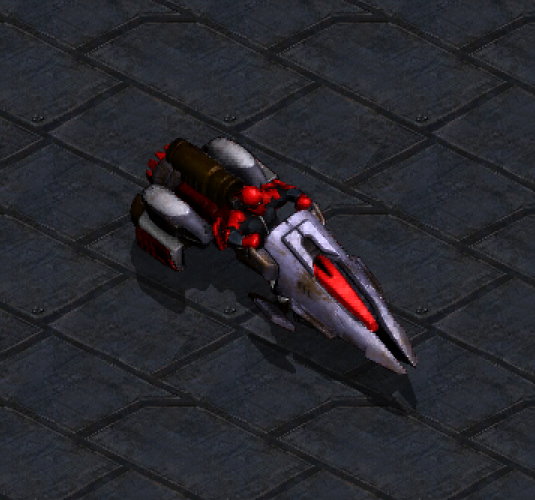
    The Vulture is an unassuming hovercycle with a grenade launcher and the ability to plant land mines that chase nearby enemies and provide surveillance of the surrounding area. Without much armor and a short attack range, I originally thought that they were primarily a scout unit without much extra utility. Watching any competitive Starcraft: Brood War game with Terran will quickly reveal just how important they are to the race’s game plan. Not only do they provide lightning-fast scouting, but their mines are some of the best area denial and vision abilities in the game. In small numbers, Vultures are vicious harassing units and they also pack quite a punch in larger groups.

    Warcraft 3 is Not an Army Simulator

    Although I played a lot of Starcraft, Warcraft 3 is my favorite game of all time and played a significant part in my childhood entertainment. That being said, none of my Warcraft 3 “ladder” matches involved any of the key components of competitive Warcraft: micro, efficient creeping, harassing, and unit diversity. My goal was often to mass a specific unit and smash my head on the keyword in an attempt to appeal to the almighty random number generator. Not only is high-level Warcraft 3 more about leveling Heroes, but armies are often small, varied groups of units that play off of each other’s strengths.

    I now realize that heroes that are generally considered great choices are completely opposite to the ones I liked most and for completely different reasons. Splashy and dramatic spells pale in comparison to the ability to summon “more dudes” to fight your opponent. The Farseer, Firelord, and other summoners dominate the competitive landscape together with heroes who provide passive benefits to their armies like the Death Knight and the Keeper of the Grove. Having more boots on the ground in a game about small skirmishing armies makes sense to me as an adult, but it was completely lost on me as a child.

    There was a reason I played more custom games than ladder matches, but as an adult, I now fully appreciate the value of a Circlet of Nobility. Minor stat benefits aren’t often attractive to Timmy or Johnny, but I’ve aged into being more of a Spike in my early 30s. Despite Blizzard’s downfall and the demise of Warcraft 3: Reforged, I suspect I’ll be playing Warcraft 3, Starcraft: Brood War, and other real-time strategy games in the future.

    Speaking of which, I just helped fund Zero Space, a new RTS game that seems to land somewhere in between Starcraft, Warcraft, and Warhammer: Dawn of War. Check it out on Steam and Kickstarter.
  • AutoChess Review – A Refreshing Blast from the Past

    AutoChess Review – A Refreshing Blast from the Past

    If you would have told me that a Chinese mobile game would be my latest obsession only three months ago, I would have had a hard time believing you. Sure, I’ve dabbled in mobile gaming before, but I usually prefer to play puzzle games like Sudoku or Picross over more complex games. Then, Auto Chess caught my attention.

    I just so happened to be browsing Twitter one fateful day when I read a Tweet about a popular DotA 2 mod turned mobile game. Players were arguing that Value and Riot Games shouldn’t be so quick to copy the hard work of devoted modders by releasing their own official Auto Chess game modes. Word through the grapevine was that anyone who respected the hard work of the mod community (e.g. me) should support the official version of Auto Chess released by Dragonest Co. Eager to try it out, I downloaded the app on my phone and dug in.

    Not only is Auto Chess essentially an old Warcraft 3 map brought back to life on my smartphone sixteen years later, but it’s also a fantastically addictive mobile game to boot. Those two things are exactly what I need in my life right now, as weird as it sounds. One of my favorite aspects of the Warcraft 3 modding community that I sorely miss is the propensity towards designing games that essentially play themselves. This, combined with the theme of snowballing power creep brought me immediately back to playing custom maps on Battle.net.

    Since the game was originally developed as a DotA 2 custom mode, each “chess” piece is based off a hero from Defense of the Ancients. If you’ve spent any time playing either DotA Allstars or DotA 2, you’ll feel right at home in Auto Chess. If you haven’t, don’t worry; the game is actually quite simple once you get the basics.

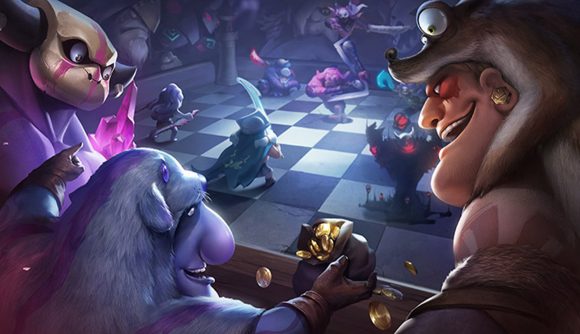
    In Auto Chess, you select a chess piece from among a random selection of five different pieces each round. You place pieces on the board and at the start of every round the pieces you’ve played come to life to fight against either another player’s pieces or a selection of A.I. controlled “creeps.” Sometimes these creeps drop items which you can equip to specific chess pieces. Each chess piece has a role, similar to their DotA counterparts, and both a race and a class associated with them. These identifiers make up the core mechanic of Auto Chess, and essentially boil down to a game of mixing and matching colored symbols. Combining chess pieces of specific races or classes provides your whole team with special bonuses. You can also combine three or more of a specific type of chess piece to upgrade their rank and increase their stats.

    If you can understand a gambling game about matching up three of a kind, you can play Auto Chess.

    Some of my favorite aspects of Auto Chess are also tied directly to its design towards mobile. For example, I get a great sense of pride from performing well enough in Auto Chess that I can actively ignore my phone and know I still have a good chance of winning the match. It’s also handy to not have to constantly be paying attention to a mobile game since you are encouraged to play them on the go and are therefore more prone to being interrupted.

    Let’s go back to that hypothetical that I started this all with and flip it around. If you went back to my high school self and told him that I would be playing what was essentially a Warcraft 3 custom map on my phone and having a blast, he would probably be ecstatic. This jenky little mobile game has stolen my heart at a point when I really needed a pick-me-up. Do I think I’ll be playing this game in 6 months? For my sake, I hope not. That being said, I’m having a ball right now and will enjoy the hell out of this ride while it lasts.

    I give Auto Chess 4 George Costanzas out of 5.