Lex Luthor is one of the most fun characters that NetherRealm Studios has developed. Here’s a short combo video showcasing some of the smooth moves he can perform.
Author: tomgoldrick
-
Deadlock Review – Who Asked For This?
There’s something about shooters (FPS or third-person) that has led them to become one of the most popular types of games for as long as we’ve been able to put pixel to screen. Valve was and continues to be at the forefront of FPS development and can be somewhat to blame for the last decade of team-based shooters trying to bite Team Fortress 2’s success. Concord and Overwatch 2’s failures to launch make me wonder what the heck Valve is trying to do with their latest FPS project, Deadlock.
Similar to Counter Strike and Team Fortress Classic, Dota 2 has also helped pushed Valve to the front of the ARTS space. Deadlock adopted much of the lessons that they’ve learned from the sequel to Defense of the Ancients and the sequel to Team Fortress to create a combination FPS ARTS. Deadlock’s current state of development reminds me a LOT of the state of the ARTS scene prior to the release of League of Legends. Valve is clearly playing it very safe, but at the same time, they are fusing two genres together in a way that doesn’t speak to a team trying to replicate the success of Riot Games in the 2010s.
If Valve’s goal is to capture the wave of casual players that gave Tencent a reason to buy Riot Games in the first place, I don’t think that Deadlock will succeed. Not only is it more similar to Dota 2, which leans more complex and competitive, but the hybrid nature of the game will likely present too many barriers to entry for those who would prefer to cosplay or draw fan art than to grind ranked. In this regard, Marvel Rivals has Deadlock beat. Having to find five other players to play with is enough of a hassle, never mind having to aim, plan item builds, and coordinate with those team mates to achieve collective goals.
If the goal is to create a new FPS that competes with games like Team Fortress 2, Apex Legends, or Counter Strike, then why is so much of the game focused on aspects other than aiming at your opponent and shooting them? So far, it feels that Deadlock borrows about 70% of its DNA from Dota and the remaining 30% from Team Fortress 2. This leads to drastic shifts in survivability, damage output, and utility can change how the game is played through its different phases and between matches. I don’t assume to speak for all FPS players, but it feels like they generally prefer the mechanical core of their games to be more in focus than what some might call “fluff.” I don’t see why an FPS player would pick Deadlock over a game that actually values the skills and abilities that they’ve specifically honed.
At the end of the day, Deadlock will either end up as an ARTS with guns or an FPS with special abilities, and I don’t suspect either will be able to necessarily bridge the gap between the genres. I also don’t think more of a combination of the two styles of games will be all that appealing after a while. When I played Counter Strike mods that included special abilities back in the day, I preferred that they assisted me in accomplishing my goals of shooting my opponents and not getting shot myself rather than supplementing the traditional gameplan of an FPS with spinning around like a cartoon character or putting up giant walls to block my opponents only path of retreat. That shit is whack as hell.
-
Mortal Kombat 1: Refreshing the Multiverse & Upsetting the “Fans”
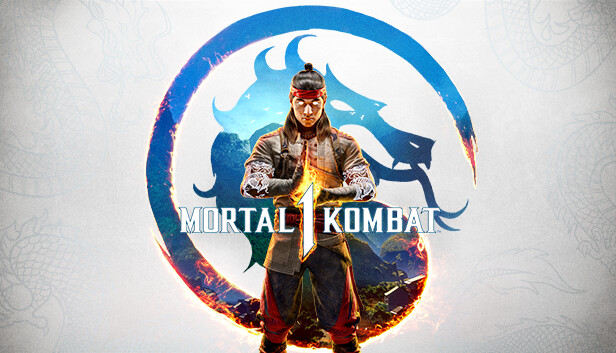
There’s no pleasing some people. That being said, Mortal Kombat 1 has received a remarkable amount of criticism compared to its contemporaries like Street Fighter 6 and Tekken 8. As a total refresh of the canonical timeline, MK1 was a chance to change up the franchise and try something new. This experiment has paid off in many ways, but has also left subsections of the community feeling aliened and taken advantage of. At the risk of providing a bit of a history lesson, here are some of my thoughts on why Mortal Kombat 1 is way better than folks give it credit for.
After the release of Mortal Kombat 9, there was no question as to whether NetherRealm Studios was going to do the series justice after the collapse of Midway. Creating a second wave of enthusiasm for traditional 2D fighting, the ninth entry in the series put Mortal Kombat back on the map after a half a decade of substantially different 3D fighters. New and veteran fans alike appreciated the returning cast of characters, over-the-top action, and a story that returned the canon to its roots.
The second Mortal Kombat entry in the NRS era brought back flavors of MK3 and a faster pace to boot. What it failed to do was embrace the comic nature of the series, instead marketing the release with a Wiz Khalifa music video while focusing on overly dark stages and hyper-violent fatalities. The arcade silliness of old suffered at the hands of updated graphics and a shift towards taking the game too seriously. Downloadable content focused on bringing in horror movie icons from various franchises kept a trend going from MK9’s Freddy Kruger alongside some fan favorites from previous titles.
Mortal Kombat 11 upped the presentation that the NRS era had become known for with improved graphical fidelity and even more gruesome displays of brutality. Again, the downloadable characters varied between classic kombatants and 80s movie icons like Rambo and Robo Cop. Overall, the community response to MK11 seems to be mixed, comparing it to its predecessors unfavorably in a myriad of ways. That being said, the Mortal Kombat fans who are vocal online seem to be prone to whingeing about whatever gets them the most views on Youtube.
After a decade of alternating between the Injustice series and Mortal Kombat, the twelfth entry was a chance for NetherRealm to respond to some of the criticism from the previous game more promptly than usual. Mortal Kombat 1 (what an awful name) seemed to embrace “fun” in a way that the previous two games didn’t. As a fan of the more cartoony 2D Kombat of the 90s, I appreciated that color, brightness, and interesting character designs were allowed to return to the realms. The Kameo system fully embraced the tag mechanics from other entries that were previously treated like bonus modes, letting players create dynamic team compositions and extended combos.
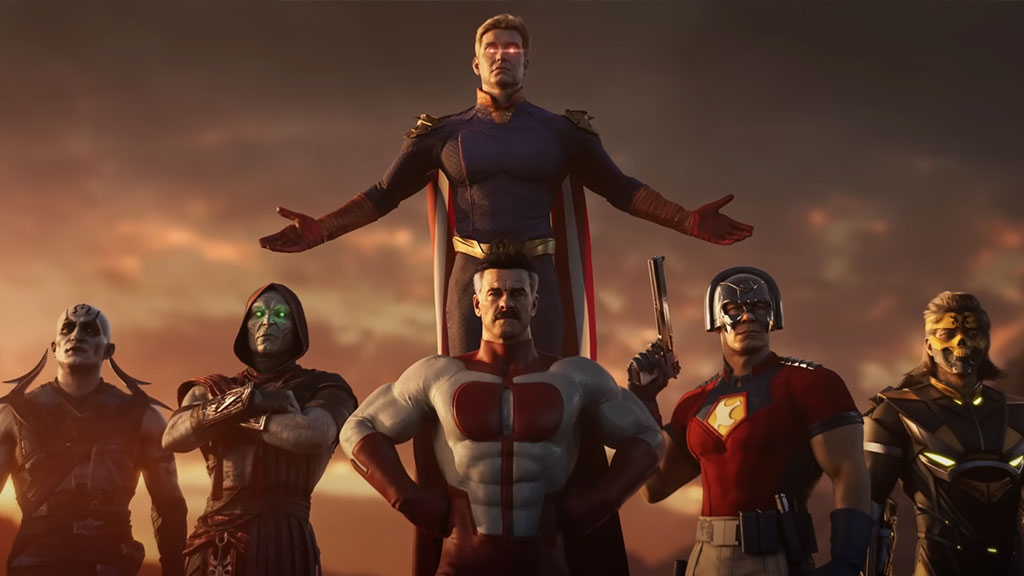
The downloadable fighters from Kombat Pack 1. Now that Mortal Kombat 1 has been out for almost a year, it seems the vocal community is back to its own game of publicly pissing on their favorite franchise for pitifully low ad revenue. What changed? Downloadable content released, promising new fighters and cameos every few weeks. Still, content grifters don’t have enough Mortal Kombat to talk about it seems. The resounding sentiment seems to be that the game appears to be rushed, lacking content, and full of over-priced micro-transactions on behalf of Warner Bros. While it is clearly lacking in substance, the quality of the product has undeniably increased.
The game lacks some of the special features for casual players that Street Fighter 6 and Tekken 8 have launched with, but outside of a cinematic story mode, challenge towers, and the admittedly half-assed Invasion mode, what do players expect? No fighting game franchise has come close to the casual/competitive cross over appeal that the Smash Bros. series has and Mortal Kombat already has more mainstream success than most video game franchises in the West. From a minimum viable product perspective, Warner Bros. doesn’t need to push NetherRealm to cater to the casual market any more than they already do.
The plot for Mortal Kombat 1 didn’t give NetherRealm much room to work with, to be fair. As an IP-reset of sorts, Mortal Kombat 1 was always going to have to get over the hurdle of winning over invested Mortal Kombat fans in addition to bringing in new attention. Changes to both aesthetics and gameplay for traditional kombatants were bound to alienate some just as much as the addition of kameos despite them being a point of interest for others. To its credit, MK1 has done a great job of reimagining an otherwise forgettable story with absurdly silly characters into something actually worth getting invested in.
As the anniversary of its initial launch approaches, an expansion named Khaos Reigns is scheduled to release with three returning characters and three new crossover fighters from others franchises. A full menu of options allow new players plenty of ways to gain access to the features. Needless to say, there’s a lot to be happy about, but it’s too early to say whether NetherRealm Studios will be able to escape the cloud of negativity that more vocal parts of their community seem to thrive on.
-
Simple, Fun, and Engaging – The Fall Guy Review
Most of what I heard about The Fall Guy before seeing it myself was folks pondering on Twitter, “who is this movie made for?” It turns out the movie is made for folks who love movies. Whodathunkit?
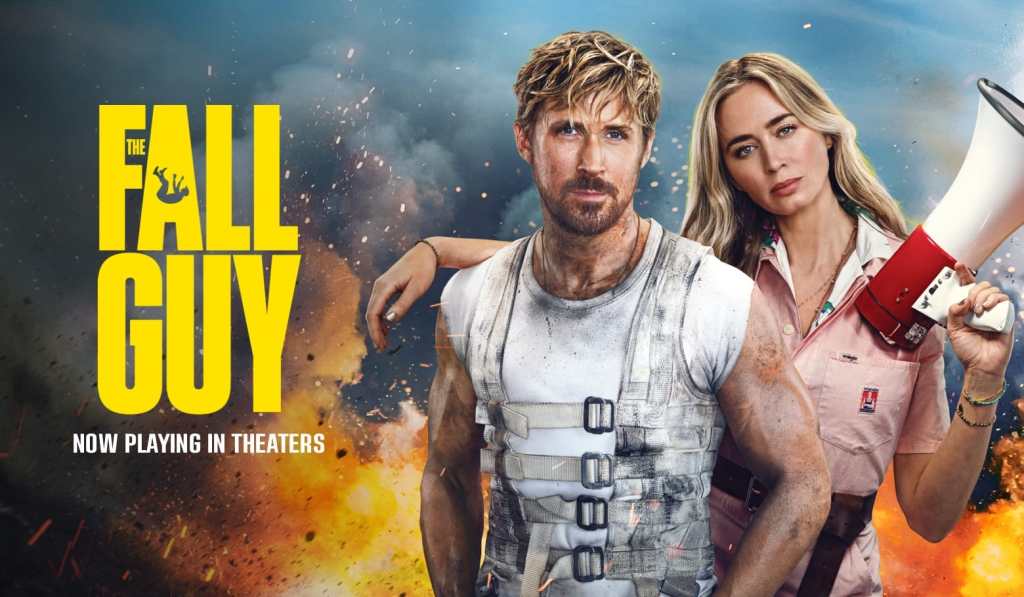
Rarely do I get to watch a movie that feels so jam-packed with passion and love for the art form. Not only is The Fall Guy a movie about movies, it’s a movie about the people who make movies. Emily Blunt plays a stunt coordinator turned director playing opposite Ryan Gosling, a stunt man forced into early quasi-retirement who is brought back for one more gig. Winston Duke excels as the movie-within-a-movie’s stunt director; he’s a great addition to an already stellar cast. What was marketed as a nonstop action romp turned out to be much more of a romantic comedy through the lens of film making, which was a pleasant surprise. The writing was witty, the actors looked like they were having a blast, and the visual effects were stunning.
Compared to the director’s other similar project, Bullet Train, The Fall Guy kept me engaged throughout and was more polished overall. I usually find myself nitpicking dialogue or special effects if I’m not really into a movie. Besides leaving to get drink refills and a quick bathroom break, my partner and I were stuck to our seats, nearly forgetting to eat all of the snacks we snuck in with us.
The question is, was this movie worth watching in the theaters instead of catching it on streaming in the comfort of my own home? I guess that depends on your living situation, but The Fall Guy was worth watching on the silver screen. Health concerns notwithstanding, the theater feels like the right place to see a movie that is a celebration of the industry as well as the art. TFG may not have a gimmicky popcorn cup like Dune 2, but it was worth seeing in the theater for the sake of talking about it on the walk to the parking lot.
 tommgoldrick.com