Category: Reviews

  • Deadlock: Old Gods, New Blood Review or Why We Play Games That Hurt Us

    Deadlock: Old Gods, New Blood Review or Why We Play Games That Hurt Us

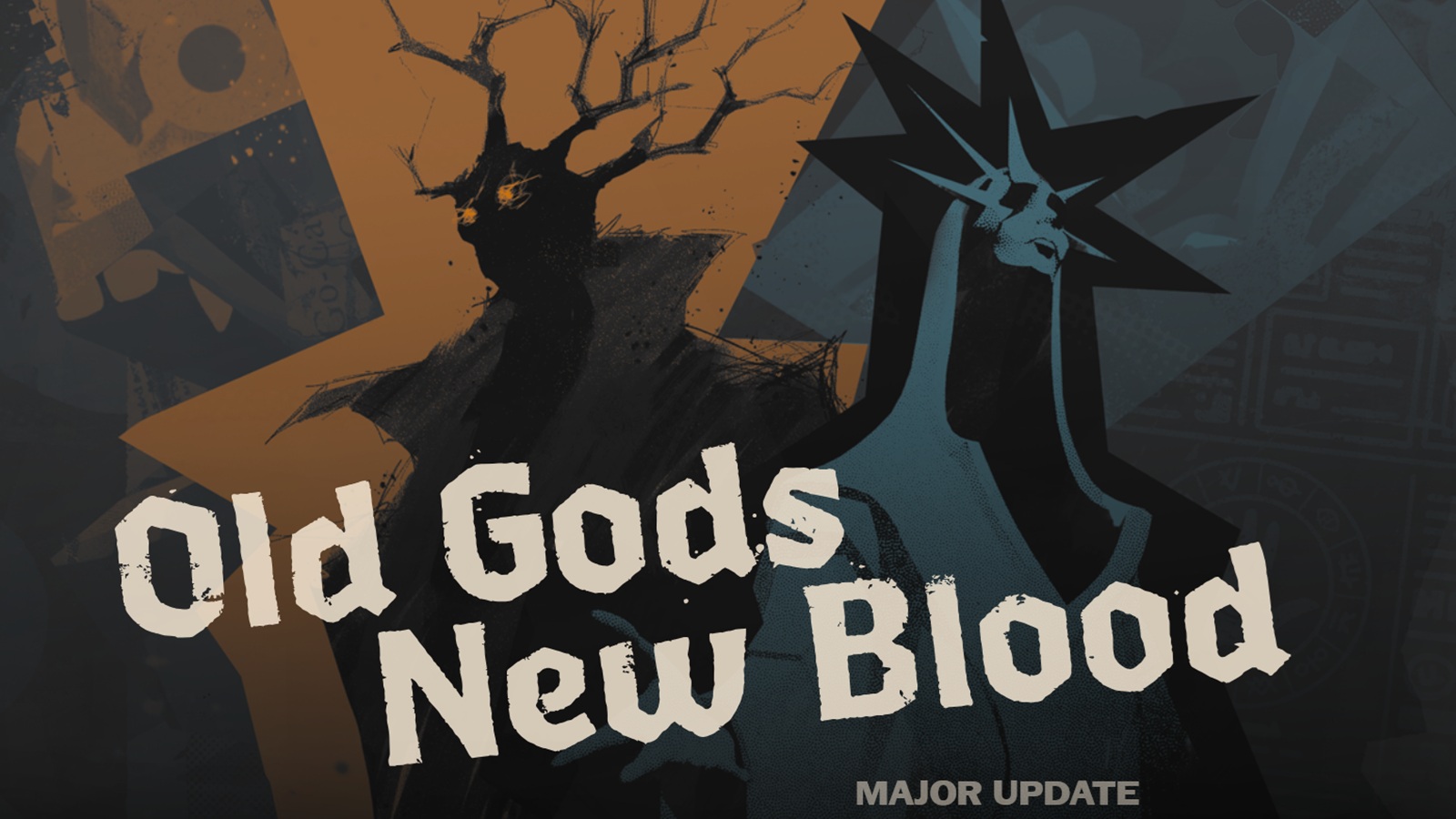
    Deadlock may be a game without an intended audience, but it’s clear that hasn’t stopped Valve’s latest experiment from succeeding. After an extended period of open beta testing, the Old Gods, New Blood patch has updated the game’s overall look and feel to be more cohesive and expressive. Red team is now fighting under the Hidden King and the Blue team are followers of the Arch Mother.
    What remains from my previous endeavor in Valve’s fictional New York City is gameplay that hasn’t evolved much past Defense of the Ancients circa 2006 fused together with a loose interpretation of what it means to be a third-person shooter. The game is still split into two major components: character select and item select. Normally, I would complain about the fact that Valve is dead set on making this more akin to an ARTS like DOTA or Smite than a traditional “hero” shooter. Items in Deadlock are exemplary of what they should be for the genre it is in, despite me wishing they didn’t exist. Being able to adjust your character’s strengths and weaknesses throughout a match is very useful to avoid players feeling like games are decided solely by character select. All in all, the MOBA-style gameplay loop offers players who might not be comfortable with a more shooting focused third-person shooter a more comfortable on-ramp, making Deadlock easier to find a friends to play with than others.

    The biggest deciding factor in a character’s strategic diversity is their weapon of choice, which lead to lopsided character balance and annoying match ups. McGuiness, for example, can benefit from a wide array of different types of items, but due to her gatling gun-styled weapon, she can also upgrade her basic attack to a ridiculous level. This can feel like a lottery at times, as the usefulness of a character’s weapon often feels like its based on aesthetic preferences from the character artists rather than intended game design.

    What’s left over is better than the sum of its parts, but only just. Every aspect of Deadlock seems to be designed to bring in as many new players to both third-person shooters and ARTS/MOBA as possible while greasing the wheels and leaving up the guard rails up to avoid giving players any reason to stop playing. What’s more accessible than a game that plays itself once you’ve been fed enough and can follow an enemy’s silhouette with your crosshair?

    On the topic of accessibility, Deadlock suffers from the same issues as its predecessors—namely that it has 30+ characters and even more items that can fit into up to eight item slots, making for an innumerable amount of information for new players to digest before playing optimally. How games like this get new players and folks still struggle to play fighting games is beyond me.

    Last of note is how Valve has been releasing new characters. Each big update has come with a set of fresh heroes to play as and against. 2025 brought with it Victor, Paige, Drifter, Mina, and Billy. From my experience, four out of six of these characters are either:

    1. Annoying as hell to fight against
    2. Way too powerful when fed early on
    3. Lacking much skill expression to make better players stand out
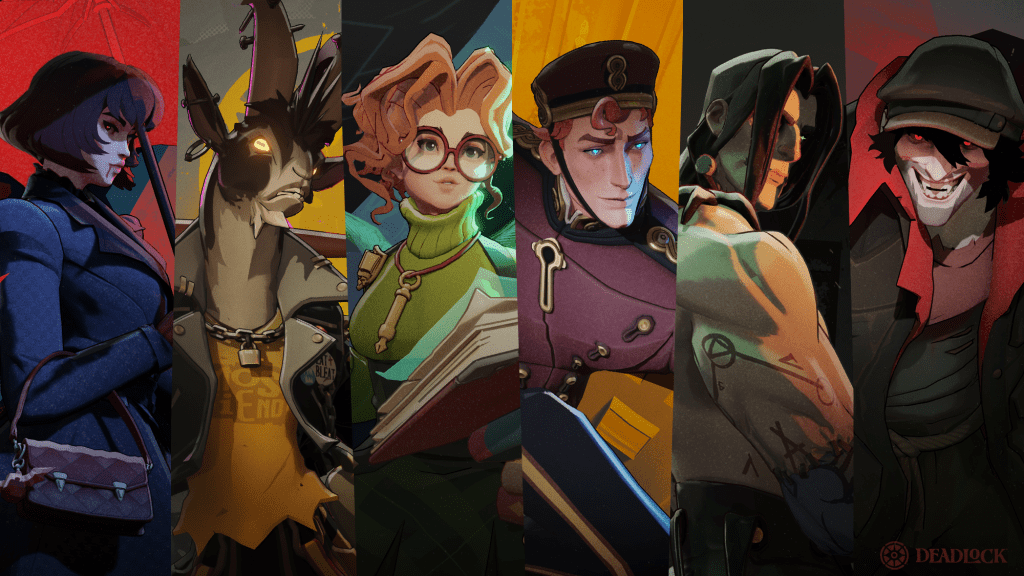
    You can guess who is who.

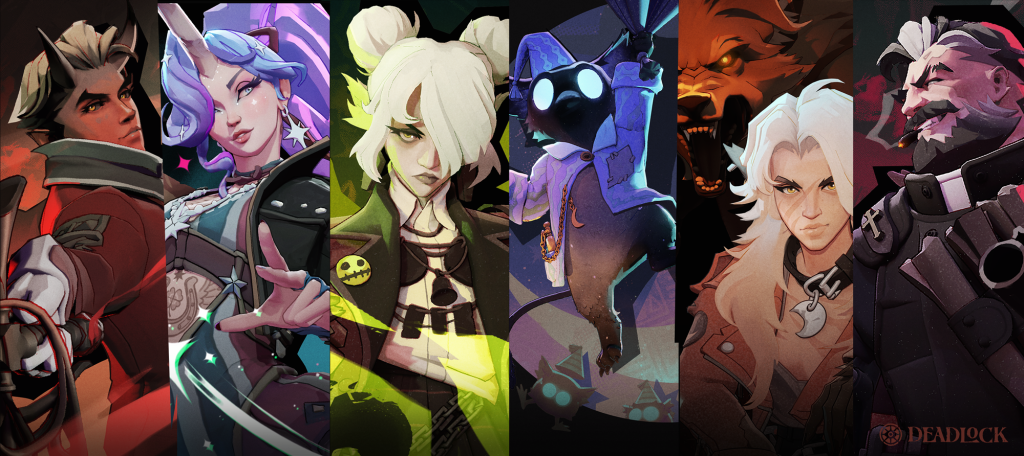
    Olds Gods, New Blood has brought another sinister six to the roster, including Apollo, Celeste, Graves, Rem, Silver, Venator. Although only two are released as of this publication, I can already tell that Rem and Graves are described by at least one of the there complains listed above, if not all three.
    As the lines blur between open beta and a soft release, Valve has made it abundantly clear that their release cycles will mimic other games in the genre to a tee. New characters will dominate until player backlash becomes too much to ignore and the community’s whales have been drained of all of their precious oil. Annoying character designs will also be characters who are incredibly powerful and dominant in matchmaking, and they will never feel as devastating when a team mate is controlling them.

    I’m still enjoying myself with Deadlock, but I suspect it has more to do with my investment in the genres it borrows from and my friends logging in to play more than the game design itself. I would have fun rubbing rocks together if my friends were down. This game feels like any game you might play with friends, except it is intended to annoy you to death over the course of a 60 minute match.
  • Warhammer Age of Sigmar: Dominion – 3rd Edition Review

    Tabletop wargaming is my generation’s model train. I grew up going to train conventions with my dad, collected Warhammer 40,000 models in middle school, and admired Warhammer Fantasy from afar for years. It wasn’t until the 2020’s pandemic that I took another look at my miniature collection and regained a love for tabletop wargaming. After a year and a half of learning Warhammer 40k’s 9th edition, I purchased an Age of Sigmar Dominion box and fell head over heels for the modern fantasy equivalent of Games Workshop’s most popular tabletop wargame.

    For context, Age of Sigmar is not Warhammer Fantasy—it is a brand reset for the fantasy version of Warhammer and presents a totally new product despite similar models being used in both games. While Warhammer 40,000 has the baggage of decades of legacy mechanics and rules, Age of Sigmar strips back the bloat and attempts wild and flavorful approaches to traditional wargaming tropes as opposed to the strict interpretations of the 41st millennium. 

    The core rules for Age of Sigmar are relatively simple compared to its contemporaries and help engage the players in the cooperative storytelling that makes for fun gaming sessions. Mortals of the various realms face off against terrifying daemons, horrifying beasts, and followers of chaos alike. 

    Without a ton of rules bloat to lull your brain to sleep (or boredom), Sigmar relies heavily on universal mechanics that all players can take advantage of. The more flavorful abilities are left for specific factions to utilize, but they rarely take center stage in a game primarily around statistics and predictability. This creates a game flow that helps players build up knowledge and familiarity with the game regardless of which force they select to field (the exception being OCR).

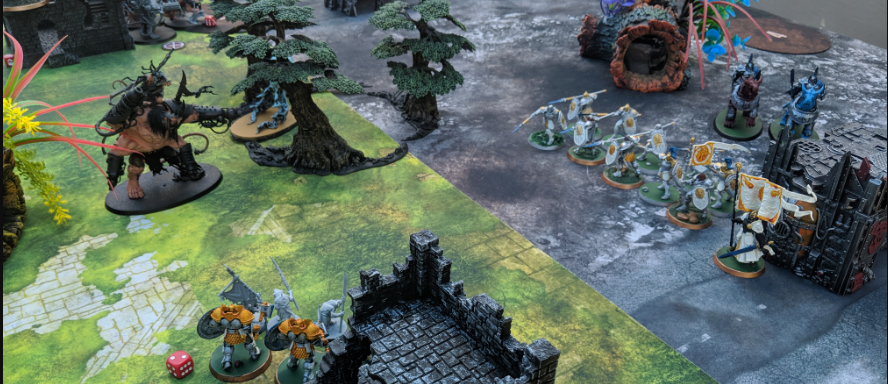
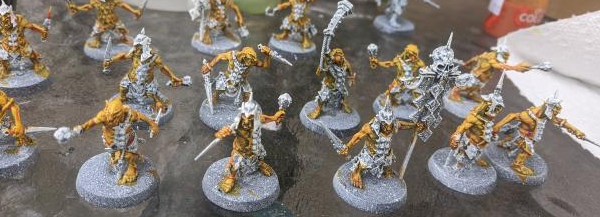
    After growing up with old metal models and janky instructions, assembling the models from the Age of Sigmar Dominion box was a breeze! Not only are the models pegged for easy, no-glue-required assembly, but their design is sleek and elegant enough to allow for more experienced builders to trim the pegs off and work with or kitbash the plastic to their heart’s content. If you like the honorable Stormcast Eternals or the slimy Kruleboyz, both armies are a steal at ~$60 each.

    If you’re interested in getting into tabletop wargaming but don’t know where to start, consider picking up the Age of Sigmar Dominion box (they currently sell for around $120 USD) to gain access to two 1,000-point armies that can be played after assembly. If you’d rather try something smaller scale, there’s always Age of Sigmar: Warcry to test your mettle against opposing warbands instead of opposing armies.

  • The Midnight Gospel – A Review

    Being a cishet white dude almost guarantees that I’m into podcasts of some sort. I listen to NPR, various gaming shows, and a couple of comedy podcasts to help lighten the mood. I often find my specific preferences too idiosyncratic to make sharing podcasts with all but my closest friends practical. The Midnight Gospel, however, is one podcast that I heartily recommend to just about anyone who enjoys lengthy cartoons for adults. What you get in return for a few minutes of your time is a wild ride that was worth the price of admission simply for the conversation with friends after watching the first episode.

    While most podcasts rely on specific topics or guest speakers to guide the conversation, the Midnight Gospel flips the format on its head to form an amalgam of spontaneous conversation and scripted comedy that is worth experiencing at least once. Whether you can stomach the rest of the first season is another question entirely.

    I want to avoid spoiling anything, so I’ll try to be as vague as possible in my description. The Midnight Gospel is a story about an intergalactic, perhaps interdimensional, podcast host who interviews various denizens of the cosmos on a variety of topics ranging from drug use to the teachings of Ram Dass. That’s it. That’s all you’re going to get. If that sounds up your alley, then today is your lucky day! The Midnight Gospel can currently be found streaming on Netflix.

    For everyone else who may not watch but is still interested, I’d say that Midnight Gospel absolutely nails what it sets off to accomplish. The pseudo-philosophical dialog and psychedelic atmosphere makes it an easy cartoon to throw on while hanging out with friends just to gauge their reactions. I fully expect TMG will fall somewhere on the cultural impact spectrum akin to Mystery Science Theater or other late-night stoner classics.

  • Remnant: From the Ashes – Review

    Remnant: From the Ashes – Review

    In a world where every game is at some point inevitably compared to Dark Souls, it’s understandable why it took me this long to give Remnant: From the Ashes a try. “It’s Souls with guns!” people would say to me. I’ve slogged through enough Souls-likes that I need more than just the lure of the next bonfire and relentlessly punishing gameplay to win my attention. Thankfully, Gunfire Games manages to find a graceful balance between drawing inspiration from other games and improving upon the foundation they’ve already set.

    Instead of drawing directly from From Software’s magnum opus, the developers of Remnant cherry-picked the best qualities from the series to adopt and discarded the rest. Gone are the endless corpse runs back from the last bonfire after dying over and over on the same boss. The UI is intuitive and jumping into a game with friends is as easy as pressing one button. There’s even a difficulty rating, a welcome addition to a genre that often misses the point about player experiences.

    A pattern that quickly reveals itself is that Remnant owes just as much to Diablo 2, Borderlands, and similar loot pinata simulators than it does to the Souls series. Chests explode, showering you with crafting materials and ammo. Weapon mods and equipment are easy to mix and match at one’s leisure. Most obtainable items are shared with all players in your party, so there’s no downside to running around collecting everything in sight if that’s up your alley. With an aesthetic that leans closer to Fallout or Deadlands, it’s clear that Remnant borrows a lot from gaming royalty.

    That being said, Remnant: From the Ashes is still very much a Souls-like. Players still dodge roll through enemy attacks, chop off dragons’ tails to craft fantastical weapons, and fight against overwhelming odds to their heart’s content. What is gone, however, is the frustration, alienation of new players, and a tanking frame rate. This game runs remarkably smooth and doesn’t overstay its welcome. 

    Instead of having long branching paths interwoven within one another, Remnant opts for the randomly generated approach. Players could have very similar experiences up until they encountered their first boss, for example. This along with the difficulty rating provide a lot of replay value for players who want to experience more than the main game has to offer or experiment with new gear and weapon mods combinations. For everyone else who just wants to enjoy a short and sweet romp through a dystopian wasteland, I was able to complete the main story in two or three vigorous gaming sessions.

    If you are a fan of Dark Souls and similar titles, then you have probably already given this game a try. However, if you cringe at the idea of dying to hidden traps and wandering off aimlessly only to be eaten by a dragon, then don’t overlook Remnant just because it fits into the Souls-like mold. This might be the perfect introduction to the genre for new players period, both because of how similar to Dark Souls it is and how drastically different it is at the same time.

  • Roadtrip of the Rings – Onward Review

    Roadtrip of the Rings – Onward Review

    (Disney/Pixar)

    Although Disney Pixar’s Onward isn’t the type of film that usually draws my attention, I was pleasantly surprised with the recent release on Disney+. Besides being a genius marketing strategy for their new streaming platform, Onward is also a wholesome and heartfelt road trip movie for the whole family starring Tom Holland and Chris Pratt.

    The two brothers, Ian and Barley, live in a world very similar to our own except that it was once full of magic and wonder. Now that the magic is gone, however, capitalism has taken over, leading to the formerly-mystical creatures getting day jobs. The Lightfoot brothers, who just so happen to be elves, find themselves getting wrapped up in an epic quest with a surprisingly compelling twist. With stakes rapidly escalating, jokes throughout, and heartstrings being pulled like only Disney knows how, Onward completely shattered my expectations. Whether that’s because I had extremely low expectations to start with is still up for discussion.

    Onward completely shattered my expectations. Whether that’s because I had extremely low expectations to start with is still up for discussion.

    Without spoiling too much, Onward is set up as a very standard family-friendly animated flick but ends up taking some interesting creative twists that surprised and delighted. The fact that the story had so many emotional moments that hit close to home for me definitely helped. It’s hard to dislike a movie when you’re bawling your eyes out and clutching your significant other’s hand at the sight of two cartoon elves hugging. That’s got to take some kind of magic in and of itself, to be honest.

    Although I enjoyed the movie, it’s definitely not without its flaws. Both Ian and Barley took a while to grow on me, which I partly attribute to the film’s pacing and writing. Chris Pratt is really the only actor given enough of a personality to warrant an especially expressive take, but his lines are wasted, at least at the beginning, on a lackluster Jack Black impression that he eventually grows out of. As Holland and Pratt are given more to work with, their performances drastically improve.

    For the price of already having Disney+ to rewatch the Mandalorian and an hour and forty-two minutes of your time, Onward is the kind of wholesome, magical adventure that we all need in these difficult times.

    Stay safe.