Category: Reviews

  • The Boys – Season 1 Review

    The Boys – Season 1 Review

    (The Boys – Amazon Studios)

    As apprehensive as I was to give Jeff Bezos another dollar, Amazon’s marketing campaign for their latest origin series, The Boys, worked like a charm. After watching the trailer (where a Flash-esque superhero accidentally runs into a citizen at Mach-speed, turning her instantly into jelly), I was immediately intrigued. The theme of superheroes pushed to the brink and forced to contend with real-world consequences may not be new, but The Boys treads familiar ground in a way that both pays homage to classic comic book stories while also exploring lots of new ideas due to a significant change in perspective and a much darker tone. That same tone and focus on adult situations may also be a deal-breaker for a few, but anyone who can wince through the gory special effects is in for a thrilling and thought-provoking ride.

    The Boys quickly introduces us to its main character, Hughie, who is as goofy and awkward as his name suggests. A traditional fish out of water story quickly ratchets up the stakes as our protagonist’s girlfriend is accidentally killed right before his eyes (remember that girl I mentioned earlier?), which sends him on a quest for revenge against the most popular superheroes of the city, The Seven. Hughie ends up joining a group of criminal vigilantes called the Boys who collectively seek justice against the superhumans. This comic book adaptation could have easily been another “what if Superman was bad?” story beat-for-beat, but instead, it took plenty of opportunities to explore just how brutal and bizarre the world would actually be with superheroes flying about.

    Like any good ensemble superhero story, the characters are the core of the plot in The Boys. There is no giant laser beam in the sky or evil alien empire menacing Earth. It turns out that superheroes would be total dicks if they were real, and The Boys pulls no punches in explaining just how corrupt they would become in modern-day corporate-run America. The fact that this series was released in 2019 is no accident, and the political and philosophical overtones are both pertinent to today’s issues and expressed eloquently enough to not be patronizing. 

    Homelander, this story’s amalgamation of Captain American and Superman, is a perfect poster boy for a series intent on exploring complex topics such as nationalism, morality, war, religion, sexism, and corporate greed. He’s the asshole that you love to hate, but that doesn’t mean that our protagonists are much better off. Hughie’s mentor, played by Kyle Urban, is the quintessential foul-mouthed anti-hero. We’re clearly meant to cheer for the namesake group of vigilantes, but The Boys rack up quite a body count as well. Frenchie and Mother’s Milk round out the rest of the crew, making for a large range of interesting characters who each get their own room to breath in the complex world that the show presents. Out of all of them, however, Hughie ended up being my favorite given his propensity for transforming his own incompetence into a form of superpower when things start to go south.

    As is expected of a modern show with significant financial backing, The Boys doesn’t wrap up all of the questions it poses by the finale, expecting the story to continue through for another season. What we do get, however, is a satisfying ending that made me want to rewatch past episodes to find any clues I might have missed. If the goal of the show was to make me want to immediately read the comics, it’s done its job in spades. The fact that I was already knee-deep in Wikipedia articles before I finished the last episode should tell you something about how far I’ve fallen into the rabbit hole.

    If you’re looking for a raunchy, gory, thoroughly adult-themed superhero show to binge and you already have an Amazon Prime subscription, I recommend you take the time to watch the series from beginning to end. The Boys won’t be for everyone, but those who can stomach what it has to offer will enjoy its complex and dynamic characters, thrilling plot, and twists and turns that will keep you smashing “Next Episode” after every shocking cliffhanger.

  • Zombieland: Double Tap – Review

    Zombieland: Double Tap – Review

    (Zombieland: Double Tap – Columbia Pictures)

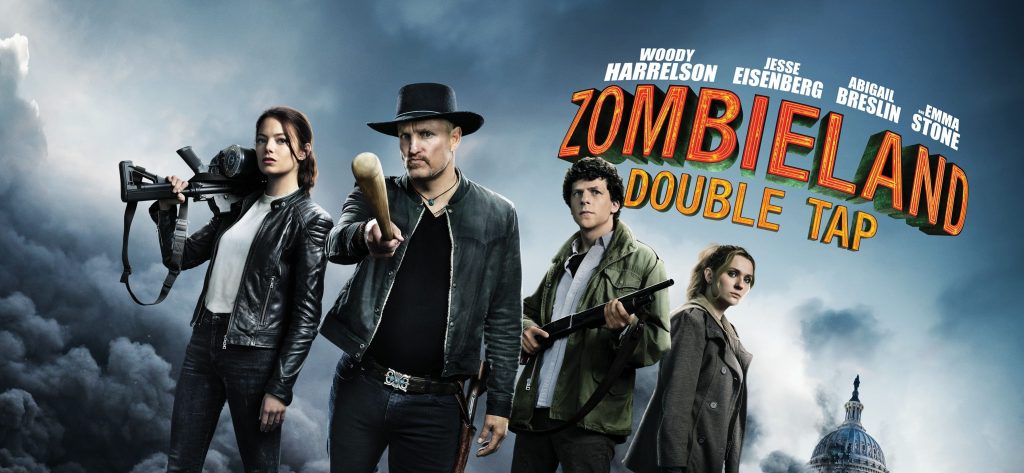
    Rarely does a sequel so accurately leave me with the same feeling as its predecessor as I’m walking out of the theater. In Zombieland: Double Tap, Columbus, Tallahassee, Wichita, and Littlerock are back, albeit a little older, and ready to take on the undead hordes that have laid waste to the contiguous United States of America. In similar fashion to the Terminator franchise that it so often references, this second romp through the apocalypse treads familiar ground while deviating only slightly from the core elements that made the original so popular. Instead of going on a road trip to Hollywood, our survivors decided to turn the White House into a zombie-fortress and visit Graceland to fawn over Elvis memorabilia. The pattern is perfectly apparent as the opening credits roll, once again matching slow-motion zombie battles with Metallica except with slightly crappier CGI and editing.

    What Zombieland: Double Tap does well is deliver on a simple, comedic zombie road trip movie. Butchering the undead is as entertaining as ever and the survivors are just as charming as they were nearly a decade ago, but if you were expecting an evolution on the formula, Double Tap offers more of the same. In that way, the sequel actually improves on the foundation that the original Zombieland set. While the first film abandoned the zombie survival rules gimmick about halfway through its runtime, Double Tap doubles down on the idea by keeping it going throughout the film, even going so far as to introduce a second character that also obsesses about a set of commandments for staying alive.

    The new characters this time around are all welcome additions, especially given how homogenous the original cast was, but like everything else in this series, they aren’t left with much to do or say that’s of much consequence. If The Big Lewbowski was a movie about nothing, Zombieland and its sequel really want to be about something but, either due to budget restraints or severely limited scope, fail to create characters or plot arcs worth caring about. Double Tap makes up for this somewhat by keeping me laughing throughout, regardless of whether I’m laughing with the movie or at it.

    Verdict: Definitely worth seeing if you enjoyed the first, but otherwise forgettable.

  • Joker – Review: A Film About Everything And Nothing

    Joker – Review: A Film About Everything And Nothing

    (Joker – Warner Bros.)

    SPOILER WARNING


    If you haven’t seen Joker yet, there are potential spoilers ahead.

    To tell you the truth, I almost didn’t want to see this movie. With all of the media attention that Joker got prior to its release, I was already tired of the discourse by the time October 4th rolled around. Thankfully, good friends of mine invited my girlfriend and me out to see the film in addition to going to our favorite Mexican restaurant, so needless to say, I was sold.

    It seems like Joker is already a lot of things to a lot of people. For some, it’s a clumsy origin story of a psychotic killer clown from the director that brought you The Hangover 3. For others, it’s a tragedy of how a man with serious mental illness is driven to violence and villainy by a city that neither cares about his wellbeing nor acknowledges his humanity. As for myself, I’m having a hard time coming up with a concise explanation of how I felt given how much was going on during the film. Ultimately, I wasn’t as impressed with Joker as I would have liked, but Joaquin’s performance was nearly worth the price of admission alone and it managed to gain my seal of approval after a solid third act.

    Despite acting as an homage to both Taxi Driver and The King of Comedy, Joker falls short of its inspiration in more ways than one. The idea that it deserved the supposed eight-minute standing ovation Joker got during its initial screening is silly at best, but that being said, it succeeds in exactly what it was meant to do and kept me on the edge of my seat throughout. What might be more interesting, however, is how the film played with my expectations and left me questioning a lot of the assumptions I had made about it beforehand.

    I would be remiss to continue without mentioning that the acting, casting, costumes, set design, and photography for Joker was fantastic. The dark, comic book-inspired 1980s setting helped ground the otherwise comical character firmly in reality. Although it manages a much darker tone than most comic book stories, Joker isn’t without its own laughs sprinkled throughout the otherwise tense and dramatic film.

    It’s hard to say exactly what I expected out of Joker besides a grittier, more realistic take on the Joker’s origin story. Instead of a vat of acid, Arthur Fleck falls into the realization that not everything about his life is as it seems, which combined with severe mental illness, transforms him into the criminal clown that we all know and… love?

    What I wasn’t expecting, however, was just how much time we would end up spending with Arthur Fleck as opposed to his evil alter-ego. Most of the scenes from the trailer show up in the film but reveal something very interesting about Warner Bros. marketing: the trailers want you to believe that the Joker will appear in the film and cause havoc. However, the film shows a different side of the character as Joaquin triumphantly stomps down a flight of stairs only to interrupted by shouting policemen, causing him to skitter away with all of the grace of a looney tune. The Joker we see just doesn’t match up with the genius criminal we’re made to believe he is. In fact, I would say that this Joker feels a lot more like Arthur Fleck playing the Joker than him coming into his own as the Clown Prince proper.

    Once again, spoilers ahead.

    One of my primary issues with the film relates directly to a major plot point. After Arthur Fleck murders three wall street suits on the subway, Thomas Wayne, who is running for Mayor in the film, vaguely compares the downtrodden of Gotham to clowns, which ignites political upheaval as protesters don plastic clown masks and riot. Although the film starts off by establishing the trash strike going on in Gotham, it takes a generous leap of logic to suggest that heaps of trash in the streets, a crappy mayoral candidate, and the random slaying of three businessmen would start a political movement. This shakey connection only helps to muddy the overall message of the film. The riot scenes in Joker felt more like progressive political anti-establishment sentiment filtered through the lens of an aging filmmaker who didn’t really get what all the kids marching on Wall Street were up to years ago but really admired their gumption.

    The twist of fate at the end of the movie where, despite announcing that he was not affiliated with the political riots going on at the time, the Joker is saved from police custody by the protesters rioting in the streets caught me off guard and left me with a lot of questions. Do the protesters recognize Arthur from the television broadcast that was happening simultaneously to the riots? If they do, I can see how killing Robert DeNiro’s character could be taken as a strike again Gotham’s 1%, but I find the the whole connection difficult to believe. Is the ramming of the police vehicle just a random act of violence that happens to result in a crowd forming around a man who was just in a car crash?

    Talking about twists, I wish Joker’s big reveal that his relationship with his girlfriend from the first act was all in head was executed less clumsily. Instead of recognizing the “strange” scenes for what they were, I chalked it up to bad film making rather than an unreliable narrator. Once the idea that what appears on the screen may not be what is actually happening was introduced, things started to make a lot more sense. I’d go so far as to say that the movie should have played with that a bit more. For example, my issues with Joker being retrieved from the police car as a symbolic figure for revolution could be easily explained by the theory that the character we see in “Joker” isn’t Joker himself, but instead Arthur Fleck playing the character from time to time, drifting in and out of his more sinister persona.

    What if we never see Arthur fully become the Joker in this film?

    I don’t know what it says about Joker that I’m having more fun speculating about how it could all make sense given some pretty specific hypothetical fan theories, but hear me out. What if we never see Arthur fully become the Joker in this film? What if, like Fight Club’s unreliable narrator, we only get to see one side of the story? What if Arthur Fleck is to Joker as “The Narrator” is to Tyler Durdan? That might explain how Arthur, a frail, pathetic man transforms into a genius criminal capable of bringing Gotham to its knees. Or, you could believe the fan theory that the director has at least directly mentioned, that Arthur isn’t actually the Joker but a proto-version of the character that inspires the one we know and love. I’d feel cheated if that was the case, given how much marketing went into hyping us up to see the Crown Prince of Crime.

    Unfortunately, this movie doesn’t give me any reason to believe that Arthur would be capable of the kind of mental and physical gymnastics that Joker is most known for. Every event that the populace of Gotham attributes to the Joker is actually caused by Arthur accidentally causing havoc as he flails about, barely managing to stay standing half the time. The slayings that set off the initial protests aren’t some sinister plot to sow seeds of unrest among the people of Gotham. The riots at the end of the film aren’t caused by an insane clown mastermind; they happen because Arthur hides from the cops on a busy subway train. If the goal of this origin story was to subvert our expectations that Joker’s most valuable asset was his intellect, then job well done.

    With all of that in mind, I’m still glad that they tried something different this time around. I was definitely not expecting the approach to the character that they decided on, but it undoubtedly provides a fresh and intriguing look at one of America’s most beloved and feared supervillains. Top it all off with an outstanding performance from the leading actor and you have a movie that’s hard to ignore despite its sometimes sloppy execution.

  • Once Upon a Time in Hollywood – Review

    Once Upon a Time in Hollywood – Review

    (ONCE UPON A TIME IN HOLLYWOOD – Andrew Cooper/Sony Pictures)

    If there’s anything you can say about Quentin Tarantino, it’s that he has a distinct style to his film making, script writing, and storytelling. Whether you like him or hate him, Tarantino’s films have introduced a generation of movie watchers to classic tropes from serialized television and movies of the past. While films like Kill Bill pay homage to cinema history while telling a compelling and gory story of revenge, Tarantino’s new flick seems to focus more on the former while outright ignoring the latter.

    Tarantino’s signature cast of eccentric characters is on full display in Once Upon a Time, but what’s seemingly lacking is a meaningful plot worthy of the 2 and change hour run time. Brad Pitt and Leonardo DiCaprio’s performances were stellar, but neither actor could stave off my disappointment as the final tile card appeared and the end credits began to roll. “What had I just watched?” was my first blush reaction, but that was slowly replaced with an inkling that Tarantino had just duped us all into watching the college film he’d always wanted to make, just with an all-star cast of Hollywood royalty.

    Witty dialogue, beautiful set pieces, and a compelling sense of tension run throughout, but it’s hard to say a movie can be entirely positive without a point in the end. Once Upon a Time feels like an improvised bedtime story; there are a lot of threads to keep you interested, but the author may not have expected you to stay awake long enough to see the end.

    Without spoiling things too much, the ending to Once Upon a Time is more of a satire of a Tarantino film than a love letter. It is the epitome of “angry man yells at clouds,” except this time pointed at young hippies, mostly women, and we are meant to celebrate in their gruesome, violent, and over-the-top-to-the-point-of-it-being-slap-stick murder at the hands of Pitt and Decaprio.

    If Tarantino hadn’t done such a good job of setting up the climax, it probably wouldn’t have fallen so flat, but that’s what happens when a famed director gets too caught up in their own auteurship and charges moviegoers to pay $13 to bare witness to his genius.

    I have a hard time imagining Tarantino not wanting this response. There’s something incredibly cocky about hiring Margot Robby for a Tarantino film only to show off her feet and entirely waste her talent on screen. There’s something gloriously obnoxious about being led by a thread through an almost 3-hour endeavor only to be told that none of the best parts mattered in the long run.

    The worst part of Once Upon is that so many of the ignored or abandoned plot threads were more compelling than what we ended up with. The fate of Cliff’s wife alone was much more interesting than the half-assed violence sideshow that capped off Tarantino’s latest film.

    All in all, Once Upon is about as Tarantino as you can get, right up to the “screw you” attitude with which it treats its audience. Yes, we understand that you love old school Hollywood, Mr. Tarantino, but we’d also love a compelling plot to go along with your masturbatory nostalgia trip.

  • AutoChess Review – A Refreshing Blast from the Past

    AutoChess Review – A Refreshing Blast from the Past

    If you would have told me that a Chinese mobile game would be my latest obsession only three months ago, I would have had a hard time believing you. Sure, I’ve dabbled in mobile gaming before, but I usually prefer to play puzzle games like Sudoku or Picross over more complex games. Then, Auto Chess caught my attention.

    I just so happened to be browsing Twitter one fateful day when I read a Tweet about a popular DotA 2 mod turned mobile game. Players were arguing that Value and Riot Games shouldn’t be so quick to copy the hard work of devoted modders by releasing their own official Auto Chess game modes. Word through the grapevine was that anyone who respected the hard work of the mod community (e.g. me) should support the official version of Auto Chess released by Dragonest Co. Eager to try it out, I downloaded the app on my phone and dug in.

    Not only is Auto Chess essentially an old Warcraft 3 map brought back to life on my smartphone sixteen years later, but it’s also a fantastically addictive mobile game to boot. Those two things are exactly what I need in my life right now, as weird as it sounds. One of my favorite aspects of the Warcraft 3 modding community that I sorely miss is the propensity towards designing games that essentially play themselves. This, combined with the theme of snowballing power creep brought me immediately back to playing custom maps on Battle.net.

    Since the game was originally developed as a DotA 2 custom mode, each “chess” piece is based off a hero from Defense of the Ancients. If you’ve spent any time playing either DotA Allstars or DotA 2, you’ll feel right at home in Auto Chess. If you haven’t, don’t worry; the game is actually quite simple once you get the basics.

    In Auto Chess, you select a chess piece from among a random selection of five different pieces each round. You place pieces on the board and at the start of every round the pieces you’ve played come to life to fight against either another player’s pieces or a selection of A.I. controlled “creeps.” Sometimes these creeps drop items which you can equip to specific chess pieces. Each chess piece has a role, similar to their DotA counterparts, and both a race and a class associated with them. These identifiers make up the core mechanic of Auto Chess, and essentially boil down to a game of mixing and matching colored symbols. Combining chess pieces of specific races or classes provides your whole team with special bonuses. You can also combine three or more of a specific type of chess piece to upgrade their rank and increase their stats.

    If you can understand a gambling game about matching up three of a kind, you can play Auto Chess.

    Some of my favorite aspects of Auto Chess are also tied directly to its design towards mobile. For example, I get a great sense of pride from performing well enough in Auto Chess that I can actively ignore my phone and know I still have a good chance of winning the match. It’s also handy to not have to constantly be paying attention to a mobile game since you are encouraged to play them on the go and are therefore more prone to being interrupted.

    Let’s go back to that hypothetical that I started this all with and flip it around. If you went back to my high school self and told him that I would be playing what was essentially a Warcraft 3 custom map on my phone and having a blast, he would probably be ecstatic. This jenky little mobile game has stolen my heart at a point when I really needed a pick-me-up. Do I think I’ll be playing this game in 6 months? For my sake, I hope not. That being said, I’m having a ball right now and will enjoy the hell out of this ride while it lasts.

    I give Auto Chess 4 George Costanzas out of 5.