Tag: fgc
-
Magic Lessons for Fighting Game Developers
Magic: the Gathering’s most prized treasure, Mark Rosewater, presented a panel at CDC called “20 Lessons from 20 Years of Magic.” His speech focused on various aspects of game design lessons that he had learned over his tenure at Wizards of the Coast, but many can apply to fighting games as well. Please excuse me as I loosely paraphrase Mr. Rosewater and cherrypick his lessons that I find specifically valuable. There’s a chance I may have also heard of these on his podcast, Drive to Work.
Player Psychographics
Take the player psychographics that Rosewater so often references when discussing the audience for Magic: the Gathering for example. The spectrum of Timmy, Johnny, Spike, and Vorthos is a lens through which you can view anyone, not just card game players. To paraphrase Mr. Rosewater, a Timmy plays to experience something spectacular, a Johnny plays to prove something about themselves, a Spike plays to win, and a Vorthos plays to experience the story.
The fighting game community includes more specific player archetypes, but I would argue that we all have a little bit of Timmy, Johnny, Vorthos, and Spike in each of us. Keeping these hypothetical players in mind when designing your fighter will ensure that you’ve done your due diligence to include a wide variety of player perspectives into your work (or not, if that’s more your style!)
Don’t Fight Human Nature
At the end of the day, game design is all about conveying and in many ways teaching players complex concepts without ever being able to sit down with them individually. Part of that journey is doing one’s best to pack as much information up-front as possible by utilizing ideas and concepts that the player is already familiar with to ease them into learning about whatever it is that makes your game unique.
The first step on that path is to acknowledge that you cannot and should not try to fight human nature unless that is the expressed purpose of what you are trying to pull off. Otherwise, it’s best to stick to the familiar when necessary and use that to expect certain responses in return.
Players have a finite amount of time and a near-infinite inventory of great fighting games to enjoy. Don’t expect a player to want to learn how to ride a pogo stick when they already know how to ride a bicycle, for lack of a suitable metaphor. Only spend those precious mental resources on teaching your players about what makes your game cool!
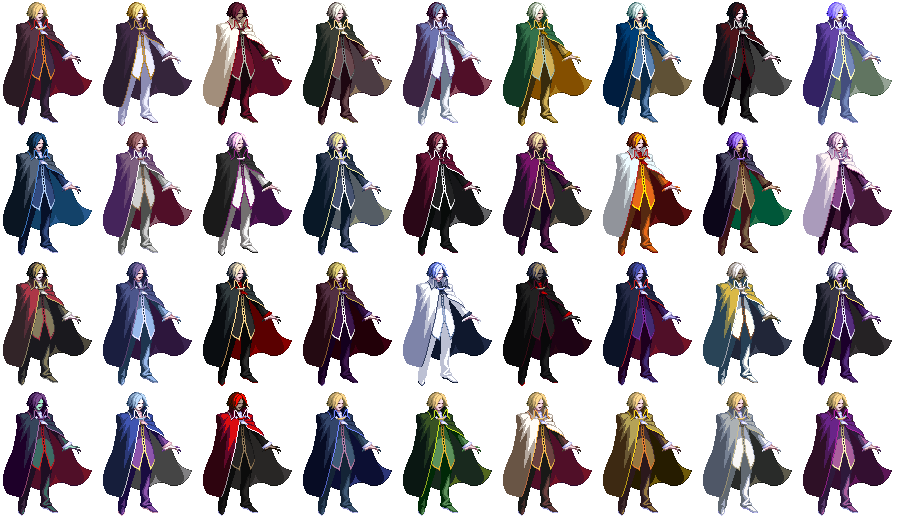
Look at this selection of vampire colors! Discovery & Self Expression Are Vital
Although it differs among players, a key component to analyzing the player psychographics mentioned above is that each player is, in some part, in it for themselves. That isn’t to say that they don’t care about the other players, but they do ultimately want to express or discover something about themselves.
Providing that player agency can be as simple as a variety of color palette choices at character select or as complex as an in-depth combo system that requires years to truly master. Whatever avenue for self expression your game eventually utilizes, being cognizant of what you are providing your audience to discover will make for a more compelling player experience.
If Your Theme Isn’t At Common, It’s Not Your Theme
I’ve left this for last simply because it deserves more explanation than the others. Magic: the Gathering separates its cards into a variety of rarities: common, uncommon, rare, and mythic rare. These have differing rates of occurrence in a booster pack, meaning that most players who purchase products from Wizards of the Coast will run into commons way more often than rare or mythic rares.
These categories offer designers a chance to throttle the player experience and leave more complex concepts or mechanics for rare or mythic rare cards. If a new player runs into a complex mythic rare, that’s okay because it is only one of potentially hundreds of other cards they own, most of which are simple enough to grok without years of experience playing the game at a high level.
Fighting games are similar, except instead of gating mechanics behind card rarities, fighters have normals, command normals, target combos, specials, ex specials, super arts, super desperation moves, and too many more to list here. Most of a character’s moves are going to be normals—their punches, kicks, and basic martial art attacks. Street Fighter’s Ryu, for example, has plenty of normal moves (Street Fighter is traditionally a six-button fighter), but only three or four special moves, and one to three super arts in his arsenal. Throwing a fireball requires a unique joystick notation as well, leaving some new players left mashing buttons rather than trying to do a 623 motion.

“Grok?” Mr. Rosewater emphasizes in his lessons on card game design that whatever one’s theme is, it should be readily apparent to a new player after confronting their first booster pack of cards. Given that only 3/15 of the cards in any normal pack will be uncommon and 1/15 of them will be rare or mythic rare (although they’ve changed the specific numbers and types of booster packs since I quit playing), that means that 11 of the 15 cards that a new player purchases will be common and, therefore, limited to being relatively simple compared to others.
In the same way that a Magic set’s theme should be apparent at common, so too should a fighting game’s theme be apparent to players who simply mash buttons and don’t wait long enough to learn how to do a hadouken. If you don’t want players to have to worry about links or precise timing between normals, make your basic attacks chain into one another. If you want to focus on aerial combat, give some fighters grounded normals that leave them airborne. Conversely, if you want a fighter to focus on grounded combat, provide them opportunities to keep their opponent where they are most effective and limit their options to jump.
This applies to both universal mechanics and character-specific themes; if your most inexperienced players can’t “get it” after hitting a few buttons, it needs to be better baked into the foundation of the player experience.
Thanks for reading!
-

Combo-A-Day Project: Ultimate Marvel vs Capcom 3 Combo Videos
During these trying times, I’ve found myself taking solace in the training mode of my favorite fighting game to lab, Ultimate Marvel vs Capcom 3. While my combos may not be perfectly optimal or stylish, I tried to take a different character/team for a spin each day and see what I could come up with. If you’re interested to see some lower tier representation rather than the same Dante/Vergil/Zero THC combo over and over, then check out my two latest combo videos below.
If you’d like to see more videos like this, consider subscribing to my YouTube Channel and following me on Twitter @mohastgridlock.
-
Power Rangers: Battle for the Grid v1.6 100% Combos
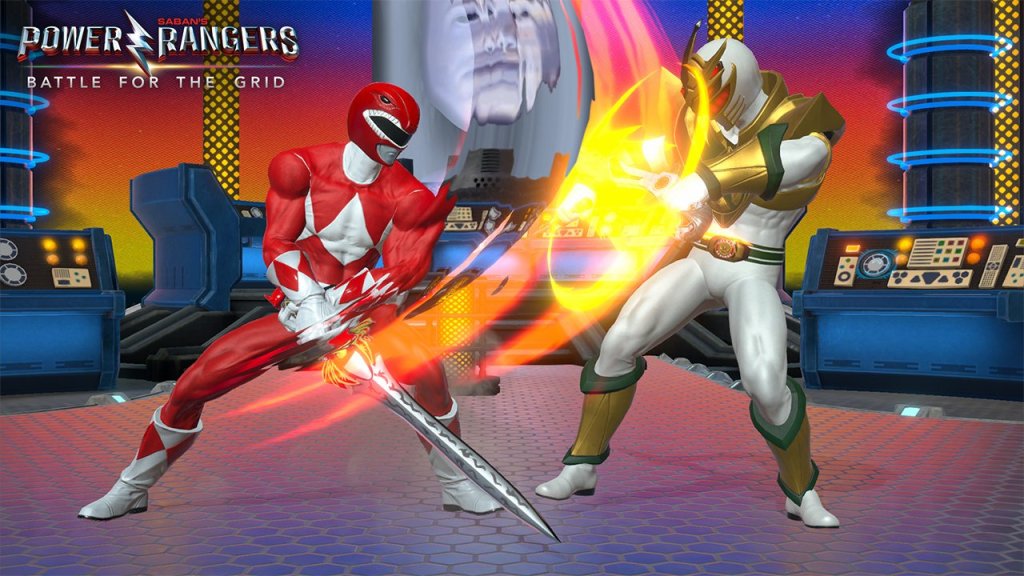
Hey y’all! I’ve been busy playing a lot of Power Rangers: Battle for the Grid lately, so I decided to create a few touch of death combo videos for my new team of Jason (Red Ranger), Goldar, and Udonna. I hope you enjoy these as much as I enjoyed making them:
Goldar 100% Damage Corner Combo
I recently picked up Goldar because of his assist, oppressive normals, and flight shenanigans. His damage potential in the corner is pretty on par for the cast, but his power in the neutral by himself or as an assist makes him stand out. This combo takes advantage of Jason’s OTG assist.
Udonna 100% Damage Corner Combo
Udonna has been my girl since day 1, but patch v0.6 has given her a lot of new tools to keep up with the rest of the cast. She can now combo after her super and OTG with her forward special and sweep.
Jason (Red Ranger) 100% Damage Combo
Like Goldar, I picked up Jason recently because he’s easy to use, deals tons of damage, and has lots of utility as an assist. This combo can start anywhere and leads to your opponent dying for 3 bars and a Goldar assist.
I highly suggest you try out Power Rangers: Battle for the Grid if you enjoy the Rangers franchise, versus-style fighting games, or fun and flexible combo systems. Check it out!
 tommgoldrick.com