Blog

  • Ode to the Barrens – Classic WoW Zone Design

    Ode to the Barrens – Classic WoW Zone Design

    When it comes to Vanilla World of Warcraft leveling zones, two stand out the most: Westfall and the Barrens. Each represent the 10-20 leveling experience for both Alliance and Horde respectively. While Westfall was one of the first leveling zones developed for WoW, it’s easy to see how much love and care went into the development of the area. There are long quest chains that tell the story of a gang of bandits and a global conspiracy, as well as smaller, more charming quests that litter the zone. The Barrens, on the other hand, stays relatively true to its name; it’s pretty barren when you get down to it.

    That being said, there is still a large population of the World of Warcraft community (especially those who frequent private servers to get their vanilla fix) that holds the Barrens close to their heart. Nostalgia is a helluva drug, but there might also be something beneath the rose colored glasses worth exploring to discover what made Barrens such a beloved leveling zone, despite it’s obvious short comings.

    5. Crossing the Plains

    One of the biggest complaints about The Barrens (both from the developers and from many players) was that there was far too much walking for a 10-20 zone. Without a mount, having to cross the entire zone on foot could be tedious, running from quest givers in the Crossroads, Ratchet, and Camp Taurajo to their requested destinations across the wild plains. Not only are these areas nearly flat and devoid of vegetation (except for a few oasis scattered around), but what they are heavily populated with is mobs that want to kill you dead.

    In this way, the Barrens is a great example of what made vanilla World of Warcraft so immersive. The wide, open plains reward exploration, provide a unique sense of scale to the world, and offer a wholly unique aesthetic to what we were used to seeing in traditional high fantasy fiction. Despite what modern game design might describe as “barriers to entry” that need to be improved by “quality of life” changes, vanilla World of Warcraft thrives when the player feels like part of a larger world. Sometimes these aspects of Azeroth can be annoying (.e.g Getting stuck on a continent with no idea where to go, etc), but they can often make the results of your labor feel all the more rewarding.

    4. Flight Paths

    On a similar note, thanks to the lack of mounts for players before level 40, the Barrens is a great opportunity to show off Kalimdor in all its glory from above. Flight paths (WoW’s version of taxi cabs or Uber) offer players a great view of the plains, the tops of mountains, and the luscious oasis that pop up throughout the Barrens. Once again, forced downtime (a mechanic that is often considered a sin among modern MMO designers) offers players time to reflect on their quests, plan for their future adventures, and take in all that the world has to offer. Flight paths offer this in spades, giving players a new perspective on the world around them and, perhaps, providing enough of an incentive to explore newfound opportunities while traveling by air.

    3. Wailing Caverns

    World of Warcraft’s instanced Dungeons are almost as much as a part of Azeroth as the open world is. This is especially true of early leveling dungeons, like Deadmines and Wailing Caverns, as they introduced newbies to group content and provided plenty of opportunities for player killers to wreck havoc on the PvE-focused populace. Wailing Caverns is a spectacular dungeon that represents a lot of firsts for fledgling Horde players; not only is it the first dungeon most Orcs, Trolls, Tauren, and Undead come across where they’re in danger of being ganked by Alliance players but it also blurs the line between instanced and open-world dungeon content. Although the maze of caverns can often feel tedious after a few runs through, WC will forever be pillar for why the Barrens is such a memorable leveling zone.

    2. The Crossroads is Under Attack!

    Along a similar train of thought to the Wailing Caverns, the corresponding central quest hub, called the Crossroads, was a bastion for early-WoW world PvP. Low and high level characters alike would duke it out over control of the Horde leveling town. Having quick access by way of the neutral town of Ratchet, Alliance players were given a perfect opportunity to gank unsuspecting Horde lowbies. As is a common pattern for content that stands out in vanilla WoW as particularly memorable, the Crossroads was a hot bed for player interaction, both in group questing and group debauchery and it will forever be synonymous with the pleasures of leveling a Horde toon.

    1. Flavor of the Horde

    One of the most charming factors that brought me to World of Warcraft initially was how different the Horde felt as opposed to other, more traditional high fantasy stories. Most games didn’t revolve around the ugly monsters or the more mundane aspects of life as an orc. The Barrens provides a perfect example of the diverse background of the Horde, giving players a more calm, nature-focused lens through which to view the warriors clans from Orgrimmar. From the scattered outposts to the shimmering oasis, the Barrens will forever be a quintessential part of the leveling experience for Horde players, and as such, outlives whatever perceived flaws designers may have attributed to it over the years. Creating a flat, barren space doesn’t sound like a recipe for game environment success, but the Barrens achieved the nearly impossible.
  • Zombieland: Double Tap – Review

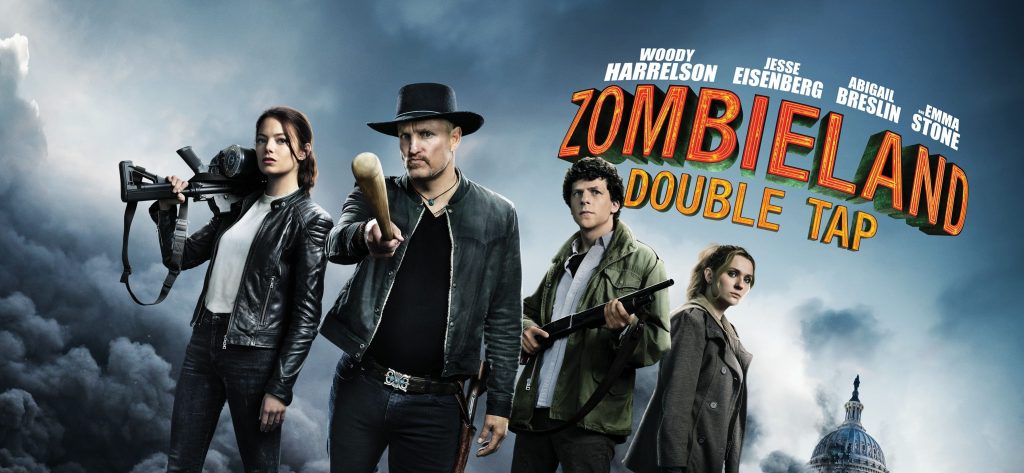
    Zombieland: Double Tap – Review

    (Zombieland: Double Tap – Columbia Pictures)

    Rarely does a sequel so accurately leave me with the same feeling as its predecessor as I’m walking out of the theater. In Zombieland: Double Tap, Columbus, Tallahassee, Wichita, and Littlerock are back, albeit a little older, and ready to take on the undead hordes that have laid waste to the contiguous United States of America. In similar fashion to the Terminator franchise that it so often references, this second romp through the apocalypse treads familiar ground while deviating only slightly from the core elements that made the original so popular. Instead of going on a road trip to Hollywood, our survivors decided to turn the White House into a zombie-fortress and visit Graceland to fawn over Elvis memorabilia. The pattern is perfectly apparent as the opening credits roll, once again matching slow-motion zombie battles with Metallica except with slightly crappier CGI and editing.

    What Zombieland: Double Tap does well is deliver on a simple, comedic zombie road trip movie. Butchering the undead is as entertaining as ever and the survivors are just as charming as they were nearly a decade ago, but if you were expecting an evolution on the formula, Double Tap offers more of the same. In that way, the sequel actually improves on the foundation that the original Zombieland set. While the first film abandoned the zombie survival rules gimmick about halfway through its runtime, Double Tap doubles down on the idea by keeping it going throughout the film, even going so far as to introduce a second character that also obsesses about a set of commandments for staying alive.

    The new characters this time around are all welcome additions, especially given how homogenous the original cast was, but like everything else in this series, they aren’t left with much to do or say that’s of much consequence. If The Big Lewbowski was a movie about nothing, Zombieland and its sequel really want to be about something but, either due to budget restraints or severely limited scope, fail to create characters or plot arcs worth caring about. Double Tap makes up for this somewhat by keeping me laughing throughout, regardless of whether I’m laughing with the movie or at it.

    Verdict: Definitely worth seeing if you enjoyed the first, but otherwise forgettable.

  • Merfight Combo Videos – Indie Fighting Game Prototype

    Merfight Combo Videos – Indie Fighting Game Prototype

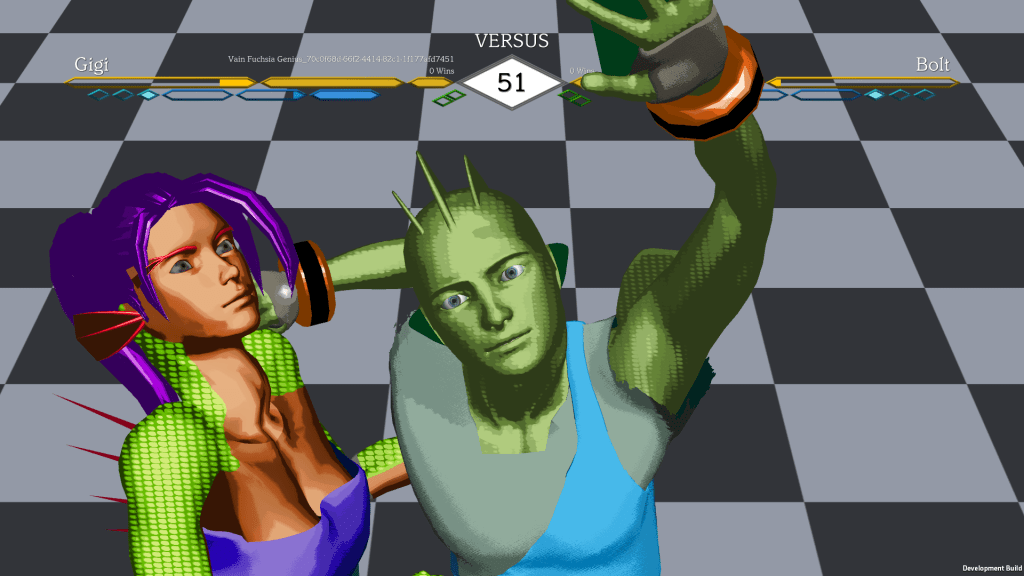
    If I had to describe myself as a fighting game player, I would call myself a lab rat. I enjoy nothing more than to sit down in training mode with a new fighting game and explore the mechanics of combat. This is why it is such a pleasure to be able to play Mattrified Games’ newest 2D fighting game project, Merfight, in an early stage of development. Given the opportunity, I created a few combo videos to demonstrate what I’ve found so far in the 4.1 version of the game, which you can find below:

    Merfight 4.1 Combo Video

    This video covers a few combos for Gigi, Bolt, Strike, and Arctina. I decided to leave Atlas for his own video, which prompted me to create videos for each of the characters. Expect more coming soon.

    Atlas is a really interesting character, especially when it comes to using Rush Gems to cancel his specials and extend his combos.

    Strike is an interesting mix of a rush down character and a grappler. He has great combo potential, but can mix-up his opponents with grab resets as well.

    Bolt is one of my favorite fighters so far. Not only does he have charged versions of his specials, but he has uncharged ones as well, meaning that he can throw out weaker versions of his specials moves while walking or jumping forward.

    Gigi has a lot of tools in her move list including linking normals, repeated wall and ground bounces, repeatable supers, and much more. Check the video out below!

    As a rekka character, Arctina has a very unique feel to her combos. Having an oki trap in addition to strong pokes and pressure means that once she gets a hit, she’ll have interesting oki mix-ups afterward.

    Finally, here’s a little video I made after Matt (the developer) mentioned that he would be introducing damage scaling during combos. I wanted to see what kinds of 100% damage combos were possible and the results were pretty shocking.

    If you like what you see and want to support Mattrified Games, follow him on Twitter @mattrified and check out the game here.

  • Joker – Review: A Film About Everything And Nothing

    Joker – Review: A Film About Everything And Nothing

    (Joker – Warner Bros.)

    SPOILER WARNING


    If you haven’t seen Joker yet, there are potential spoilers ahead.

    To tell you the truth, I almost didn’t want to see this movie. With all of the media attention that Joker got prior to its release, I was already tired of the discourse by the time October 4th rolled around. Thankfully, good friends of mine invited my girlfriend and me out to see the film in addition to going to our favorite Mexican restaurant, so needless to say, I was sold.

    It seems like Joker is already a lot of things to a lot of people. For some, it’s a clumsy origin story of a psychotic killer clown from the director that brought you The Hangover 3. For others, it’s a tragedy of how a man with serious mental illness is driven to violence and villainy by a city that neither cares about his wellbeing nor acknowledges his humanity. As for myself, I’m having a hard time coming up with a concise explanation of how I felt given how much was going on during the film. Ultimately, I wasn’t as impressed with Joker as I would have liked, but Joaquin’s performance was nearly worth the price of admission alone and it managed to gain my seal of approval after a solid third act.

    Despite acting as an homage to both Taxi Driver and The King of Comedy, Joker falls short of its inspiration in more ways than one. The idea that it deserved the supposed eight-minute standing ovation Joker got during its initial screening is silly at best, but that being said, it succeeds in exactly what it was meant to do and kept me on the edge of my seat throughout. What might be more interesting, however, is how the film played with my expectations and left me questioning a lot of the assumptions I had made about it beforehand.

    I would be remiss to continue without mentioning that the acting, casting, costumes, set design, and photography for Joker was fantastic. The dark, comic book-inspired 1980s setting helped ground the otherwise comical character firmly in reality. Although it manages a much darker tone than most comic book stories, Joker isn’t without its own laughs sprinkled throughout the otherwise tense and dramatic film.

    It’s hard to say exactly what I expected out of Joker besides a grittier, more realistic take on the Joker’s origin story. Instead of a vat of acid, Arthur Fleck falls into the realization that not everything about his life is as it seems, which combined with severe mental illness, transforms him into the criminal clown that we all know and… love?

    What I wasn’t expecting, however, was just how much time we would end up spending with Arthur Fleck as opposed to his evil alter-ego. Most of the scenes from the trailer show up in the film but reveal something very interesting about Warner Bros. marketing: the trailers want you to believe that the Joker will appear in the film and cause havoc. However, the film shows a different side of the character as Joaquin triumphantly stomps down a flight of stairs only to interrupted by shouting policemen, causing him to skitter away with all of the grace of a looney tune. The Joker we see just doesn’t match up with the genius criminal we’re made to believe he is. In fact, I would say that this Joker feels a lot more like Arthur Fleck playing the Joker than him coming into his own as the Clown Prince proper.

    Once again, spoilers ahead.

    One of my primary issues with the film relates directly to a major plot point. After Arthur Fleck murders three wall street suits on the subway, Thomas Wayne, who is running for Mayor in the film, vaguely compares the downtrodden of Gotham to clowns, which ignites political upheaval as protesters don plastic clown masks and riot. Although the film starts off by establishing the trash strike going on in Gotham, it takes a generous leap of logic to suggest that heaps of trash in the streets, a crappy mayoral candidate, and the random slaying of three businessmen would start a political movement. This shakey connection only helps to muddy the overall message of the film. The riot scenes in Joker felt more like progressive political anti-establishment sentiment filtered through the lens of an aging filmmaker who didn’t really get what all the kids marching on Wall Street were up to years ago but really admired their gumption.

    The twist of fate at the end of the movie where, despite announcing that he was not affiliated with the political riots going on at the time, the Joker is saved from police custody by the protesters rioting in the streets caught me off guard and left me with a lot of questions. Do the protesters recognize Arthur from the television broadcast that was happening simultaneously to the riots? If they do, I can see how killing Robert DeNiro’s character could be taken as a strike again Gotham’s 1%, but I find the the whole connection difficult to believe. Is the ramming of the police vehicle just a random act of violence that happens to result in a crowd forming around a man who was just in a car crash?

    Talking about twists, I wish Joker’s big reveal that his relationship with his girlfriend from the first act was all in head was executed less clumsily. Instead of recognizing the “strange” scenes for what they were, I chalked it up to bad film making rather than an unreliable narrator. Once the idea that what appears on the screen may not be what is actually happening was introduced, things started to make a lot more sense. I’d go so far as to say that the movie should have played with that a bit more. For example, my issues with Joker being retrieved from the police car as a symbolic figure for revolution could be easily explained by the theory that the character we see in “Joker” isn’t Joker himself, but instead Arthur Fleck playing the character from time to time, drifting in and out of his more sinister persona.

    What if we never see Arthur fully become the Joker in this film?

    I don’t know what it says about Joker that I’m having more fun speculating about how it could all make sense given some pretty specific hypothetical fan theories, but hear me out. What if we never see Arthur fully become the Joker in this film? What if, like Fight Club’s unreliable narrator, we only get to see one side of the story? What if Arthur Fleck is to Joker as “The Narrator” is to Tyler Durdan? That might explain how Arthur, a frail, pathetic man transforms into a genius criminal capable of bringing Gotham to its knees. Or, you could believe the fan theory that the director has at least directly mentioned, that Arthur isn’t actually the Joker but a proto-version of the character that inspires the one we know and love. I’d feel cheated if that was the case, given how much marketing went into hyping us up to see the Crown Prince of Crime.

    Unfortunately, this movie doesn’t give me any reason to believe that Arthur would be capable of the kind of mental and physical gymnastics that Joker is most known for. Every event that the populace of Gotham attributes to the Joker is actually caused by Arthur accidentally causing havoc as he flails about, barely managing to stay standing half the time. The slayings that set off the initial protests aren’t some sinister plot to sow seeds of unrest among the people of Gotham. The riots at the end of the film aren’t caused by an insane clown mastermind; they happen because Arthur hides from the cops on a busy subway train. If the goal of this origin story was to subvert our expectations that Joker’s most valuable asset was his intellect, then job well done.

    With all of that in mind, I’m still glad that they tried something different this time around. I was definitely not expecting the approach to the character that they decided on, but it undoubtedly provides a fresh and intriguing look at one of America’s most beloved and feared supervillains. Top it all off with an outstanding performance from the leading actor and you have a movie that’s hard to ignore despite its sometimes sloppy execution.

  • 5 Ways that Rift Lives on in Guild Wars 2

    5 Ways that Rift Lives on in Guild Wars 2

    (Guild Wars 2: Icebrood Saga – ArenaNet)

    As I’ve mentioned repeatedly before, Rift is one of my favorite MMORPGs. Sadly, I don’t expect to revisit Telara anytime soon, given that the game has long since transitioned to being free-to-play and entered what is effectively a maintenance mode. Another MMORPG has caught my eye, however; I just can’t seem to keep my hands off of Guild Wars 2, especially given ArenaNet recently launched their latest Living World event, the Icebrood Saga. After spending hours reliving my adventures in Tyria, I realized that many of the reasons that I had originally fallen in love with Rift were clearly apparent in Guild Wars’ sequel. Had my favorite MMO been living under my nose all this time? Did my frustration with the changes to the class and skill system in Guild Wars 2 keep me from realizing its brilliance? Either way, let’s jump straight into the top 5 ways that Rift lives on in Guild Wars 2.

    5. Group Quests

    Let’s get the obvious items out of the way, shall we? Rift’s namesake mechanic involved temporal rifts opening up in the wilderness, each requiring a group of adventurers to overcome and fight back the oncoming horde of baddies. Players didn’t need to join a group or invite strangers into their own party to participate as a community to overcome a common goal. Guild Wars 2 picked up where Rift and other MMOs (Warhammer Online comes to mind) left off, allowing players to jump in and out of quests simply by completing their objectives while sharing rewards with nearby players along the way. Not only does this create a more welcoming and accessible world to play in but it creates a more streamlined experience than the more traditional fetch quests of old.

    4. Exploration

    Although Guild Wars made a name for itself just fine without a persistent open-world environment, ArenaNet shifted their focus drastically with the sequel to emphasize exploring Tyria. Similarly, Rift implemented plenty of features to keep players from AFKing in their faction’s major city waiting for dungeon queues to pop. Whether it was open world puzzles, group events, or artifact hunting, the ascended of Telara always had some reason to explore the world. This seems like an essential part of any MMORPG, but what Rift and Guild Wars 2 accomplish that many other MMOs fail to do is provide a reason to explore outside of the main leveling experience. It’s an open world out there, so it makes sense to have plenty of things to do in it.

    3. Armies of Invaders

    In addition to the portals opening up all around Telara, Rift shook things up by having armies of enemies attack nearby towns and cities to disrupt the leveling experience. The idea of world events isn’t new, but when a giant world boss and their army of minions march on your home for the first time, it shows just how cinematic group experiences in MMOs can be. Guild Wars also embraced this as a part of their group questing mechanics. While most quests involve helping out a local farmer or harvesting resources, some involve nearby enemies laying siege to quest hubs or a zone boss killing low-level players en masse. These kinds of moments are what MMORPGs are all about, and the sense of scale and purpose just can’t be matched in other games.

    2. Mentoring

    MMORPGs, more often than most other genres, carry a lot of baggage from bygone eras. Some games embrace the silliness of endlessly slaying monsters on the hedonistic treadmill we call “grinding,” while others prefer not to shy away from the fact that levels as a concept are outdated. Rift and Guild Wars 2 are definitely the latter, despite the fact that both include level caps that come close to triple digits and leveling experiences that could take a few months to complete. Rift’s answer to the question of leveling was to implement a mentoring system to allow players of different levels to scale their stats to something closer in power level to make adventuring together more fun and engaging. Guild Wars does something similar, except that it is done automatically upon entering a zone, creating a seamless world that most other MMOs fail to achieve.

    1. Back to the Action

    When you think quick, simple fun, you probably don’t think of MMOs. Some developers have put significant work towards ensuring that isn’t the case, however. Rift, especially later in its lifespan, developed many features under the philosophy of getting players into the action as fast as possible. Their answer, among other things, was to include an Instant Adventure button that quite literally instantly teleports the player to another place and gives them a specific objective to complete with another group of adventurers. Tired of instant adventure? Try some of the singleplayer story content or instanced PVP. Crafting, costumes and other sideshows fill out the usual suite of features for a theme park MMO, but providing content is clearly not the same as guiding the player through it, which both Rift and Guild Wars 2 do spectacularly.

    I hope you enjoyed this short romp through memory lane. If you’d like to read more posts like this one or if you remember a specific MMO memory that has stuck with you, feel free to let us know in the comments below.

    Happy hunting!