Author: tomgoldrick

  • Joker – Review: A Film About Everything And Nothing

    Joker – Review: A Film About Everything And Nothing

    (Joker – Warner Bros.)

    SPOILER WARNING


    If you haven’t seen Joker yet, there are potential spoilers ahead.

    To tell you the truth, I almost didn’t want to see this movie. With all of the media attention that Joker got prior to its release, I was already tired of the discourse by the time October 4th rolled around. Thankfully, good friends of mine invited my girlfriend and me out to see the film in addition to going to our favorite Mexican restaurant, so needless to say, I was sold.

    It seems like Joker is already a lot of things to a lot of people. For some, it’s a clumsy origin story of a psychotic killer clown from the director that brought you The Hangover 3. For others, it’s a tragedy of how a man with serious mental illness is driven to violence and villainy by a city that neither cares about his wellbeing nor acknowledges his humanity. As for myself, I’m having a hard time coming up with a concise explanation of how I felt given how much was going on during the film. Ultimately, I wasn’t as impressed with Joker as I would have liked, but Joaquin’s performance was nearly worth the price of admission alone and it managed to gain my seal of approval after a solid third act.

    Despite acting as an homage to both Taxi Driver and The King of Comedy, Joker falls short of its inspiration in more ways than one. The idea that it deserved the supposed eight-minute standing ovation Joker got during its initial screening is silly at best, but that being said, it succeeds in exactly what it was meant to do and kept me on the edge of my seat throughout. What might be more interesting, however, is how the film played with my expectations and left me questioning a lot of the assumptions I had made about it beforehand.

    I would be remiss to continue without mentioning that the acting, casting, costumes, set design, and photography for Joker was fantastic. The dark, comic book-inspired 1980s setting helped ground the otherwise comical character firmly in reality. Although it manages a much darker tone than most comic book stories, Joker isn’t without its own laughs sprinkled throughout the otherwise tense and dramatic film.

    It’s hard to say exactly what I expected out of Joker besides a grittier, more realistic take on the Joker’s origin story. Instead of a vat of acid, Arthur Fleck falls into the realization that not everything about his life is as it seems, which combined with severe mental illness, transforms him into the criminal clown that we all know and… love?

    What I wasn’t expecting, however, was just how much time we would end up spending with Arthur Fleck as opposed to his evil alter-ego. Most of the scenes from the trailer show up in the film but reveal something very interesting about Warner Bros. marketing: the trailers want you to believe that the Joker will appear in the film and cause havoc. However, the film shows a different side of the character as Joaquin triumphantly stomps down a flight of stairs only to interrupted by shouting policemen, causing him to skitter away with all of the grace of a looney tune. The Joker we see just doesn’t match up with the genius criminal we’re made to believe he is. In fact, I would say that this Joker feels a lot more like Arthur Fleck playing the Joker than him coming into his own as the Clown Prince proper.

    Once again, spoilers ahead.

    One of my primary issues with the film relates directly to a major plot point. After Arthur Fleck murders three wall street suits on the subway, Thomas Wayne, who is running for Mayor in the film, vaguely compares the downtrodden of Gotham to clowns, which ignites political upheaval as protesters don plastic clown masks and riot. Although the film starts off by establishing the trash strike going on in Gotham, it takes a generous leap of logic to suggest that heaps of trash in the streets, a crappy mayoral candidate, and the random slaying of three businessmen would start a political movement. This shakey connection only helps to muddy the overall message of the film. The riot scenes in Joker felt more like progressive political anti-establishment sentiment filtered through the lens of an aging filmmaker who didn’t really get what all the kids marching on Wall Street were up to years ago but really admired their gumption.

    The twist of fate at the end of the movie where, despite announcing that he was not affiliated with the political riots going on at the time, the Joker is saved from police custody by the protesters rioting in the streets caught me off guard and left me with a lot of questions. Do the protesters recognize Arthur from the television broadcast that was happening simultaneously to the riots? If they do, I can see how killing Robert DeNiro’s character could be taken as a strike again Gotham’s 1%, but I find the the whole connection difficult to believe. Is the ramming of the police vehicle just a random act of violence that happens to result in a crowd forming around a man who was just in a car crash?

    Talking about twists, I wish Joker’s big reveal that his relationship with his girlfriend from the first act was all in head was executed less clumsily. Instead of recognizing the “strange” scenes for what they were, I chalked it up to bad film making rather than an unreliable narrator. Once the idea that what appears on the screen may not be what is actually happening was introduced, things started to make a lot more sense. I’d go so far as to say that the movie should have played with that a bit more. For example, my issues with Joker being retrieved from the police car as a symbolic figure for revolution could be easily explained by the theory that the character we see in “Joker” isn’t Joker himself, but instead Arthur Fleck playing the character from time to time, drifting in and out of his more sinister persona.

    What if we never see Arthur fully become the Joker in this film?

    I don’t know what it says about Joker that I’m having more fun speculating about how it could all make sense given some pretty specific hypothetical fan theories, but hear me out. What if we never see Arthur fully become the Joker in this film? What if, like Fight Club’s unreliable narrator, we only get to see one side of the story? What if Arthur Fleck is to Joker as “The Narrator” is to Tyler Durdan? That might explain how Arthur, a frail, pathetic man transforms into a genius criminal capable of bringing Gotham to its knees. Or, you could believe the fan theory that the director has at least directly mentioned, that Arthur isn’t actually the Joker but a proto-version of the character that inspires the one we know and love. I’d feel cheated if that was the case, given how much marketing went into hyping us up to see the Crown Prince of Crime.

    Unfortunately, this movie doesn’t give me any reason to believe that Arthur would be capable of the kind of mental and physical gymnastics that Joker is most known for. Every event that the populace of Gotham attributes to the Joker is actually caused by Arthur accidentally causing havoc as he flails about, barely managing to stay standing half the time. The slayings that set off the initial protests aren’t some sinister plot to sow seeds of unrest among the people of Gotham. The riots at the end of the film aren’t caused by an insane clown mastermind; they happen because Arthur hides from the cops on a busy subway train. If the goal of this origin story was to subvert our expectations that Joker’s most valuable asset was his intellect, then job well done.

    With all of that in mind, I’m still glad that they tried something different this time around. I was definitely not expecting the approach to the character that they decided on, but it undoubtedly provides a fresh and intriguing look at one of America’s most beloved and feared supervillains. Top it all off with an outstanding performance from the leading actor and you have a movie that’s hard to ignore despite its sometimes sloppy execution.
  • 5 Ways that Rift Lives on in Guild Wars 2

    5 Ways that Rift Lives on in Guild Wars 2

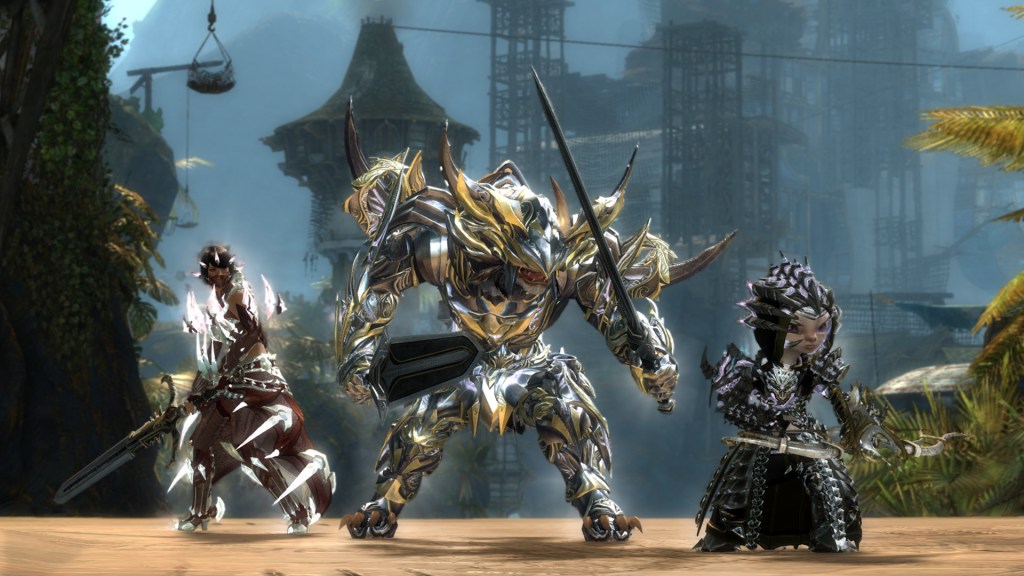
    (Guild Wars 2: Icebrood Saga – ArenaNet)

    As I’ve mentioned repeatedly before, Rift is one of my favorite MMORPGs. Sadly, I don’t expect to revisit Telara anytime soon, given that the game has long since transitioned to being free-to-play and entered what is effectively a maintenance mode. Another MMORPG has caught my eye, however; I just can’t seem to keep my hands off of Guild Wars 2, especially given ArenaNet recently launched their latest Living World event, the Icebrood Saga. After spending hours reliving my adventures in Tyria, I realized that many of the reasons that I had originally fallen in love with Rift were clearly apparent in Guild Wars’ sequel. Had my favorite MMO been living under my nose all this time? Did my frustration with the changes to the class and skill system in Guild Wars 2 keep me from realizing its brilliance? Either way, let’s jump straight into the top 5 ways that Rift lives on in Guild Wars 2.

    5. Group Quests

    Let’s get the obvious items out of the way, shall we? Rift’s namesake mechanic involved temporal rifts opening up in the wilderness, each requiring a group of adventurers to overcome and fight back the oncoming horde of baddies. Players didn’t need to join a group or invite strangers into their own party to participate as a community to overcome a common goal. Guild Wars 2 picked up where Rift and other MMOs (Warhammer Online comes to mind) left off, allowing players to jump in and out of quests simply by completing their objectives while sharing rewards with nearby players along the way. Not only does this create a more welcoming and accessible world to play in but it creates a more streamlined experience than the more traditional fetch quests of old.

    4. Exploration

    Although Guild Wars made a name for itself just fine without a persistent open-world environment, ArenaNet shifted their focus drastically with the sequel to emphasize exploring Tyria. Similarly, Rift implemented plenty of features to keep players from AFKing in their faction’s major city waiting for dungeon queues to pop. Whether it was open world puzzles, group events, or artifact hunting, the ascended of Telara always had some reason to explore the world. This seems like an essential part of any MMORPG, but what Rift and Guild Wars 2 accomplish that many other MMOs fail to do is provide a reason to explore outside of the main leveling experience. It’s an open world out there, so it makes sense to have plenty of things to do in it.

    3. Armies of Invaders

    In addition to the portals opening up all around Telara, Rift shook things up by having armies of enemies attack nearby towns and cities to disrupt the leveling experience. The idea of world events isn’t new, but when a giant world boss and their army of minions march on your home for the first time, it shows just how cinematic group experiences in MMOs can be. Guild Wars also embraced this as a part of their group questing mechanics. While most quests involve helping out a local farmer or harvesting resources, some involve nearby enemies laying siege to quest hubs or a zone boss killing low-level players en masse. These kinds of moments are what MMORPGs are all about, and the sense of scale and purpose just can’t be matched in other games.

    2. Mentoring

    MMORPGs, more often than most other genres, carry a lot of baggage from bygone eras. Some games embrace the silliness of endlessly slaying monsters on the hedonistic treadmill we call “grinding,” while others prefer not to shy away from the fact that levels as a concept are outdated. Rift and Guild Wars 2 are definitely the latter, despite the fact that both include level caps that come close to triple digits and leveling experiences that could take a few months to complete. Rift’s answer to the question of leveling was to implement a mentoring system to allow players of different levels to scale their stats to something closer in power level to make adventuring together more fun and engaging. Guild Wars does something similar, except that it is done automatically upon entering a zone, creating a seamless world that most other MMOs fail to achieve.

    1. Back to the Action

    When you think quick, simple fun, you probably don’t think of MMOs. Some developers have put significant work towards ensuring that isn’t the case, however. Rift, especially later in its lifespan, developed many features under the philosophy of getting players into the action as fast as possible. Their answer, among other things, was to include an Instant Adventure button that quite literally instantly teleports the player to another place and gives them a specific objective to complete with another group of adventurers. Tired of instant adventure? Try some of the singleplayer story content or instanced PVP. Crafting, costumes and other sideshows fill out the usual suite of features for a theme park MMO, but providing content is clearly not the same as guiding the player through it, which both Rift and Guild Wars 2 do spectacularly.

    I hope you enjoyed this short romp through memory lane. If you’d like to read more posts like this one or if you remember a specific MMO memory that has stuck with you, feel free to let us know in the comments below.

    Happy hunting!

  • The Delicate Balance of Complexity Allowance

    The Delicate Balance of Complexity Allowance

    Game design is often a juggling act involving complexity and the audience’s attention. Every game needs some level of complexity to evoke specific emotions in their players, but humans only have a finite amount of attention that they can (or want to) give to your game at any given moment. Each specific element of a game should be evaluated against the added complexity that it will bring to the overall project.

    This can create issues, however, especially when designers get attached to mechanics or assets that they might be better off cutting. The old adage “kill your darlings” applies to games just as much to creative writing, but it can be hard to quantify exactly how complex any given mechanic or how it’s purpose in the design affects how the idea should be evaluated.

    Another hurdle every designer must eventually cross is deciding whether a specific action is healthier as a player decision. Often, it’s easy to get caught up in a cool sequence of actions and lose sight of the overall vision. Those moments have their place, but it’s also important to weigh the value of that decision point against the player’s overall attention. Is the player overwhelmed with choices? How does this affect the player’s experience? What is the reasoning behind this specific sequence? If the player already had enough to keep track of, adding another decision for them could ruin the experience, no matter how interesting or cool the resulting action could have been.

    The goal isn’t always necessarily to simply things either. Decisions represent significant points in gameplay, moments that test the players skills and understanding. Throw too many of these at a player and they can start to feel discouraged, if not completely turned off, by the added opportunity. Humans don’t like messing up, especially when other people are watching, and no matter how you frame the question, there will always be a “right” and “wrong” answer, or at least the player will see it that way. The more questions, the more potential chances for them to embarrass themselves.

    Sometimes it’s better to force the player to perform the desired outcome, rather than give them the chance to fail. Other times, creating mechanics that specifically check the players ability to overcome a challenge is the way to go. It’s a blurry line at best.

    Recently, I went through the entire design document for my latest project with the intention of reducing the overall complexity of the average game state. What I found was that it was relatively easy to cut back on some mechanics, making certain actions simpler or more directed towards their desired outcome. In most cases, I removed superfluous effects that would only really matter once in a blue moon.

    The resulting game should be cleaner, more elegant, and easier to play now that the average game state is less complex and, therefore, easier to grok. Sure, some moves lost a little luster, but it’s a cheap price to pay for the game being more easily approachable. Keep in mind, the first game decides whether a player will keep playing. Making the learning experience as smooth as possible is paramount for creating an experience that players will want to come back to.

  • Guild Wars 2 is the MMORPG I Always Wanted

    Guild Wars 2 is the MMORPG I Always Wanted

    (Guild Wars 2 – ArenaNet/NCSoft)

    MMORPGs seem especially prone to building devoted fan bases, leading players towards spending most of their time in one or two virtual world’s that they prefer over others. The original Guild Wars was one of those games that I will forever admire as a landmark in gaming history. ArenaNet pioneered many mechanics that pushed the genre in new and unique directions (focusing more on PVP, showing how silly the leveling treadmill is, singleplayer AI teams, etc).

    Once Guild Wars 2 was announced, I admit that I was cautiously excited, but as the game got closer to release and I managed to get my hands on it, that caution quickly turned to disappointment.

    Gone was the revolutionary card game-esque skill system, where players selected eight abilities to bring into combat rather than using the same skills as everyone else of that class. Players could no longer select a secondary class to diversify their strategic options. Guild Wars 2, while innovative in its own ways, removed much of what I admired most about the original.

    That wasn’t enough to stop me from playing, but it did put a damper on my initial playthrough. I managed to level a warrior and travel through the world but stopped playing after a few months. It took me until 2019 to realize that Guild Wars 2 might be exactly what I need in an MMORPG at this point in my life.

    og_rift_lg

    The more I play GW2, the more I realize it’s stunning similarity to my other favorite MMO, Rift. Group quests keep me entertained as I romp through the wilderness with a pack of strangers, monsters attack nearby villages that need defending, exploration is rewarded, the scenery and atmosphere are gorgeous, and the skill system, while not as brilliantly elegant as it’s predecessor’s, is varied and interesting enough to keep me switching up my playstyle every couple of sessions.

    The only thing that Guild Wars 2 is missing from Rift is it’s tab targeting and poorly aged questing system, both of which I do not miss dearly (although I am always nostalgic of boar killing-style quests once in a while). I wish there was fishing, but with the addition of gliders and mounts, Guild Wars 2 is just about as perfect an MMO as you can get without installing Guild Wars 1.

  • Bonnaroo 2019 Day 3 – Post Malone, Lil Simz, and The Lonely Island

    Bonnaroo 2019 Day 3 – Post Malone, Lil Simz, and The Lonely Island

    Each day of Bonnaroo has its own distinct vibe. Thursday is like Christmas in July, Friday is usually once everything starts to get into the swing of things. Saturday’s vibe is one of excitement paired with unease at the fact that the festival is almost over.

    saturday

    Bonnaroo 2019 wasn’t any different. My girlfriend, my brother, and I started the day at Lil Simz’s show. While she had a lot of people dancing (myself included), I do wish the sound engineers had made her a little louder. It’s strange how an act like Brockhampton can fill the entire festival grounds, but a 1 PM set for a lesser-known artist gets shafted in terms of volume, despite having almost no other musical acts to compete against.

    My memory is a little hazy, but for one reason or another, we ended up missing Bishop Briggs, despite having looked forward to seeing her for a while. Sometimes shit happens.

    We managed to return to Centeroo to catch Quin XCII, before shuffling over to see Kacey Musgraves while heading towards John Prine’s set. After hearing a particularly romantic duet, we took a chance to “see” ODESZA while making our way to the restrooms.

    Our next destination was Post Malone and we were an hour early, so instead of waiting through the ODESZA set, I introduced my girlfriend to the Silent Disco for an AC Slater set (for one reason or another, she didn’t get to experience it her first time on the farm). After dancing our faces off, we took a break by resting on a wooden bench and watched Tokimonsta’s set at The Other. Some of the best Bonnaroo moments involve standing at one amazing set and being able to turn your head to hear another amazing show going on across the Farm.

    We met up with my brothers to see Post Malone. Although I understand that he is very popular amongst the youngsters, I was completely taken aback by how full the What Stage field was. To provide some context, Centeroo is broken up into two major sections: the What Stage and everything else. So when I say that Post Malone’s crowd filled the entire field with what often felt like standing room only you understand the kind of square footage we were dealing with. I’ve seen plenty of rock superstars play the What Stage and never saw a field of people that large. Now, they weren’t all jamming to the tunes as hard as closing acts from previous years rocked the same stage, but the numbers don’t lie; Posties’ got something that keeps the kids coming back.

    To top off the night, we ended up seeing The Lonely Island’s first music festival concert ten years after I had first heard of their music by way of viral Youtube videos. What commenced was essentially an abridged reenactment of their most popular Youtube videos with famous celebrities replaced with puppets. Also, Chris Parnell was there. I had fun and I was glad to see more comedic acts at Bonnaroo this year, but I was also wondering how the act would evolve over time or whether they would slowly run out of viral memes from a decade ago.

    Although 2019 was definitely Sleeparoo (however, this time I have an excuse), my girlfriend and I decided to try and stay up late on Saturday to ensure that we caught some late-night sets and, maybe, we would catch Kalliope around 3 AM. That all fell apart after The Lonely Island’s set ended around 1:30 AM. Although we had promised some of our friends that we would be raging long into the night, we both crashed hard. Needless to say, we did not make it to Kalliope (during their normal hours) at any point during the festival.

    Top 5 Less Obvious Places to Visit at Bonnaroo After You’ve Seen the Big Stuff

    1. The House of Yes: Although pod-specific stages and barns are a fairly new introduction (they must have popped up during my break between 2016 and 2018) to the farm, the House of Yes (Pod 3’s Venue) is a treat worth visiting even if you aren’t camped close. They’re a performance act from Brooklyn, New York and they’re a trip. Feel free to check out my review of their show last year.
    2. The Woods: There are often several wooded areas at Bonnaroo where festival goers can set up hammocks and take a nap. They’re worth visiting at least once to enjoy a more laid back vibe or take a nap. You can’t also be partying hard.
    3. Outside the Grounds: There are some opportunities to leave the grounds and explore other vendors and booths set up outside. Maybe it’s because they don’t pay vendor fees (I don’t actually know), but they tend to sell cheaper wares if you can deal with the occasional religious nutjob shouting at festival kids for living their best lives.
    4. Pod 10 / The Boonies: Although the campground you end up in is a crapshoot, Live Nation seems to understand how much it sucks to land in one of the farther camp sites, like Pod 10. Back in my day, we used to have to walk 45 minutes to Centeroo to listen to music, but nowdays, Pod 10 tends to be where secret sets pop up or other spontaneous debauchery occurs. Sometimes there are perks to being out in the boonies. For everyone lucky enough, you can just visit when the cool stuff is happening and go back to your closer Pod afterwards.
    5. Monteagle: I’m a filthy yankee through and through, but one of my favorite parts of going to Bonnaroo is spending some time in a nearby town called Monteagle, TN. I’m not going to spoil any of our best spots, but you’d be doing yourself a favor by visiting this small town on your trip in or out of the festival. Don’t forget to pick up some hot sauce on your way home.

    Stay tuned next week when I cover the last day of the festival, my first time ever seeing Phish, and some closing thoughts on Bonnaroo 2019 before delving into our trip home.