If playing tabletop wargames is your favorite part of the hobby, then you likely play a skirmish game like Warcry or Kill Team. Either provide all of the glory that traditional Warhammer provides at a significantly smaller scale. It’s been around six months since I last played a game of Warcry, so I thought it would be worthwhile to walk through some of what happened on that fateful night.
After work, three of my friends came by to trade Magic the Gathering cards and play Warcry. I set up the board with five objectives and a couples pieces of terrain (unfortunately, I had temporarily misplaced some of my more vertical terrain) and laid out the available warbands for my friends to select. Noah chose his ever faithful Ossiarch Bonereapers, Sam stuck with his Kruleboyz, Alec brought out the Iron Golems, and I represented the Daemons of Nurgle.
The battle plan was a simple capture and hold objective with the twist that anyone who controls an objective turns it into a healing spring for any nearby allied models. What started out as a patient game of Red Rover turned into a mosh pit in the middle of the board once we all realized that it was going to be the turning point in the game without serious upsets occurring. Alec’s sturdy Iron Golems marched to the center objective first, followed by a skeleton warrior and a Beast of Nurgle. Sam’s Kruleboyz were ambushed by Noah’s Liege Kavalos, which kept them securely in their corner of the battlefield.
Despite having a ton of wounds, the Orruks were eventually able to fell the Ossiarch leader and begin spilling onto the rest of the board. By that time, however, most of the battle had already taken place. As the Ossiarch retreated, the Ogor Breacher and Beasts of Nurgle continued to clash over the central objective, while the Plaguebearers charging in toe were easily felled by the remaining Iron Golems.
By the end of the game, the Kruleboyz were able to slink away mostly unharmed but without achieving their ultimate victory of poisoning the local water supply. Their job was done for them, however, as the blighted corpses of the followers of Nurgle piled up around the well and oozed foul bile into the soil. A new dawn rose slowly over the battlefield to reveal the Iron Golems standing victorious over their enemies, unaware that grandfather Nurgle’s wishes had been fulfilled as well.
Understanding how your online multiplayer game may be used to abuse your player base by bad apples is a key component to keeping a healthy audience of friendly, inclusive, and happy players. If you find your audience begin to skew more toxic and angry, take a look at your game and what elements may be specifically abrasive when played by someone who wants to ruin the fun for everyone else.
Games are not meant to be taken too seriously. There’s a reason that little league baseball diamonds have signs to warn parents against getting too heated during their child’s game. That being said, it is human to take something one is passionate about to heart. Telling folks that “it’s just a game” is often an unhelpful dismissal of the experience that person is having, especially in instances where the game design itself is to blame for the player’s frustrations. Keep in mind, a developer’s job is to evoke specific emotions: it is not the player’s job to be in the right mindset or react appropriately.
Giving players the chance to chat with one another is becoming increasingly unnecessary as accessibility features progress rapidly. Context specific pinging systems, canned alerts, and emojis offer plenty of chances for players to interact without the chance of them throwing slurs and insults at one another. Let folks communicate through their favorite VoIP application with people they like and keep in-game communication as an options for players to opt in for instead of having it as a default setting.
“I love being an annoying prick in online games, especially when I’m better than my opponent. Do I think that’s a particularly pleasant personality trait? Hell no!”
Bad actors can use more than just communication tools to troll and goad other players; specific game designs can often be abused, if not used as intended, to annoy and frustrate opponents. This is an established tactic in all competitive games, but there is a reason that competitive poker players are limited in how they can interact with the other players at the table. A good litmus test for whether a mechanic could potentially be used as a psychological shiv against others is for designers to playtest with competitive players rather than with other developers. Letting more invested players beat your ass by wiping your mental stack and making you want to punch your monitor can be an effective way to iron out these kinds of tools.
Animations, aesthetics, and sounds can also be used by players to annoy and frustrate others. Anyone who has played a particularly spicy Jigglypuff player in Smash Bros. knows how old it gets to hear them taunt repeatedly from across the stage. Costumes and cosmetics can be specifically tailored to vex opponents just as easily. Mortal Kombat’s fatalities are infamous for causing players to turn off their game in anger. Were they just as bad back in the arcades? Probably, but being online only exacerbates the issue.
There is a long precedent of both games that lean into aggressive behavior and avert negative play experiences through clever design. Mortal Kombat 1 is an example of playing both sides: players can brutally disembowel each other post-match but attempting to tea-bag one’s opponent will result in an innocuous taunt instead. NetherRealm Studios also made the baffling decision to let players chat over VoIP by default. Apex Legends does a stellar job of encouraging interaction between team mates without requiring them to communicate verbally or through chat. Most games don’t even allow randomly matchmade opponents to chat with one another, but even canned messages and emojis can be abused. At the end of the day, there is nothing to replace community moderation, but developers have plenty of tools in their repertoire to avert a player’s influence over others’ emotional wellbeing.
Each piece of your design can and will be used against other players by bad actors if you let them. I should know… I love being an annoying prick in online games, especially when I’m better than my opponent. Do I think that’s a particularly pleasant personality trait? Hell no! There will always be a place for people like me in online games, but it should be a result of intentional design and not an accidental byproduct of innocent intentions. Keep in mind how players will play your game beyond the boundaries of your expectations and help avoid tensions among players by resolving those pain points before they become cudgels used to beat your audience into submission.
Player expectations can vary depending on a myriad of variables too varied to count. As a child, I was drawn to the “sexier” elements of real-time strategy games like Starcraft, Warcraft, Command & Conquer, and Age of Empires, such as building a giant army and watching it clash against my opponent’s. Without a clue as to what competitive gameplay looked like and high on passion for the more simulation-style elements of the genre, I struggled to grasp what made these games tick. Watching high-level competitive matches of Starcraft: Brood War and Warcraft 3: The Frozen Throne as an adult has exposed the vast chasm between my expectations as a younger player and the reality of winning an actual match online.
How to Play Terran – Starcraft: Brood War
I was originally drawn to the cowboys-in-space fantasy that Terran represented; lining tanks up and bombarding enemies with nuclear bombs seemed like cool enough tactics to make the game worth playing as a Timmy/Johnny hybrid. Siege Tanks are undoubtedly one of the most important units in the Terran arsenal, but my least favorite unit has now become the one piece I rely on most in 99% of my own matches.
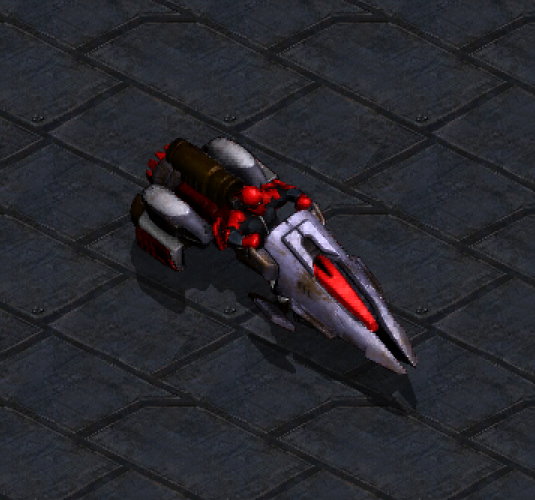
The Vulture is an unassuming hovercycle with a grenade launcher and the ability to plant land mines that chase nearby enemies and provide surveillance of the surrounding area. Without much armor and a short attack range, I originally thought that they were primarily a scout unit without much extra utility. Watching any competitive Starcraft: Brood War game with Terran will quickly reveal just how important they are to the race’s game plan. Not only do they provide lightning-fast scouting, but their mines are some of the best area denial and vision abilities in the game. In small numbers, Vultures are vicious harassing units and they also pack quite a punch in larger groups.
Warcraft 3 is Not an Army Simulator
Although I played a lot of Starcraft, Warcraft 3 is my favorite game of all time and played a significant part in my childhood entertainment. That being said, none of my Warcraft 3 “ladder” matches involved any of the key components of competitive Warcraft: micro, efficient creeping, harassing, and unit diversity. My goal was often to mass a specific unit and smash my head on the keyword in an attempt to appeal to the almighty random number generator. Not only is high-level Warcraft 3 more about leveling Heroes, but armies are often small, varied groups of units that play off of each other’s strengths.
I now realize that heroes that are generally considered great choices are completely opposite to the ones I liked most and for completely different reasons. Splashy and dramatic spells pale in comparison to the ability to summon “more dudes” to fight your opponent. The Farseer, Firelord, and other summoners dominate the competitive landscape together with heroes who provide passive benefits to their armies like the Death Knight and the Keeper of the Grove. Having more boots on the ground in a game about small skirmishing armies makes sense to me as an adult, but it was completely lost on me as a child.
There was a reason I played more custom games than ladder matches, but as an adult, I now fully appreciate the value of a Circlet of Nobility. Minor stat benefits aren’t often attractive to Timmy or Johnny, but I’ve aged into being more of a Spike in my early 30s. Despite Blizzard’s downfall and the demise of Warcraft 3: Reforged, I suspect I’ll be playing Warcraft 3, Starcraft: Brood War, and other real-time strategy games in the future.
Speaking of which, I just helped fund Zero Space, a new RTS game that seems to land somewhere in between Starcraft, Warcraft, and Warhammer: Dawn of War. Check it out on Steam and Kickstarter.
World of Warcraft, the 800 lb gorilla of the MMORPG industry, has gained renewed popularity with the release of World of Warcraft: Classic, its subsequent expansions, and novelty servers. Even as the ashes of Activision Blizzard’s public reputation continue to smolder, Warcraft persists almost twenty years after its release. Despite having a new ‘retail’ expansion on the horizon, it feels that the longevity of WoW Vanilla will outlast not just its competition but its progeny as well whether Blizzard wants it to or not.
Winter is Coming
Massively multiplayer online role-playing games, like World of Warcraft, and Winter go together like blueberries and pie. For those living far enough from the equator for it to matter, the holiday season is cold, dark, and often lonely. Fantastic worlds of wonder and magic offer players an escape from their troubles and a “third place” to gather with other like-minded individuals. In search of a virtual world to make my home for the winter, I shuffled through my collection of MMORPGs to see what the space had to offer in 2023.
Clearly, Final Fantasy is doing just fine. It’s not my cup of tea, but I’m glad folks are enjoying it and I wish I liked it more. Retail WoW offers me none of the joy that brought me to the scene as a child. Several new IPs have come and gone since I last paid for a Warcraft subscription, Wildstar, Rift, and Star Wars the Old Republic to name a few. The ones that were lucky enough to be put into maintenance mode offer me even less than World of Warcraft: the War Within. Other survivors market themselves as drastically different experiences, some attempting to recreate the magic of Ultima Online and others adopting a more action-oriented approach to combat. None of these experiences capture the fantasy of a massively multiplayer role-playing game: they’re unabashedly selling a product, showering new players in meaningless trinkets, and offering plenty more at the cost of an active monthly subscription.
More Money, More Problems
Money makes the world go round, but that’s not an excuse for bad game design. In an attempt to capture the success of World of Warcraft: Wrath of the Lich King, many competitors rushed out similar products without realizing what made the original worth its weight in gorilla. With employee turnover, the ravages of time, and some level of incompetence, Blizzard eventually began acting more like one of its own competitors rather than the company that launched the World of Warcraft back in 2004.
Deathwing helped reshape Blizzard as well as Azeroth.
Beginning with WoW: Cataclysm, it was clear that the world had changed, but not for the better. Blizzard stubbornly fought against private servers and their administrators for years, openly admitting that they thought they knew better than their fanbase. What they really knew is that, if players got what they really wanted, the stockholders would lose money. The original World of Warcraft was such a well-made carrot-on-a-stick that the players seem to prefer it over whatever gold-plated turd Activision Blizzard continues to serve their retail subscribers. Conceding to the inevitable, they eventually released their own vanilla servers called World of Warcraft: Classic.
Exploring the World
What is it about the original Azeroth that keeps players coming back? The “World.” Every other game, more modern expansions included, attempted to copy the success of WoW but forgot that the staying power of an MMO lies in its core fantasy. In World of Warcraft, the player starts off as a meager adventurer and must travel, go on quests, and meet other players and virtual characters. Reaching the max level in Vanilla was not the be-all-end-all goal popularized by later expansions. Role-playing, traversing the world, and chatting with other players are some of the most fulfilling experiences that MMORPGs uniquely offer, yet the industry quickly shifted to focus on end-game dungeoneering and selling premium fashion via microtransactions.
Keeping the magic of an MMORPG can be a daunting task given they are intrinsically designed to keep the player playing as long as possible to soak up as many subscription fees as possible. Whatever Stockholm Syndrome that MMO fans suffer from comes with the urge to go back to the familiar and continue adventuring, but the illusion fades quickly once the player looks behind the metaphorical curtain. Despite the risk of scams, bots, and server admin drama, players flock to private servers to cut out the middleman and enjoy their favorite game however they want to.
World of Warcraft is worth replaying over and over because there is enough going on across both continents to keep any sane person engaged for years. The game was designed to be explored. Even the most common form of fast travel, flight paths, zeppelins, and boats, force the player to stop and smell the roses. Open-world games are about setting one’s own goals, so results may vary, but as long as a player is comfortable making their own path, they’ll have plenty of adventuring to do.
Retail World of Warcraft and plenty of other MMOs fail to fulfill their fantasies from the beginning; not only can players pay for max-level characters but they hardly start out as lowly adventurers. I have no interest in paying to become a renowned warlord of a virtual realm; A. because it saps the “accomplishment” of all its meaning and B. without meaning, there’s no point in spending my time chasing the proverbial carrot. Any game that offers a free max level boost on their in-game shop is conceding that a majority of the “game” is worth paying hard-earned cash to skip.
World of Warcraft: Classic offers an experience that no other MMO can; everything matters (within reason). Delving into a modern MMORPG often involves dodging landmines and trying to avoid any gameplay that is outdated, underdeveloped, or otherwise obsolete. It’s a tedious process that WoW Vanilla avoids by being a time capsule of a better time rather than a half-baked hedonistic treadmill meant to milk players for every cent they’re worth. Cataclysm marked a clear delineation between the old Blizzard and the new; not only could you not go back to the old Azeroth anymore, but most of the Burning Crusade and Wrath of the Lich King (two popular expansions) became irrelevant. WoW Vanilla, TBC, and WoTLK give players a clear beginning and end with a static playing field to explore without fear of mistakenly playing a part of the game that no longer matters. Blizzard proved that plenty of players are willing to pay their developers to stop developing their games for the sake of endless growth and stockholder earnings.
What do you think? Are there other MMORPGs that are doing something new and interesting? Let me know in the comments below.
Appreciating concept albums feels like something you age into, like bluegrass or vintage baseball card collecting. Not that the idea was lost on me in my youth, but that I didn’t spend a whole lot of time thinking about the structure of an album while listening to it. Another orbit around the sun is rapidly approaching and it feels like as good a time as any to share of my favorite albums to listen to front to back. The criteria are simple: bangers throughout that flow seamlessly from beginning to end. In no particular order, here are a few of the best ones that came to mind:
Downward Spiral – Nine Inch Nails
Trent Reznor in his prime was something unique to behold. If Pretty Hate Machine is more your cup of tea, that’s also perfectly acceptable, but Downward Spiral is an impending tsunami of passion and anger that needs to be heard all the way through at least once. Drugs are a hell of a drug, but they do make fantastic music.
Brown Album – Primus
Imagine yourself in a haze, wandering through a turn-of-the-century carnival haunted by the ghost of Frank Zappa. The circus master is named Les Claypool and the sideshow attractions double as the band. With that mindset, you may be prepared to feel the funk, jams, catchy lyrics, and bass-slapping goodness that Primus has to offer.
Drunk – Thundercat
A one-two punch of another bassist-led project that includes plenty of funk and comedy mixed in equal measure, Thundercat’s “Drunk” is an enrapturing experience throughout. Unabashedly cool and nerdy at the same time, Thundercat slaps on all the right stings in a way that seems at times both a blast from the past and a gift from the future.
Francis the Mute – The Mars Volta
The sophomore album from The Mars Volta holds no punches and explodes into a cavalcade of progressive rock virtuosity right from the first track. A concept album at its core, Francis the Mute borrows elements from a story written in a diary discovered in a repossessed car by the band’s former sound technician. If that sounds up your alley, then you are in for a wild ride.
Steal This Album! – System of a Down
A fair combination of heavy metal, political activism, levity, and storytelling, System of a Down’s provocatively titled album stands out and demands to be heard. Not taking themselves too seriously while simultaneously talking about very serious topics can be a mixed bag, but Steal This Album! nails System’s quintessential sound without anything as corny as “Chop Suey” or conspiracy theorist-y as some of the lyrics on their freshman outing.
Each individual’s music taste is molded just as much by their personality as their environment. In this way, sharing music becomes a channel through which people from all different backgrounds, cultures, and geographies can connect. What are some albums that shaped who you are? Let me know in the comments below.





 tommgoldrick.com