Category: Gaming & Culture

  • AutoChess Review – A Refreshing Blast from the Past

    AutoChess Review – A Refreshing Blast from the Past

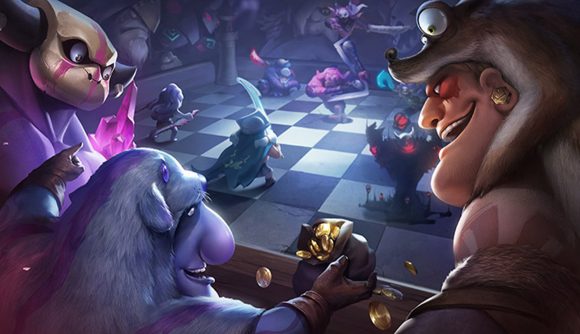
    If you would have told me that a Chinese mobile game would be my latest obsession only three months ago, I would have had a hard time believing you. Sure, I’ve dabbled in mobile gaming before, but I usually prefer to play puzzle games like Sudoku or Picross over more complex games. Then, Auto Chess caught my attention.

    I just so happened to be browsing Twitter one fateful day when I read a Tweet about a popular DotA 2 mod turned mobile game. Players were arguing that Value and Riot Games shouldn’t be so quick to copy the hard work of devoted modders by releasing their own official Auto Chess game modes. Word through the grapevine was that anyone who respected the hard work of the mod community (e.g. me) should support the official version of Auto Chess released by Dragonest Co. Eager to try it out, I downloaded the app on my phone and dug in.

    Not only is Auto Chess essentially an old Warcraft 3 map brought back to life on my smartphone sixteen years later, but it’s also a fantastically addictive mobile game to boot. Those two things are exactly what I need in my life right now, as weird as it sounds. One of my favorite aspects of the Warcraft 3 modding community that I sorely miss is the propensity towards designing games that essentially play themselves. This, combined with the theme of snowballing power creep brought me immediately back to playing custom maps on Battle.net.

    Since the game was originally developed as a DotA 2 custom mode, each “chess” piece is based off a hero from Defense of the Ancients. If you’ve spent any time playing either DotA Allstars or DotA 2, you’ll feel right at home in Auto Chess. If you haven’t, don’t worry; the game is actually quite simple once you get the basics.

    In Auto Chess, you select a chess piece from among a random selection of five different pieces each round. You place pieces on the board and at the start of every round the pieces you’ve played come to life to fight against either another player’s pieces or a selection of A.I. controlled “creeps.” Sometimes these creeps drop items which you can equip to specific chess pieces. Each chess piece has a role, similar to their DotA counterparts, and both a race and a class associated with them. These identifiers make up the core mechanic of Auto Chess, and essentially boil down to a game of mixing and matching colored symbols. Combining chess pieces of specific races or classes provides your whole team with special bonuses. You can also combine three or more of a specific type of chess piece to upgrade their rank and increase their stats.

    If you can understand a gambling game about matching up three of a kind, you can play Auto Chess.

    Some of my favorite aspects of Auto Chess are also tied directly to its design towards mobile. For example, I get a great sense of pride from performing well enough in Auto Chess that I can actively ignore my phone and know I still have a good chance of winning the match. It’s also handy to not have to constantly be paying attention to a mobile game since you are encouraged to play them on the go and are therefore more prone to being interrupted.

    Let’s go back to that hypothetical that I started this all with and flip it around. If you went back to my high school self and told him that I would be playing what was essentially a Warcraft 3 custom map on my phone and having a blast, he would probably be ecstatic. This jenky little mobile game has stolen my heart at a point when I really needed a pick-me-up. Do I think I’ll be playing this game in 6 months? For my sake, I hope not. That being said, I’m having a ball right now and will enjoy the hell out of this ride while it lasts.

    I give Auto Chess 4 George Costanzas out of 5.

  • Why Rift was the Best MMORPG for Me

    Why Rift was the Best MMORPG for Me

    There’s this prevailing sentiment among video game players that there is an objective ruler upon which you can evaluate all games. For the rest of us that live with at least one leg firmly planted in reality, we realize that art and entertainment are never that simple. Some games do very well financially to little critical acclaim, while some critical darlings go mostly ignored by the masses. Some games may not even register on your average Forknife tween’s radar, but they may still have had a profound effect on the people who enjoyed them.

    MMORPGs are especially difficult to discuss like this due to their temporary nature. Despite what game publisher PR departments want you to believe, you can never go home again, at least not to Azeroth or Telara. MMOs are designed to constantly be in flux, relying heavily on player engagement to make the experience feel whole. I mention this because one of my favorite games of all time was what some in more niche gaming scenes might consider a failure, a fly-by-night World of Warcraft clone that did little more than distract fans until the next expansion by Blizzard.

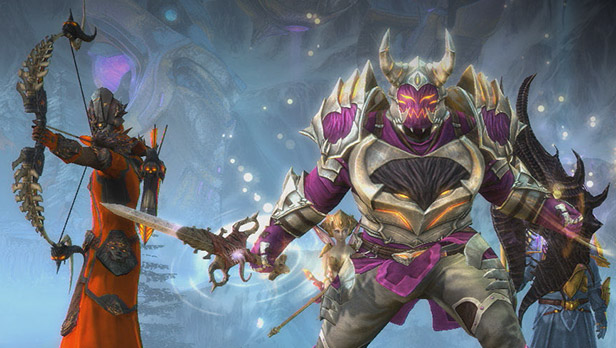
    This summary couldn’t be farther from the truth, as Rift did much more than temporarily steal a portion of WoW’s audience. Trion World’s debut MMO invited gamers into a rich fantasy world with an emphasis on player expression, exploration, and cooperation, at a time when World of Warcraft was dealing with massive blowback from its community about the difficulty of Cataclysm content compared to the WotLK expansion, among other things. Telara wasn’t just Azeroth 2.0, instead offering a welcome alternative that pushed the experience in other directions. While WoW’s cataclysm was revitalizing how traditional questing was done, Rift stuck to a more familiar formula and tried expanding on the core MMO experience instead of reinventing it.

    Rift was developed at an interesting time in MMO history, one most memorable for the string of game publishers trying to cash in on the WoW craze just as WoW was waning in popularity and trying to revamp itself. A big complaint gamers had about the streamlining of MMO design was that it often leads to players AFKing in one or two major cities, stopping only to queue into a dungeon or check their auction house sales. Rift’s answer to this was it’s namesake Rifts that opened up throughout the game and offered players an incentive to explore Telara and cooperate with other players to defend it against invading forces.

    On paper, this idea sounds revolutionary. In reality, it ended up playing like a slightly more engaging group quest from other, similar titles. But, what it lacked in mechanics it made up for in atmosphere and worldbuilding, both of which are paramount to my experience playing an MMORPG. Sure, you could theoretically ignore the invaders and go about your business, but for those playing for the sake of adventure, it provided a great distraction from the more basic questing system.

    Rifts weren’t the only thing keeping players engaged, however. In between the planar invasion and rifts opening up, players could also (eventually) click a button to immediately be grouped together with other players and thrust directly into a group quest, jump into dungeons, raids, and smaller raid-style encounters. They even eventually offered more casual players access to raid content through more intimate encounters using similar assets and environments. Essentially, if you were a PvE MMO fan, Rift probably had something for you.

    That being said, it did leave a bit to be desired in terms of Player versus Player mechanics. World PvP never seemed as lively as it should, perhaps because the open-world provided much more interesting endeavors than PKing unsuspecting newbs (An Ex Por, y’all), but there were plenty of instanced opportunities to kill your fellow man. Thankfully, I was more than happy to dip my toe in Warfronts before returning to my much more comfortable time murdering A.I. controlled monsters en masse.

    For me, Rift was perfect because I was pretty disappointed with World of Warcraft at the time and found a fresh, yet familiar approach to a game genre I had thoroughly enjoyed for more than a decade at that point. It was obviously not for everyone, but I hope that people give the game a chance despite the fact that it will probably never live up to my fond memories of time spent in Telara.

  • Apex Legends Brings Classic Deathmatch Legitimacy to the Battle Royale

    Apex Legends Brings Classic Deathmatch Legitimacy to the Battle Royale

    Boy howdy, Apex Legends is fun!

    This is coming from a stalwart opponent of games like Fortnite, Day-Z, and other battle royales. I don’t touch the stuff. I’d rather play Counter Strike 1.6 any day of the week.

    I hope that helps explain some of my surprise when I downloaded a first-person battle royale looter shooter on my PS4 and had a blast despite losing over and over.

    I was immediately brought back to days of old when I used to grind matches of counter strike, team fortress classic, and unreal tournament. Fast movement, map knowledge, and twitch aiming were key and I felt right at home. Sure, the PlayStation controller is about as wieldy as a bag of lobsters taped to an etch-a-sketch, but with a few adjustments, even a seasoned PC player can feel comfortable (note: not ideal, just comfortable).

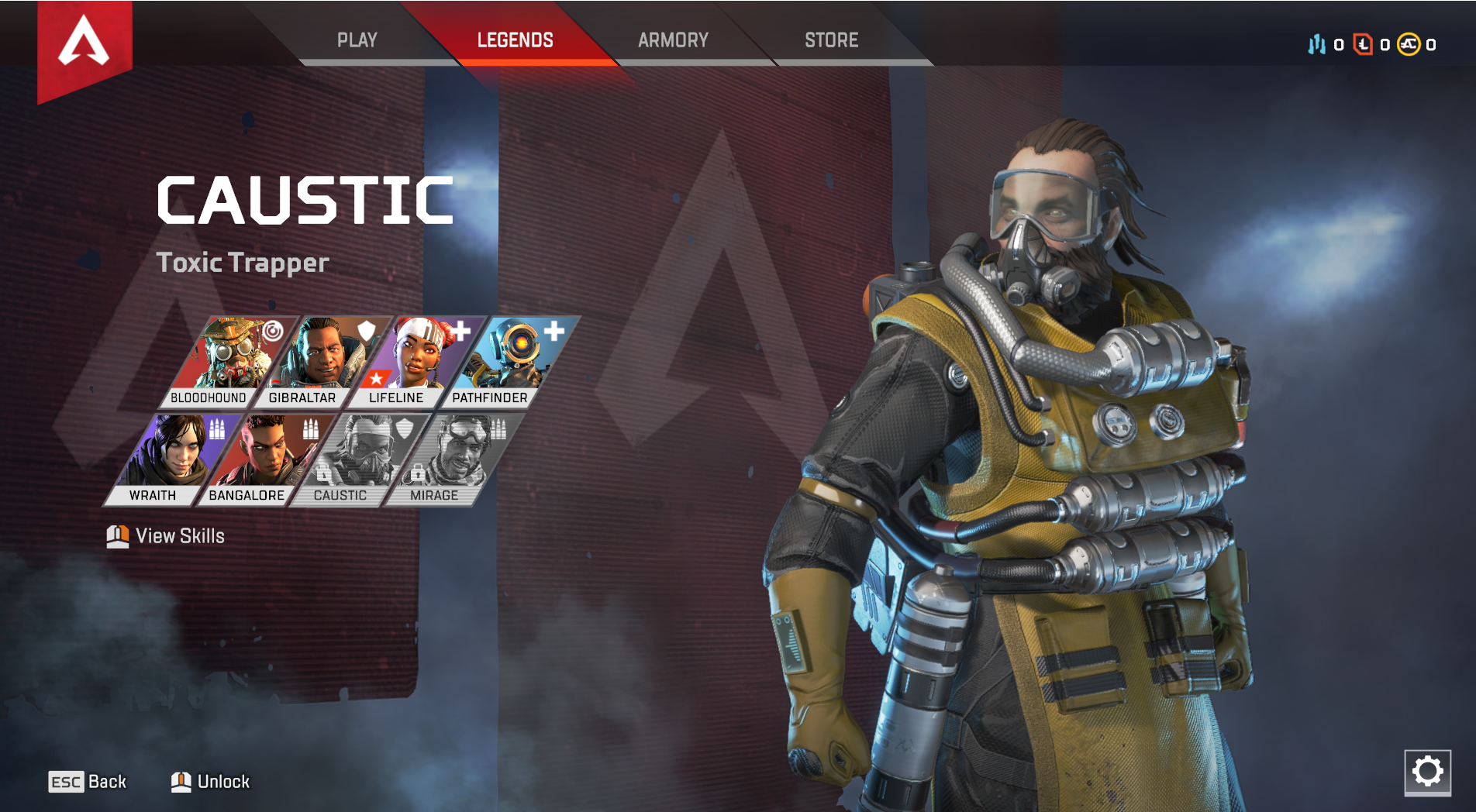
    What I’m perhaps most impressed by is how Apex Legends has taken the best aspects of several subgenres of first-person shooter while maintaining a tight focus on gunplay and twitch precision. Somehow, Respawn was able to take the character class system from Overwatch (arguably Team Fortress), the drop-in Battle Royale system from H1Z1 (or whichever one did it first), and the shooting and mobility from Titanfall and make an amazing free-to-play game. Each playable “legend” feels unique and interesting, but none feel like a crutch for players who can’t hit the side of a barn with a bazooka. Despite all of its strategic depth, each match of Apex Legends still essentially boils down to who can shoot each other in the head best. For me, that’s a huge plus, as weird as it sounds.

    I hope I don’t make it seem like Apex is simply an amalgamation of other games’ best features. That couldn’t be farther from the truth. What Apex Legends does is take some of the best aspects of several different games, strip away all of the rotten parts, and improve on the formula in new and interesting ways. Part treasure hunt, part old school deathmatch shooter, Apex Legends is the only battle royale I gleefully recommend.

    So far, my favorite aspect of Apex is its communication features, which is new for me. Being able to mute all VOIP activity and still communicate effectively through the ping system is a godsend for someone like me who plays without headphones and generally hates hearing other people’s voices when I play. Without this feature, I simply would not play this game. Now, if only I could mute all VOIP activity before the match even starts to avoid having randos yell racial slurs at me during character select.

    caustic.png

    That isn’t to say that EA’s Free-to-play Battle Royale doesn’t have its own flaws. Uneven hitboxes, inconsistent gun balance, and a potentially stale map layout are a few I can name off the top of my head, but I have confidence that Respawn will improve and iterate on their success from here. New legends, rebalanced skills and guns, and alterations to the map will go a long way towards revitalizing the player base and give gamers a reason to stay indoors this spring.

    Are you playing Apex Legends? If so, are you playing on PC or console? I’m curious because I play on both and have friends who play on both and may end up writing an article on the differences between the two in the future and would love any different perspectives. Feel free to let me know in the comments below.


  • Autobots Roll Out! Transformers TCG Autobot Starter Pack Review

    Autobots Roll Out! Transformers TCG Autobot Starter Pack Review

    I’m a huge sucker for new games. It doesn’t particularly matter whether I am attached to the developer or license. Unsolved games present a dual opportunity for me to explore new puzzles and adopt game design lessons learned to my own projects.

    This past September, Wizards of the Coast and their parent company Hasbro released a brand new trading card game based on the Transformers IP. When I heard the news on Mark Rosewater’s podcast, Drive to Work, my ears immediately perked up. Apparently, WotC brought Mr. Rosewater on board because it had been so long since they had released a new TCG that they needed the guidance of someone with enough experience designing collectible games from the ground up.

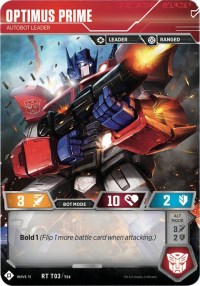
    Like many of WotC’s entries into the genre, The Transformers TCG borrows a lot from Magic the Gathering. Cards tap (turn sideways to signify that something has been done to change them in some way), characters attack one another, items are equipped and spells are cast fairly similarly. Even the namesake mechanic, transforming, was also borrowed wholesale from Magic after the Innistrad expansion proved that two-sided cards could be successful outside of Wizard’s other flagship product, Duel Masters.

    178405_200w3b8a7e4883eb78fbde7aefe2261e3902

    That is basically where the similarities end, thankfully. Unlike in Magic, you start a game of Transformers with your favorite set of bots already in play. Players take turns drawing cards, attacking other their characters and upgrading their bots until all of one player’s characters are KO’d. For a game aimed at a younger audience, I was impressed with how much flavor and fun could be packed into a relatively simple design.

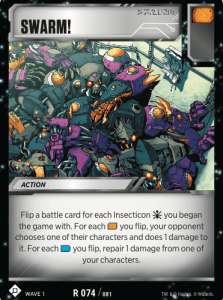
    A mechanic that I particularly enjoy is the ability for each card in the game to offer bonuses in combat, regardless of whether the card itself affects combat at all. When a Transformer attacks, that player reveals two cards from the top of their deck. If the revealed cards have orange pips in the top left corner, they add +1 damage to the bot’s attack. The same is true with Transformers blocking and blue pips. While I’m sure it will play heavily into deckbuilding, at its bare bones, it acts as a workhorse to keep an otherwise simplistic combat system dynamic and engaging.

    file

    My main gripe with Transformers (despite being outside of the target demographic by a significant margin) is that I wonder whether or not the game truly justifies being a trading card game over other popular alternatives. In its current form, players can purchase the Autobot Starter Kit and individual Booster Packs. The Starter Kit comes with enough cards and transformers for one standard deck but also offers an alternative play mode where the deck can be shared with another player for a more simplified version of the game.

    While I appreciate the flexibility, a part of me wonders whether the whole package would have been better off as a living card game (LCG) or something similar where the cards are available for purchase, rather than won through what is essentially a lottery. While collecting is an essential part of games like Pokemon or Magic, the same doesn’t seem to be the case with the Transformers intellectual property. For a franchise about selling an endless amount of toys, the roster of bots doesn’t offer much in terms of a roster for people who aren’t diehard fans outside of Optimus Prime, Megatron, Starscream, and Bumblebee.

    As it stands, I don’t think that I will be purchasing more than the Transformers TCG Starter Kit because I don’t have any interest in chasing rares by buying boosters, a habit that I’ve already had trained out of me in regards to Wizard’s other products. If they end up releasing a more contained product (perhaps a duel deck-style kit with two standard playable decks), then I may be interested in jumping back in to give it a try, but unless I can add it to my growing collection of tabletop games, I don’t think I’ll be participating much in this new trading card economy.

    If you’d like to learn more about the Transformers TCG, you can do so at Hasbro’s website here.

  • Top 10 Guilds of Ravnica Cards

    Top 10 Guilds of Ravnica Cards

    If Jace is the face of Magic: the Gathering, then the city-plane of Ravnica is its home, despite what veterans of the game may argue. The third and triumphant return to the familiar setting was destined to be a success from the get-go, but it seems that Wizards have outdone themselves this time. Not only does Guilds of Ravnica feel like the two blocks that came before it, but it exemplifies some of the most interests aspects of Magic’s design: the color wheel. Without further adieu, here are some of my favorite cards from the set for both constructed and limited in no particular order.

    10. Disinformation Campaign


    Although the theme of Ravnica heavily implies that players should choose a side and stick with a particular guild, I’ve always found myself drawn to each color combination individually, depending on my mood. Of all of Ravnica’s guilds, however, Dimir is easily my least favorite. Like most Magic players, I love the color blue only through the lens of what it can do for me as a player. Playing against a blue mage, on the other hand, can be a daunting, often frustrating experience. Add in a little black mana and the Dimir’s newest mechanic, surveil, and you’ve got a recipe for a one-sided match.
    Disinformation Campaign is a perfect example of the kind of grindy, resource denial strategy that Dimir is known for. It can take a bit to get going (keeping in mind that you need to survive until turn 4-5 in the first place), but once you start your “lock”, it can be difficult for an opponent to escape your grasps. Is it fun to play without any cards while your opponent has a full hand of 7? Hell no. Is it fun to keep your opponent from playing cards while you durdle around doing nothing, confident that you’ll win by turn 34 eventually? Hell yes! Welcome to the paradox that is blue mana.

    9. Sunholme Stalwart


    Although it’s become almost the norm as of late, a 2/2 creature for two mana with upside is never going to be a bad card in limited. It could even see play in constructed as a curve filler for a Boros or white weenie strategy. The first strike allows you to attack much more freely, and therefore trigger Mentor on your weaker attacking creatures, but also provides a strong defensive line for the investment as well. Boros Challenger may end up being a better card, but at [W/R] it’s a little more restrictive for my tastes.

    8. Murmuring Mystic


    Monastery Mentor, this card is not. But with a thicc behind (remember that 4 damage is the magic number for this set) and a potentially game-ending ability tacked on, I don’t know if this mystic needs to be. Murmuring Mystic blocks for days and can completely shut down certain wienie strategies, but should only really be considered if you have enough instants and sorceries to trigger the activated ability. Once you’ve mucked up ground combat enough and have an army of flying illusionary birds at your disposal, it shouldn’t take much to finish off your opponent in limited, even if this creature doesn’t see much play in constructed due to its {3U} mana cost.

    7. Thoughtbound Phantasm


    Remember when I said that Dimir wasn’t really my thing before Guilds of Ravnica? Well, here’s the third Dimir card to hit this list. At 1 mana, you can’t really go wrong with a 2/2 with defender in blue. Once you start surveilling, this little guy can become a destructive force, often swinging in for 5+ damage as soon as turn 3 or 4. That’s one helluva investment, even if you don’t particularly like the more durdly strategy of Dimir. I’ve won enough matches by playing one of these guys on turn one and another on turn two, followed by a surveil spell, to know that Thoughtbound Phantasm has legs in limited and (at least casual) constructed.

    6. Creeping Chill


    Another Dimir card? How dare you, you might say. Here me out! While Creeping Chill works very well with surveil, I wouldn’t necessarily say that it is strictly a Dimir card. In fact, I’d venture to say that it’s more of a Golgari card in practice. For 4 mana, dealing 3 damage and healing for 3 isn’t a great rate. For the low-low cost of milling yourself (or being milled by an opponent), you can play this spell for free and, since it’s a triggered ability, it will resolve unattested in limited and standard. While this seems like a great way to keep yourself alive while also milling through your deck, I’m much more interested in developing a black/red burn strategy, utilizing surveil and self-milling, to surprise my opponents with free, uncounterable lightning helixes.

    5. Erratic Cyclops


    While the price may be limiting, Erratic Cyclops is a ticking time bomb waiting for you to play a big, disruptive spell to provide the gas it needs to smash into your opponent’s health total. With a big butt, it’s not going to die anytime soon, which may provide you enough time to cast your spells and swing in for lethal before your opponent knows what hit em’. Maybe I have a thing for big blockers that eventually smack my opponent for a billion. Who knows?

    4. Lava Coil


    Whenever a graveyard set releases, it’s good practice to look through the red instants and sorceries for the keyword “exile.” If you find one cheap enough, that deals with enough corner cases, you may be onto something. At 2 mana for 4 damage and an exile clause, Lava Coil checks all the boxes for a limited all-star removal spell. Having a toughness of 5 or greater is a clue that any specific creature will survive longer than most, simply because it won’t die immediately to Lava Coil. These kinds of format warping removal spells are important to keep in mind when drafting, but will also see plenty of sideboard play in Standard to deny graveyard strategies and keep the board clean of those pesky creatures your opponent controls.

    3. Risk Factor


    I’m a huge fan of the punisher mechanic (i.e. cards that offer your opponent a choice, rather than yourself), but Wizards has proven in the past that punisher-styled cards can be very hit or miss. The general rule of thumb is that if your opponent has a choice, they will always choose the option that is worse for you. Why pay mana for the worst possible iteration of a card when you could just play blue and win the game like a normal person? Well, Risk Factor has the answer: what if both options were great? Ding your opponent for 4 or draw 3 cards! Who could ask for more? For 3 mana at Instant speed, that’s a deal either way you slice it. Now, any seasoned player will see this as {2R} → Deal 4 damage to target player, because allowing a burn deck to draw 3 cards could be much more deadly, but when your opponent is at 4 life, what choice do they really have? Ding ding ding! We have a winner.

    2. Pelt Collector


    Historically, the problem with 1 mana creatures is that they often do not offer enough value to compensate for them taking up a card slot in your deck, unless you specifically aim to play a lot of them early and win before your opponent can offer a rebuttal. Pelt Collector flips this on its head by offering early game potential without the normal late-game uselessness aftertaste. Even on turn 4 or 5, Pelt Collector can still come onto the battlefield and grow into a relevant size quickly enough, as long as other creatures are dying.
    Protip: When evaluating new Magic cards, look for those that benefit you for what some describe as “playing the game of Magic.” That means, if a card offers benefits for behavior that you would be performing anyway (creatures dying, spells going to the graveyard, lands being played/tapped, etc) then it’s not actually much of a hoop to jump through in the first place.

    1. Hypothesizzle


    In a game where card advantage and value are key, flexibility quickly becomes a commodity. Hypothesizzle lets you draw two cards for five mana. At that rate, it’s a pretty bad Divination. What Divination can’t do, however, is allow you to deal 4 damage to a creature for the cost of a nonland card in your hand. Now, five mana to deal 4 damage to a creature and draw a card isn’t actually that bad. Factor in that the nonland card you discard could have been otherwise useless in your hand (too much mana, too conditional for the situation, etc), meaning that the cost could potentially be very low. While this is just a common in the set (when did commons get so complicated?), it’s also a great example of how deceiving some card designs can be. On its face, Hypothesizzle looks like a bad card draw spell, but in reality, it’s a good removal spell that can also act like a bad Divination if you don’t have a target. Now that’s cooking with gas.